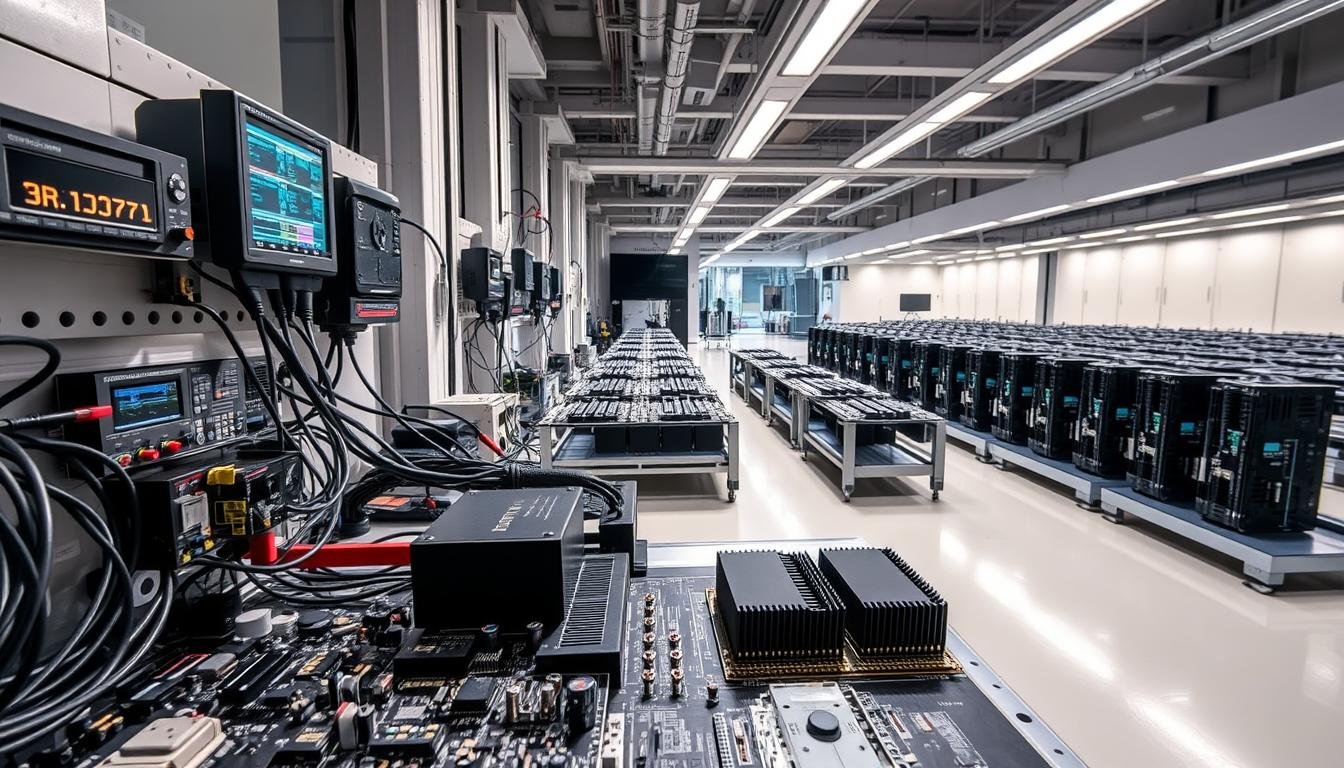
Can a simple testing process significantly reduce the likelihood of failure in critical electronic components?
We explore the crucial role of burn-in testing in ensuring the reliability of high-stakes products across various industries, including automotive, military, and telecommunications.
Burn-in testing subjects electronic components to accelerated stress conditions to identify and eliminate potential early-life failures before products reach end-users.
Key Takeaways
- Burn-in testing is a critical quality assurance process that enhances product reliability.
- It helps reduce warranty claims and enhances customer satisfaction by identifying weak components early.
- The process is grounded in the “bathtub curve” model, which charts component failure rates throughout a product’s lifecycle.
- Various industries implement burn-in testing to meet stringent reliability requirements.
- Modern burn-in methodologies and equipment configurations help manufacturers deliver products with predictable reliability metrics.
Understanding the Reliability Challenge in Electronic Components
Manufacturers face significant hurdles in guaranteeing the reliability of electronic components used in various applications. The complexity of modern electronic systems demands that components not only perform their intended functions but also maintain their performance over time under diverse environmental conditions.
The Cost of Field Failures
Field failures can lead to costly repairs, product recalls, and customer dissatisfaction, ultimately harming both the bottom line and the viability of a manufacturer. The cost of such failures extends beyond immediate financial losses to include brand damage, market share loss, and safety implications. For instance, a failure in a critical system can have catastrophic consequences, emphasizing the need for high-reliability components. By understanding the true cost of field failures, manufacturers can better appreciate the importance of investing in reliable PCB assembly processes.
Reliability Requirements Across Different Industries
Reliability requirements vary significantly across different industries. For example, aerospace and medical devices demand near-zero failure rates due to the critical nature of their applications. In contrast, consumer electronics may tolerate slightly higher failure thresholds, balanced against cost considerations. Understanding these varying requirements is crucial for manufacturers to tailor their reliability strategies to meet specific industry needs, ensuring that their products meet the necessary quality and reliability standards.
The Bathtub Curve: Foundation of Reliability Engineering

The bathtub curve serves as a cornerstone in reliability engineering, graphically representing the failure rate of electronic parts over time. This curve is characterized by its distinctive shape, resembling a bathtub, with high failure rates at the beginning and end of a component’s life and a relatively low, constant rate in between.
Early Failure Period: Infant Mortality
The early failure period, often referred to as the infant mortality phase, is marked by a high initial failure rate due to manufacturing defects, material impurities, and process variations. Burn-in testing is specifically designed to accelerate through this period, ensuring that components with inherent defects are identified and removed from the production line before they reach customers.
Useful Life Period: Random Failures
Following the infant mortality phase, components enter their useful life period, characterized by a relatively constant and lower failure rate. During this phase, failures occur randomly and are often attributed to external factors such as operational stress or environmental conditions. The failure rate during this period is a critical metric for determining the reliability of components under normal operating conditions.
Wear-Out Period: End-of-Life Failures
As components approach the end of their operational life, they enter the wear-out period, where physical degradation mechanisms such as electromigration, oxide breakdown, and mechanical fatigue cause an increasing failure rate. Understanding this phase is crucial for predicting the lifespan of components and planning for their replacement or maintenance.
| Period | Characteristics | Failure Causes |
|---|---|---|
| Early Failure | High initial failure rate | Manufacturing defects, material impurities |
| Useful Life | Constant, lower failure rate | Random failures, operational stress |
| Wear-Out | Increasing failure rate | Electromigration, oxide breakdown, mechanical fatigue |
By understanding the bathtub curve and its three distinct periods, reliability engineers can develop targeted testing strategies, including burn-in testing, to ensure the delivery of high-reliability components that meet the stringent demands of various industries.
The Importance of Burn-In Testing for High-Reliability Products
For high-reliability products, burn-in testing serves as a vital quality control measure. We rely on this process to ensure that electronic components can withstand the rigors of their intended applications, particularly in industries where failure is not an option.
Defining Burn-In Testing
Burn-in testing is a controlled process that subjects electronic components to elevated stress conditions, such as temperature and voltage, for a specified period. This test aims to precipitate early failures before products reach customers, thereby enhancing overall product reliability.
As we define it, burn-in testing operates on the principle of accelerated aging, where increased stress levels compress time and reveal latent defects that would otherwise manifest during the first months or years of normal operation. By doing so, we can identify and eliminate weak components early on.
Accelerated Stress Conditions
The conditions under which burn-in testing is conducted are critical. Elevated temperature and voltage provide the necessary stressors to induce failure in weak devices. The scientific basis for these conditions lies in the Arrhenius equation, which quantifies how elevated temperatures accelerate failure mechanisms.
By understanding the relationship between stress conditions and failure rates, we can determine appropriate test durations and ensure that our products meet the required reliability standards.
Screening Out Weak Components
The primary goal of burn-in testing is to screen out weak components that could lead to premature failure. By subjecting devices to rigorous testing, we can eliminate those that are likely to fail early, thus increasing the overall reliability of the remaining devices.
As we analyze the statistical foundations of burn-in testing, it becomes clear that this process shifts the reliability curve by eliminating the weakest components from the population. This, in turn, enhances the reliability of the products that pass the burn-in test, ensuring they meet the high standards required for critical applications.
In conclusion, burn-in testing is a crucial step in ensuring the reliability and longevity of high-reliability products. By understanding its importance and implementing effective testing strategies, we can guarantee the quality and performance of our electronic components.
Types of Burn-In Testing Methodologies
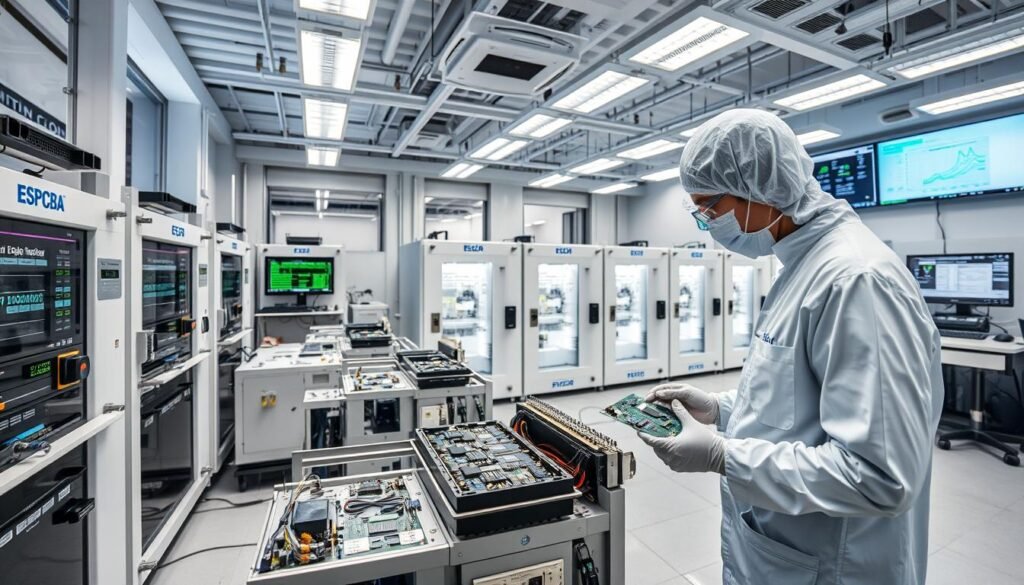
To ensure high-reliability products perform as expected, manufacturers employ different burn-in testing methodologies tailored to specific component characteristics and application requirements. The selection of a burn-in testing methodology is crucial as it directly impacts the effectiveness of the testing process in identifying potential failures.
Static Burn-In Testing
Static burn-in testing involves subjecting components to elevated temperatures and voltages without active operation. This method primarily stresses the physical materials and passive elements within the component. By applying higher voltage and temperature, static burn-in testing accelerates the aging process, helping to identify weak components that could fail early in their lifespan. For instance, a component might be tested at a voltage higher than its nominal operating voltage to simulate long-term stress.
Dynamic Burn-In Testing
In contrast, dynamic burn-in testing applies functional signals to components during stress conditions, activating internal circuitry and revealing defects that only manifest during actual operation. This methodology is particularly useful for components that will be used in complex systems where operational stresses are significant. Dynamic burn-in testing can include RF bias for devices intended for wireless applications, making it a versatile method for a wide range of components. By simulating real-world operating conditions, dynamic burn-in testing provides a comprehensive assessment of a component’s reliability.
DC vs. RF Burn-In Testing
The choice between DC and RF burn-in testing depends on the component’s intended application. DC burn-in testing is suitable for components that operate under direct current conditions, whereas RF burn-in testing is essential for high-frequency components used in communications or radar applications. RF testing, although more complex and costly, is critical for ensuring the reliability of components that operate under high-frequency stress. For example, components used in satellite communications require RF burn-in testing to simulate the high-frequency signals they will encounter in operation.
| Testing Methodology | Description | Application |
|---|---|---|
| Static Burn-In | Elevated temperatures and voltages without operation | Stress testing physical materials and passive elements |
| Dynamic Burn-In | Functional signals applied during stress | Complex systems, operational stress simulation |
| RF Burn-In | High-frequency signal application | Communications, radar applications |
For more detailed information on burn-in testing and its applications, we recommend exploring our comprehensive guide on the topic, available here. By understanding the different burn-in testing methodologies, manufacturers can make informed decisions about the most appropriate testing strategy for their components, ensuring high reliability and performance.
Burn-In Test Equipment and Process
Advanced burn-in test equipment is designed to simulate real-world conditions, helping to identify potential failures early. The effectiveness of burn-in testing heavily relies on the equipment used to subject devices to stress conditions. We will provide a comprehensive overview of the equipment and process involved in burn-in testing.
Test Platforms and Equipment
Burn-in test equipment has several key functional blocks that are vital to dispensing an effective burn-in environment to the devices under test (DUTs). A typical test platform has one to six zones, with each zone having a provision of 12 to 18 slots. Each slot is capable of burning-in 8 to a couple of hundred units concurrently. The equipment includes environmental chambers, burn-in boards, socket designs, and automated handling systems that enable efficient high-volume testing.
- Environmental chambers provide a controlled environment for burn-in testing.
- Burn-in boards are designed to accommodate multiple DUTs.
- Socket designs ensure reliable connections between the DUTs and the test equipment.
- Automated handling systems optimize the testing process.
Temperature and Voltage Parameters
The burn-in test parameters are established based on the reliability goals and failure acceleration factors. Temperature selection typically ranges from 125°C to 150°C, while voltage stress levels are usually 10-30% above rated values. The burn-in test process involves careful consideration of these parameters to ensure effective testing.
The critical subsystems of burn-in platforms include electrical (power delivery and signal generation), thermal (temperature control and monitoring), and mechanical (material handling and fixturing). These subsystems work together to provide a comprehensive testing environment.
Test Duration and Monitoring
The test duration is determined based on the reliability goals and failure acceleration factors. Modern burn-in monitoring techniques capture real-time performance data during testing, allowing for more sophisticated failure analysis and process improvement. The data collected during testing is crucial in identifying potential failures and improving the overall testing process.
By understanding the equipment and process involved in burn-in testing, manufacturers can optimize their testing procedures to ensure the reliability of their products.
Applications and Benefits of Burn-In Testing
Burn-in testing is a critical step in ensuring the reliability of electronic components, particularly in industries where failure can have severe consequences. Reliability is paramount in sectors such as automotive, military, telecommunications, and consumer electronics.
Automotive and Military Applications
In the automotive and military sectors, the reliability of electronic components is crucial for safety and mission success. Burn-in testing is used to screen out weak components that could fail under extreme environmental conditions. By doing so, it significantly reduces the risk of field failures, thereby enhancing safety and reliability.
Telecommunications and Consumer Electronics
Telecommunications infrastructure and high-end consumer electronics also benefit significantly from burn-in testing. The process ensures service continuity and protects brand reputation by minimizing the likelihood of component failures. In competitive markets, the reliability assured by burn-in testing can be a significant differentiator.
Statistical Process Control and Quality Improvement
One of the critical benefits of burn-in testing is the collection of performance data. By analyzing the conditions and timing of each failure, manufacturers can improve future testing procedures and enhance product reliability. This data feeds into statistical process control systems, enabling early detection of manufacturing process shifts and facilitating continuous quality improvement.
The implementation of burn-in testing results in the delivery of a statistically more reliable product population to customers. By quantifying the return on investment from burn-in testing, manufacturers can compare the costs against the benefits of reduced warranty claims and enhanced customer satisfaction, thereby justifying the implementation of burn-in testing protocols.
Conclusion: Implementing Effective Burn-In Testing Strategies
The implementation of effective burn-in testing strategies is pivotal in achieving the high reliability standards demanded by today’s electronic manufacturing industry. Burn-in testing is not a standalone solution but a critical component of a comprehensive reliability engineering framework. Effective burn-in testing involves careful consideration of test parameter selection, sample size determination, and failure analysis protocols to ensure that it effectively screens out defective components without unnecessarily inflating production costs.
To maximize the benefits of burn-in testing, organizations must also leverage the data generated by these tests to inform continuous improvement efforts in design, manufacturing, and supplier management. This proactive approach enables manufacturers to address the root causes of failures, thereby enhancing product reliability over time. Emerging trends such as adaptive test methods and AI-powered failure prediction are set to further optimize burn-in testing processes, reducing test times while maintaining effectiveness.
In conclusion, while burn-in testing represents a significant investment in time and resources, the returns in terms of enhanced product reliability, reduced warranty costs, and strengthened customer confidence make it an indispensable practice for manufacturers of high-reliability electronic products. By integrating burn-in testing into a broader reliability strategy and embracing emerging trends, manufacturers can ensure the delivery of high-quality products that meet the stringent demands of modern applications.
FAQ
What is the primary goal of burn-in testing?
How does burn-in testing relate to the bathtub curve?
What types of stress conditions are typically used in burn-in testing?
How does static burn-in testing differ from dynamic burn-in testing?
What are the benefits of burn-in testing for automotive and military applications?
How can burn-in testing improve statistical process control and quality improvement?
What is the role of test duration and monitoring in burn-in testing?
About The Author
