As we soar into an era where technology dominates every aspect of our lives, the aerospace industry stands as a testament to human innovation. From the Wright brothers’ simple yet revolutionary aircraft to today’s sophisticated flying computers, the journey has been remarkable. At the heart of this transformation lies aerospace electronics, where reliability and quality are paramount.
As aircraft become increasingly reliant on complex electronic systems, the role of high-quality PCB assembly becomes critical. The stakes are high, with component failure potentially leading to catastrophic consequences. This raises a crucial question: How do manufacturers ensure the reliability of aerospace electronics?
The answer lies in adhering to stringent standards, such as the AS9100 certification, which represents the gold standard in aerospace manufacturing. By understanding the unique challenges and quality control measures involved in producing aerospace-grade PCBAs, we can appreciate the complexity and expertise required in this field.
Key Takeaways
- Aerospace electronics have evolved significantly, with PCB assembly playing a critical role in modern aircraft.
- AS9100 certification is crucial for ensuring the quality and reliability of aerospace electronics.
- Manufacturers must adhere to stringent quality control measures to meet aerospace standards.
- The complexity of aerospace PCBA manufacturing demands specialized knowledge and expertise.
- Reliability is paramount in aerospace electronics, where component failure can have severe consequences.
The Critical Role of PCBAs in Aerospace and Defense Applications
PCBAs are the backbone of modern aerospace and defense electronics, enabling complex systems to operate under extreme conditions. The requirements for PCBAs used in aerospace technology are similar to those for car electronics, with the important distinction that operating conditions are much harsher.
Evolution from Simple Aircraft to Flying Computers
Modern aircraft have evolved significantly from their predecessors, transforming into sophisticated “flying computers” with complex electronics systems. This evolution has led to an increased reliance on PCBAs to control and navigate these advanced systems. As a result, the demand for high-reliability PCBAs has grown, driven by the need for precise and durable electronics that can withstand extreme environmental conditions.
Why Reliability is Non-Negotiable in Aerospace Electronics
Reliability is paramount in aerospace electronics because failure can have catastrophic consequences, including mission failure and loss of life. To achieve the required level of reliability, PCBAs used in aerospace applications must be designed and manufactured to exceptional standards, incorporating robust design practices, redundancy, and stringent quality control processes.
| Reliability Factor | Aerospace Requirement | Commercial Standard |
|---|---|---|
| Operating Temperature | -65°C to +125°C | 0°C to +70°C |
| Vibration Resistance | High vibration resistance | Moderate vibration resistance |
| Maintenance | Rarely maintained (e.g., satellites) | Regular maintenance possible |
Our industry’s approach to aerospace electronics manufacturing emphasizes reliability through redundancy, robust design practices, and stringent quality control processes that far exceed commercial standards. By understanding the critical role of PCBAs in aerospace and defense, we can better appreciate the need for high-quality, reliable electronics that meet the demanding requirements of these applications.
Unique Challenges for Aerospace and Defense PCBAs
The complexity of aerospace and defense applications demands PCBAs that can endure harsh environments, driving the need for innovative production methods. We specialize in addressing these challenges through advanced manufacturing techniques and stringent quality control.
Extreme Environmental Conditions
Aerospace PCBAs are exposed to extreme temperatures, vibrations, and other environmental stressors. To mitigate these effects, we employ materials and designs that enhance durability and reliability. Our expertise in handling such conditions ensures that our PCBAs perform optimally in aerospace environments.
Specialized Materials and Manufacturing Requirements
The use of specialized materials is crucial in aerospace PCBA production. We utilize materials that meet stringent military and NASA standards, ensuring that our products can withstand the rigors of space and defense applications. Our technology enables us to fabricate PCBAs with the precision required for these demanding environments.
Conformal Coating and Press-Fit Technology
Conformal coating and press-fit technology are critical in enhancing the reliability of aerospace PCBAs. We apply conformal coatings that meet NASA outgassing requirements and military specifications, providing a protective barrier against moisture, dust, and chemicals. Additionally, our use of press-fit technology creates robust mechanical connections that withstand extreme vibrations.
| Technology | Benefits | Applications |
|---|---|---|
| Conformal Coating | Protects against environmental stressors, enhances electrical insulation | Aerospace, Defense |
| Press-Fit Technology | Creates robust mechanical connections, withstands extreme vibrations | Aerospace, High-Reliability Electronics |
By incorporating these advanced technologies and manufacturing processes, we ensure that our aerospace and defense PCBAs meet the highest standards of quality and reliability. Our commitment to innovation and customer satisfaction drives us to continually improve our production capabilities.
Understanding AS9100 Certification for Aerospace Manufacturing
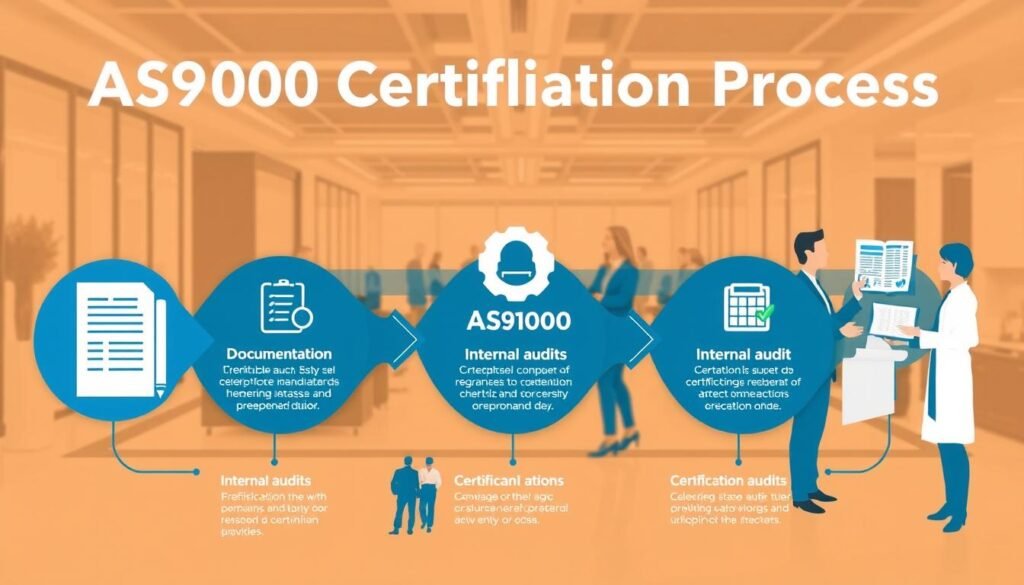
AS9100 certification is a benchmark for quality management in aerospace manufacturing. This standard is an enhancement of the ISO9001 standard, focusing on quality management and placing high demands on personnel to respond quickly to customer requirements.
What is AS9100 and Why It Matters
AS9100 is designed to ensure the highest quality in aerospace manufacturing by emphasizing product safety, reliability, traceability, and the ability to handle non-standard situations and changes. We implement AS9100’s requirements to ensure that our manufacturing processes meet the stringent demands of the aerospace industry.
The key aspects of AS9100 include:
- Enhanced Risk Management: Implementing risk management throughout the product lifecycle, going beyond ISO9001’s general approach.
- Rigorous Documentation and Traceability: Ensuring every component can be traced back to its source.
- Configuration Management and Change Control: Maintaining consistency in aerospace products by controlling changes.
- Stringent Supplier Management: Exercising exceptional control over the entire supply chain.
Key Differences Between AS9100 and ISO9001
While ISO9001 provides a foundation for quality management, AS9100 adds over 100 additional requirements specific to aerospace manufacturing. These differences reflect the unique challenges of the aerospace industry, including the need for enhanced risk management, rigorous documentation, and stringent supplier management.
By obtaining AS9100 certification, we demonstrate our commitment to meeting these challenges and ensuring the highest quality in our aerospace manufacturing processes.
Essential Testing Protocols for Aerospace-Grade PCBAs
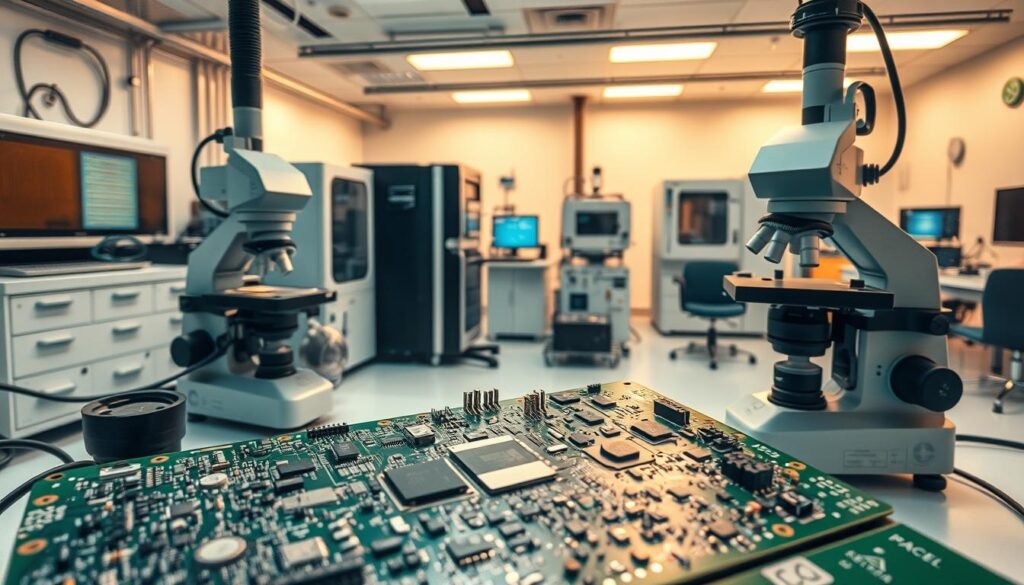
Ensuring the reliability of aerospace-grade PCBAs is a complex task that requires rigorous testing protocols. We implement a comprehensive testing regimen to validate the performance and durability of our PCBAs under extreme conditions.
Temperature and Environmental Testing
Temperature and environmental testing are critical for assessing the PCBA’s ability to operate in harsh aerospace environments. We conduct tests such as Thermal Aging, which exposes PCBAs to elevated temperatures for extended periods, simulating long-term aging and testing the board’s durability.
Mechanical and Structural Testing
Mechanical and structural testing evaluate the PCBA’s ability to withstand mechanical stress and maintain its structural integrity. This includes Pressure Tests, which assess the PCBA’s ability to operate under high-pressure conditions, such as those encountered at high altitudes.
Reliability and Longevity Testing
Reliability and longevity testing are essential for ensuring that aerospace-grade PCBAs maintain their functionality over their expected service life. We employ various testing methods, including:
- Highly Accelerated Life Testing (HALT): Exposes PCBAs to progressively extreme conditions to identify potential failure modes and design weaknesses.
- Highly Accelerated Stress Screening (HASS): Identifies manufacturing defects that might not be detected through standard functional testing.
- Burn-in testing: Subjects PCBAs to extended operation at elevated temperatures to force early failures before deployment.
- Component aging tests: Evaluate the long-term reliability of critical components under various stress conditions.
By leveraging these advanced testing protocols and incorporating cutting-edge technology, we ensure that our aerospace-grade PCBAs meet the highest standards of quality and reliability.
PCBA for Aerospace & Defense: Meeting AS9100 Requirements
AS9100 certification is a benchmark of quality for aerospace and defense PCBAs, ensuring reliability and compliance. This standard has evolved over the years, with the most recent upgrade, AS9100 Revision D in 2016, focusing on risk management procedures and control of outsourcing and external purchasing.
Risk Management and Quality Control Processes
Effective risk management and quality control are critical components of AS9100 certification. We implement rigorous risk assessment processes to identify potential issues before they become major problems. Our quality control processes are designed to ensure that every PCBA meets the required aerospace standards.
Documentation and Traceability Requirements
AS9100 certification requires meticulous documentation and traceability. We maintain detailed records of all production processes, ensuring that every component and material used in our PCBAs can be traced back to its source. This level of traceability is essential for ensuring compliance and facilitating any necessary recalls or investigations.
Supplier Management and Control
Managing our supplier chain effectively is crucial for maintaining the quality and reliability of our PCBAs. We maintain an Approved Supplier List (ASL) and conduct regular performance evaluations based on quality, delivery, and responsiveness. Our supplier management processes also include audits and verification to ensure compliance with AS9100 requirements, as well as controls to prevent counterfeit parts from entering the supply chain, as highlighted in resources like choosing the right PCB assembly factory.
Additional Standards and Certifications for Aerospace Electronics
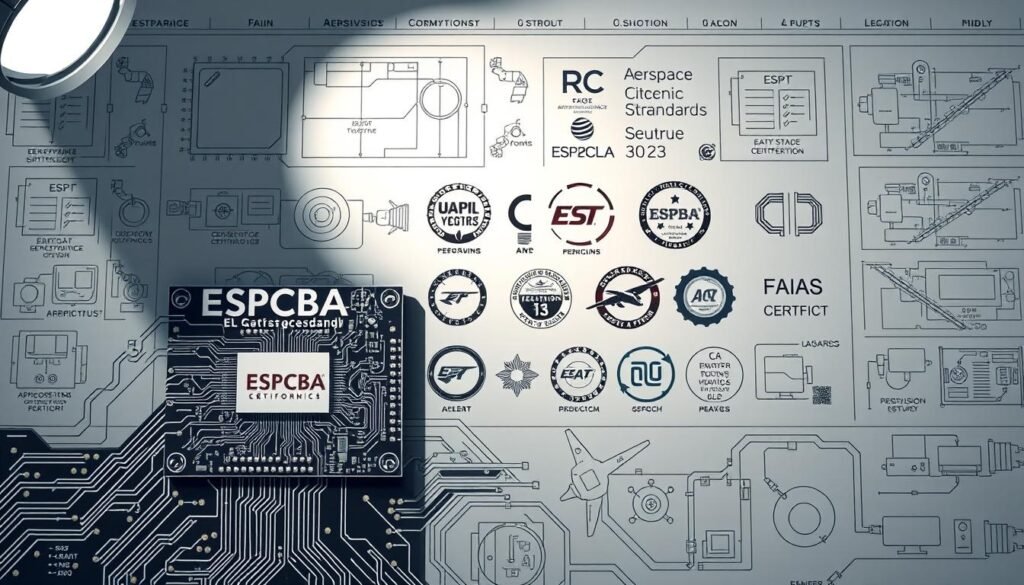
In addition to AS9100 certification, aerospace electronics manufacturers must comply with other critical standards and regulations. The industry’s complex requirements demand a comprehensive approach to quality and reliability.
IPC Class3 Standards for High-Reliability Electronics
The IPC Class 3 standard is crucial for ensuring the high reliability of electronics in aerospace applications. This standard specifies rigorous requirements for the design, manufacturing, and testing of printed circuit boards and assemblies. By adhering to IPC Class 3 standards, manufacturers can guarantee the quality and durability of their products, even in the most challenging environments. We implement IPC Class 3 standards in our manufacturing processes to ensure that our products meet the highest industry expectations.
ITAR Registration and Compliance
For companies involved in defense-related aerospace projects, ITAR registration is a legal requirement. ITAR, or International Traffic in Arms Regulations, is administered by the U.S. Department of State’s Directorate of Defense Trade Controls (DDTC). ITAR registration helps control sensitive military technology by restricting access to defense-related articles and services. We maintain strict ITAR compliance through comprehensive security protocols, including:
- Physical access controls to sensitive areas
- Data protection systems to safeguard confidential information
- Personnel screening to ensure that employees handling ITAR-controlled projects are authorized
Non-compliance with ITAR regulations can result in significant legal penalties, including fines of up to $1 million per violation and potential criminal charges. Therefore, our ITAR compliance program includes regular training, internal audits, and meticulous documentation to demonstrate our commitment to protecting sensitive defense technology while maintaining the quality reliability expected in aerospace applications.
| Standard/Certification | Description | Importance in Aerospace |
|---|---|---|
| IPC Class 3 | Standard for high-reliability electronics | Ensures durability and quality in challenging environments |
| ITAR Registration | Legal requirement for defense-related projects | Critical for controlling sensitive military technology |
| AS9100 Certification | Quality management standard for aerospace | Essential for ensuring quality and reliability in aerospace manufacturing |
Partnering with an AS9100 Certified PCBA Manufacturer
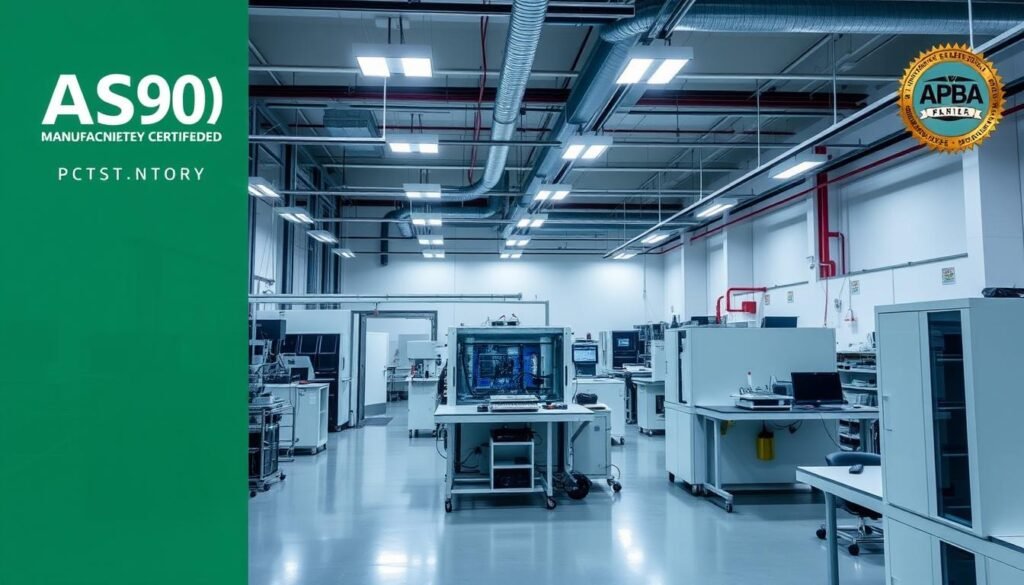
To meet the stringent requirements of the aerospace industry, companies often seek the expertise of an AS9100 certified PCBA manufacturer. Aerospace technology companies require reliable, high-performance PCBAs manufactured to exacting standards. Meeting these standards can be a challenge, which is why it sometimes makes sense to partner with a third-party manufacturer who has the necessary registrations and certifications.
Benefits of Working with Certified Manufacturers
Working with AS9100 certified manufacturers provides several benefits, including robust supply chain management and risk mitigation strategies. These manufacturers implement comprehensive supplier qualification programs that extend AS9100 requirements throughout the supply chain, ensuring all materials meet aerospace standards.
What to Look for in an Aerospace PCBA Partner
When selecting an aerospace PCBA partner, look for a manufacturer that maintains appropriate inventory levels of critical components and implements long-term supply agreements. This helps minimize supply chain risks and ensures business continuity.
Reducing Supply Chain Risk Through Certified Partners
Certified partners provide several advantages, including:
- AS9100 certification requires manufacturers to implement robust supply chain management processes that reduce the risk of counterfeit parts entering aerospace products.
- We maintain comprehensive supplier qualification programs that extend AS9100 requirements throughout the supply chain, ensuring all materials meet aerospace standards.
- Certified partners provide business continuity planning and risk mitigation strategies that protect aerospace OEMs from supply disruptions and quality issues.
- Working with established AS9100 certified manufacturers provides access to their established supply networks, often including preferred pricing and allocation priorities during component shortages.
- The right partner will maintain appropriate inventory levels of critical components, implement long-term supply agreements, and provide complete traceability documentation to minimize supply chain risks.
Conclusion: Ensuring Success in Aerospace Electronics Manufacturing
In conclusion, meeting AS9100 requirements is crucial for PCBA manufacturers in the aerospace and defense sectors. We understand that AS9100 certification is not just about compliance, but about implementing comprehensive quality systems that ensure the safety, reliability, and performance of critical aerospace electronics.
At PRIDE Industries, we have the expertise and personnel needed throughout your PCBA manufacturing journey. Our AS9100 certification and ITAR registration, combined with in-house SMTA-Certified Process Engineers, ensure you receive the highest quality results while meeting all relevant aerospace industry standards and regulations.
By partnering with experienced, certified PCBA manufacturers for aerospace and defense applications, OEMs can focus on their core competencies while ensuring their electronic systems meet all regulatory requirements and performance expectations. This includes implementing specialized processes such as conformal coating to enhance the reliability of their PCBAs.
In summary, achieving success in aerospace electronics manufacturing requires a commitment to quality and a deep understanding of the industry’s unique challenges. By prioritizing AS9100 certification and partnering with the right manufacturers, companies can ensure the reliability and performance of their PCBAs.
FAQ
What is the significance of AS9100 certification in aerospace manufacturing?
How does temperature and environmental testing ensure the reliability of aerospace-grade PCBAs?
What role does risk management play in the production of aerospace PCBAs?
Why is documentation and traceability important in aerospace electronics manufacturing?
How can partnering with an AS9100 certified manufacturer benefit aerospace electronics production?
What are the key differences between AS9100 and ISO9001 certifications?
What is the importance of IPC Class3 standards in high-reliability electronics?
How does ITAR registration impact aerospace electronics manufacturing?
About The Author
