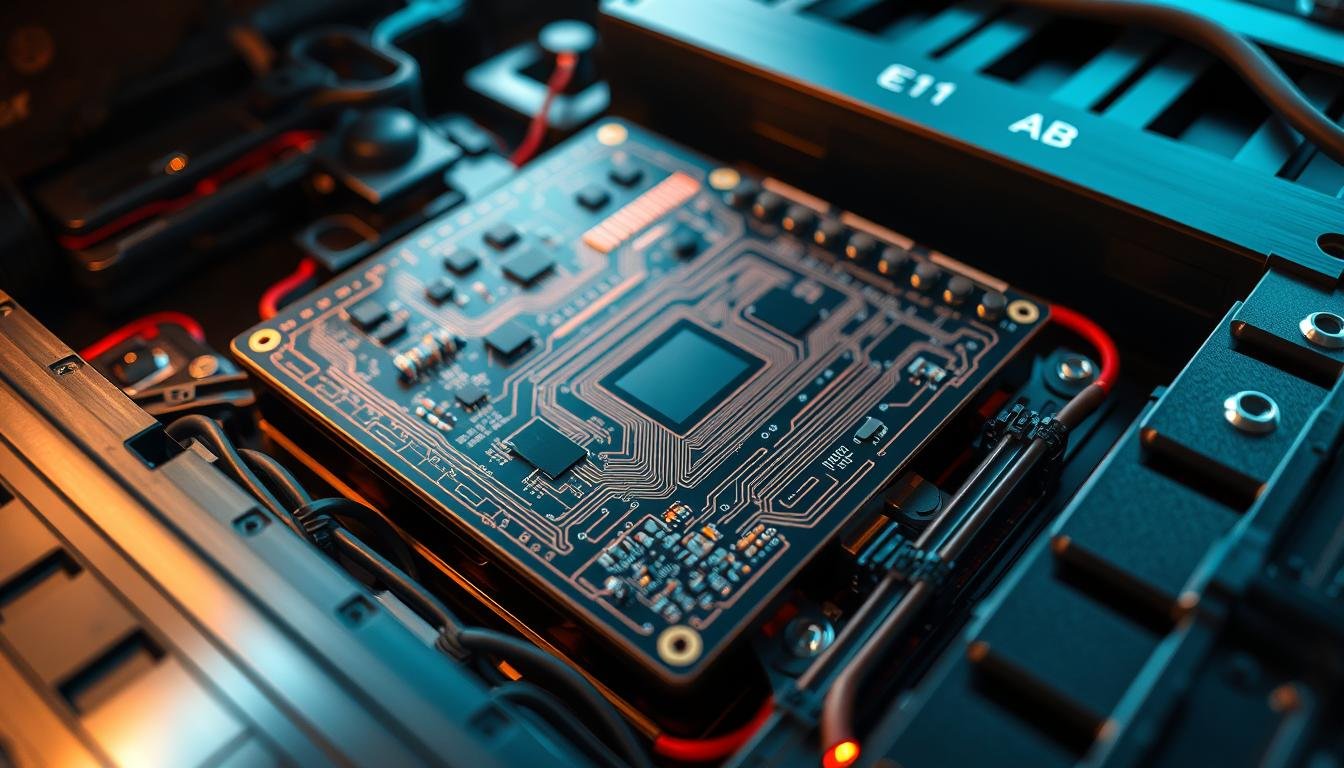
As the world shifts towards electric vehicles (EVs), the demand for sophisticated pcbs that can efficiently manage battery performance and charging systems is on the rise.
We are witnessing a significant transformation in the transportation industry, driven by the need for cleaner, more efficient travel options. At the heart of this revolution are pcbs that enable the reliable operation of EVs by managing their complex battery management and charging infrastructure.
At ESPCBA, we understand the critical role that high-quality pcbs play in the success of EV technology. Our expertise in manufacturing pcb solutions is geared towards enhancing the performance and safety of EV battery systems.
Key Takeaways
- The EV market is expected to grow significantly, driving demand for advanced PCBAs.
- PCBAs are crucial for efficient battery management and charging systems in EVs.
- The complexity of EV battery management requires sophisticated pcbs.
- High-quality pcbs are essential for the performance and safety of EVs.
- Manufacturers like ESPCBA are leading the way in providing cutting-edge PCBA solutions.
The Critical Role of PCBAs in Electric Vehicle Technology
The technology behind electric vehicles relies heavily on sophisticated PCBAs for various critical systems. At the heart of an EV’s functionality are advanced PCBs that enable efficient management and operation.
How PCBAs Power the EV Revolution
PCBAs are instrumental in driving the EV revolution forward by enhancing the performance and safety of battery management systems (BMS). By leveraging sophisticated PCBs, BMS can monitor and control charging-discharging cycles, balance power distribution across battery cells, and maintain overall safety. This capability is crucial for the reliable operation of EVs.
Key EV Systems Dependent on PCB Assemblies
Several key systems in EVs depend on PCB assemblies for optimal performance. These include BMS, which relies on PCBs to monitor cell voltages, temperatures, and state of charge. Additionally, motor control systems use PCBAs to regulate power delivery to electric motors, optimizing performance and efficiency. Furthermore, power inverters and converters utilize specialized PCBAs to transform DC battery power to AC for motor operation. Our experience shows that auxiliary systems like climate control and infotainment also depend on integrated PCB assemblies.
Understanding Battery Management Systems (BMS) in EVs
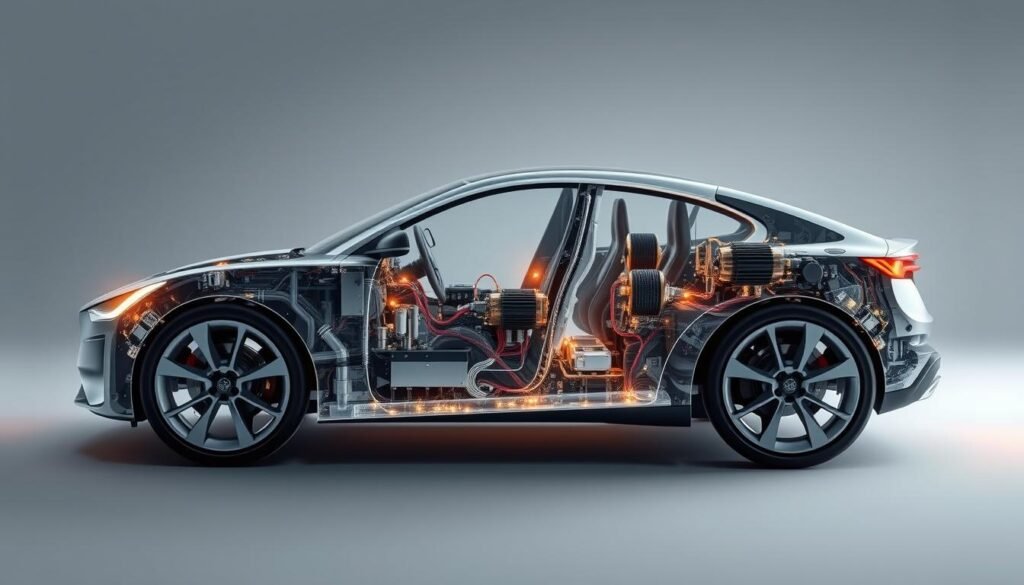
Electric vehicles rely on sophisticated Battery Management Systems (BMS) to optimize battery performance and prevent potential hazards. The BMS is the brain of the battery pack, monitoring and managing the operating status of the batteries to ensure safe, stable, and efficient operation.
Core Components of EV Battery Management PCBAs
The core components of EV Battery Management PCBAs include sophisticated algorithms, temperature monitoring systems, and cell balancing technology. These components work together to analyze battery performance patterns, detect anomalies, and prevent safety issues.
Essential Functions of Battery Management Systems
Battery Management Systems perform several essential functions, including monitoring voltages and temperatures across the battery pack, controlling the work status of the battery pack, and preventing overheating and overcooling. By doing so, BMS ensures that the battery pack operates within a safe voltage range and maintains optimal performance.
| Function | Description | Benefit |
|---|---|---|
| Voltage Monitoring | Monitors voltage levels across cells | Prevents overcharging/discharging |
| Temperature Monitoring | Tracks temperature changes in the battery pack | Prevents thermal runaway |
| Cell Balancing | Ensures even charge/discharge patterns | Extends battery life |
How BMS Ensures Battery Safety and Longevity
The BMS ensures battery safety and longevity by implementing various safety measures, including isolation monitoring and thermal management. By detecting potential issues before they become major problems, BMS helps prevent dangerous short circuits and maintains the overall health of the battery pack.
By integrating advanced technologies and sophisticated algorithms, we design BMS PCBAs that not only enhance battery management but also contribute to the overall efficiency and reliability of electric vehicles.
PCBA for Electric Vehicles (EVs): Battery Management and Charging Systems
In the rapidly evolving landscape of electric vehicles, PCBAs play a pivotal role in ensuring the efficiency and reliability of battery management and charging systems. As EVs continue to gain traction, the demand for high-performance PCBAs that can manage complex battery systems and charging infrastructure is becoming increasingly critical.
Design Requirements for EV Power Management PCBAs
Designing PCBAs for EV power management involves several critical considerations, including high-voltage tolerance, thermal management, and compact design. Efficient thermal management is essential to prevent overheating, which can significantly impact the performance and lifespan of EV batteries. We utilize materials like insulated metal substrates (IMS) and implement thermal vias to enhance heat dissipation.
High-Voltage Considerations in EV PCBA Manufacturing
High-voltage PCBAs in EVs require specialized manufacturing processes to ensure safety and reliability. Clearance and creepage distances are critical to prevent electrical discharges and ensure the PCB can withstand high voltages. Our manufacturing processes adhere to stringent automotive standards to guarantee the quality and reliability of our PCBAs.
Thermal Management Solutions for EV PCBAs
Effective thermal management is crucial for maintaining the performance and longevity of EV PCBAs. We employ various strategies, including metal-core PCBs (MCPCBs) and thermal simulation analysis, to identify and mitigate potential hotspots.
| Thermal Management Technique | Description | Benefits |
|---|---|---|
| Metal-Core PCBs (MCPCBs) | Direct thermal path from components to cooling systems | Enhanced heat dissipation, improved performance |
| Thermal Vias | Strategic placement to draw heat away from critical components | Reduced heat buildup, increased reliability |
| Thermal Simulation | Analysis during design phase to identify hotspots | Proactive solutions, optimized design |
By integrating these thermal management solutions, we can ensure that our PCBAs meet the demanding requirements of EV applications, providing both performance and reliability.
Charging System PCBAs: Powering the EV Infrastructure
As electric vehicles (EVs) continue to gain traction, the importance of reliable charging system PCBAs cannot be overstated. These PCBAs are crucial for the efficient and safe charging of EVs, supporting the widespread adoption of electric vehicles.
Fast Charging Technology and PCBA Requirements
Fast charging technology demands high-performance PCBAs that can handle increased power levels without compromising safety or efficiency. We utilize advanced materials and manufacturing techniques to ensure our PCBAs meet the stringent requirements of fast charging applications.
Communication Protocols Between Charging Systems and Vehicles
Effective communication between charging systems and EVs is vital for safe and efficient charging. Our PCBAs are designed to support various communication protocols, ensuring seamless interaction between the vehicle and charging infrastructure.
Safety Features in EV Charging PCBAs
Safety is paramount in EV charging PCBAs. We implement multiple safety features, including ground fault monitoring, temperature monitoring, isolation monitoring, and arc detection circuits, to prevent electrical hazards and ensure reliable operation.
Some key safety features of our EV charging PCBAs include:
– Multiple redundant systems to prevent electrical hazards during high-power charging.
– Sophisticated ground fault monitoring circuits to detect insulation failures.
– Temperature monitoring to prevent overheating.
– Isolation monitoring to check for breakdowns in the isolation barrier.
– Arc detection circuits to identify potentially dangerous arcing conditions.
For more information on how PCBAs are driving the future of electric vehicles, visit Powering the EV Revolution.
Overcoming Challenges in EV PCBA Manufacturing
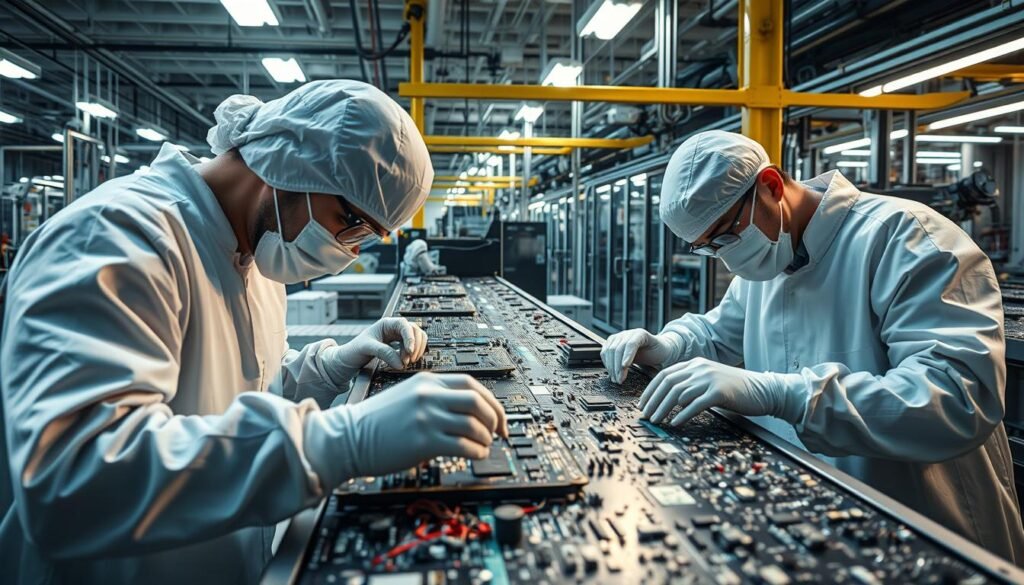
The challenges in EV PCBA manufacturing are multifaceted, requiring advanced materials and techniques. We address these challenges through innovative design and assembly processes.
Material Selection for High-Performance EV PCBAs
Selecting the right materials is crucial for EV PCBAs. We use high-quality materials that can withstand the harsh conditions of automotive applications. Our material selection process involves careful consideration of factors such as thermal conductivity, durability, and electrical performance.
Testing and Quality Assurance for Automotive-Grade PCBAs
To ensure the reliability of EV PCBAs, we implement rigorous testing and quality assurance protocols. Our testing includes thermal stress testing, vibration testing, and electrical performance verification. For instance, our quality assurance process involves:
| Test Type | Description | Frequency |
|---|---|---|
| Thermal Stress | Testing PCBA under extreme temperatures | 100% |
| Vibration | Simulating vehicle vibrations | 100% |
| Electrical Performance | Verifying PCBA electrical functionality | 100% |
Miniaturization and Space Constraints in EV Electronics
Miniaturization is a significant challenge in EV electronics. We employ high-density interconnect (HDI) techniques, including microvias and sequential lamination, to maximize functionality in limited space. Our design approach often involves 3D design considerations, with components placed on both sides of the board. For more information on how we address EV design challenges, visit our blog on PCBs in Electric Vehicle Design.
Conclusion: The Future of PCBA Technology in Electric Vehicles
The future of electric vehicles is inextricably linked with advancements in PCBA technology. As we move forward, we anticipate significant developments, including higher integration, advancements in materials science, and more sophisticated battery management systems. For instance, the integration of wide-bandgap semiconductors like silicon carbide (SiC) and gallium nitride (GaN) will revolutionize power conversion PCBAs. These advancements will enable the creation of more efficient electric vehicle systems, enhancing overall performance and safety. We are committed to delivering high-quality PCBA solutions that meet the evolving needs of the EV industry.
FAQ
What is the role of PCBAs in Electric Vehicle battery management?
How do PCBAs contribute to the reliability of EV charging systems?
What are the key considerations in designing PCBAs for EV applications?
How do BMS PCBAs ensure battery safety and longevity?
What are the benefits of using high-quality PCBAs in EV charging systems?
How do EV manufacturers ensure the quality and reliability of their PCBAs?
What role do PCBAs play in enabling fast charging technology?
How do PCBAs facilitate communication between EV charging systems and vehicles?
About The Author
