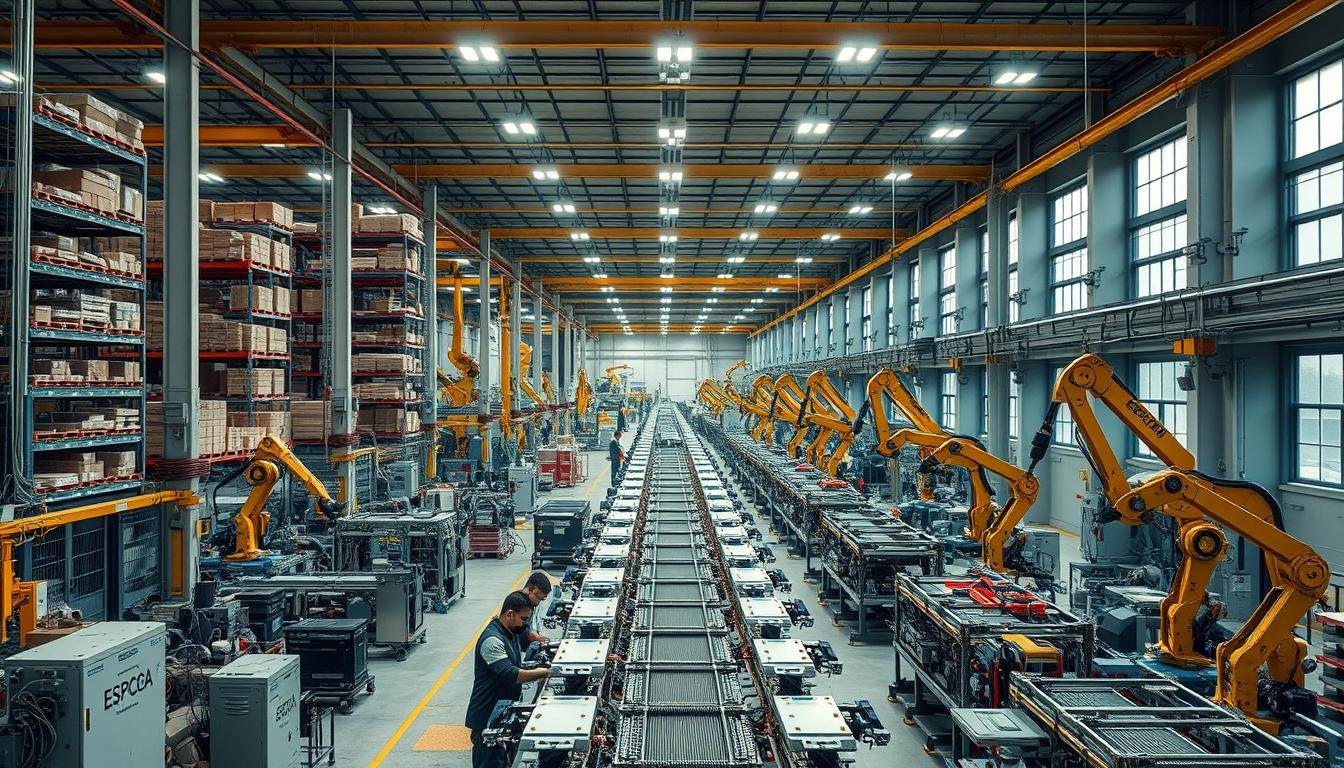
Moving from prototype to production is a critical phase in product development. While a functional prototype is a significant milestone, ensuring it can be manufactured efficiently at scale poses numerous challenges.
The shift to a reproducible, cost-effective product often reveals design flaws, material constraints, and production inefficiencies not apparent during prototyping. Understanding this transition is crucial for product success, as it determines whether your concept can be manufactured reliably and profitably at scale.
Key Takeaways
- Understanding the challenges of transitioning from prototype to production.
- The importance of planning for production-ready design.
- Common pitfalls that derail production timelines and inflate costs.
- Best practices for a smooth transition to full-scale production.
- A structured approach to bringing your design to market successfully.
Understanding the Critical Transition from Prototype to Production
As we navigate the complexities of product development, the shift from prototyping to production stands out as a critical juncture. This phase is not just about scaling up; it’s a fundamental transformation in mindset, resources, and processes that can significantly impact a product’s success in the market.
We recognize that the transition from prototype to production represents a make-or-break phase for product success. It’s a period that demands a deep understanding of the differences between verifying functionality in a prototype and achieving repeatability, efficiency, and consistent quality in a production environment.
Why This Phase Is Make-or-Break for Product Success
The transition is critical because it requires a shift from the flexibility and manual adjustments typical in prototyping to the automated processes and strict tolerances necessary for mass production. As noted by industry experts, “The key to successful production lies in understanding the limitations and capabilities of your manufacturing process.”
This phase is make-or-break because it directly affects the product’s quality, cost, and time-to-market. A well-managed transition ensures that the product meets rigorous quality standards, regulatory requirements, and customer expectations consistently.
Key Differences Between Prototyping and Production Environments
The differences between prototyping and production environments are stark. While prototypes are used to verify design concepts and functionality, production units must be manufactured with repeatability and efficiency in mind. Material choices, for instance, may work perfectly for prototyping but be unsuitable for production due to cost, availability, or manufacturing limitations.
For a seamless transition, it’s essential to understand these differences and plan accordingly. By doing so, product teams can ensure a smooth shift from prototype to production, ultimately leading to successful product launches. For more insights on optimizing your product for production, visit ESPCBA to learn about the PCB manufacturing process from design to production.
The Roadmap: Key Phases in the Prototype-to-Production Journey
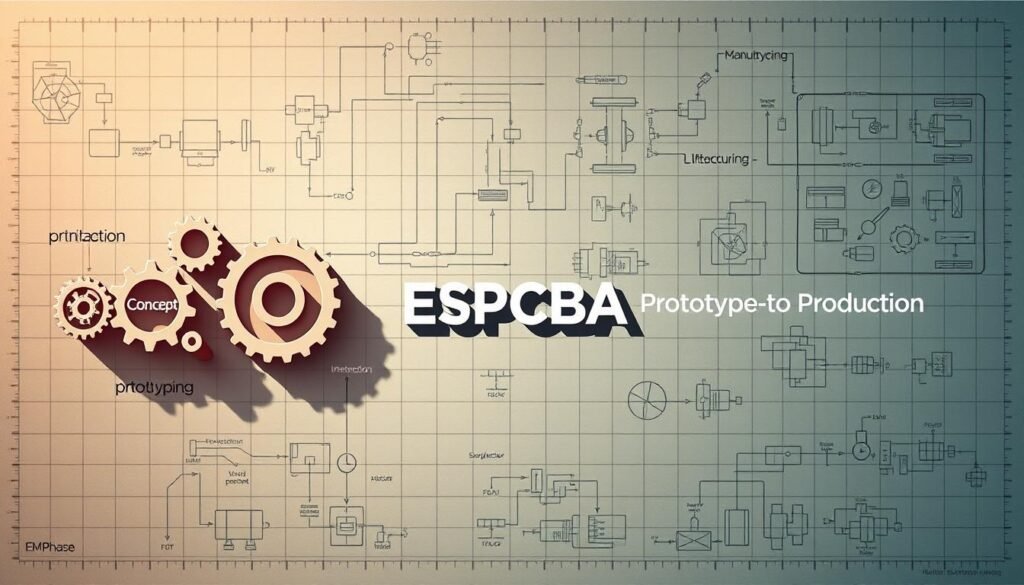
To successfully scale a product, understanding the key phases between prototype and production is essential. We guide you through a structured four-phase approach that ensures your product is production-ready.
LLWL: Creating a Looks-Like, Works-Like Prototype
The first milestone in scaling your product is creating a Looks-Like, Works-Like (LLWL) prototype. This prototype closely resembles the final product in both design and functionality, allowing you to test and refine the product before moving to manufacturing. Typically, 1-5 units are produced in this phase.
EVT: Engineering Verification Testing
During the Engineering Verification Testing (EVT) phase, we produce 20-50 units using low-volume manufacturing techniques. Rigorous testing verifies that the product meets all defined engineering specifications, including functional, durability, environmental, and preliminary compliance testing.
DVT: Design Verification Testing
The Design Verification Testing (DVT) phase focuses on manufacturability at scale with 100-250 units. We verify that components fit correctly, production processes are efficient, and the product meets all safety and regulatory requirements.
PVT: Production Verification Testing
In the Production Verification Testing (PVT) phase, we produce 500-1000 units to validate the entire production line, packaging, logistics, and quality control processes. This phase ensures that all processes are ready for full-scale manufacturing.
Each phase involves progressively larger production runs, allowing for the identification and resolution of issues before significant investment in tooling and inventory occurs. This structured approach ensures a smooth transition from prototype to production.
| Phase | Units Produced | Testing Focus |
|---|---|---|
| LLWL | 1-5 | Design and Functionality |
| EVT | 20-50 | Engineering Specifications |
| DVT | 100-250 | Manufacturability and Safety |
| PVT | 500-1000 | Production Line Validation |
Design for Manufacturing (DFM): Optimizing Your Prototype for Production
The journey from a prototype to a production-ready design hinges on the effective application of Design for Manufacturing (DFM). DFM is about designing with the realities of manufacturing in mind, considering factors like material selection, ease of assembly, and the limitations of manufacturing processes.
Simplifying Designs for Manufacturability
Simplifying designs for manufacturability involves reducing part counts, eliminating unnecessary complexity, and ensuring that assembly processes are straightforward and repeatable in a production environment. By doing so, we can significantly reduce production costs and improve product quality.
- Reduce part counts to minimize assembly time and costs.
- Eliminate unnecessary complexity to improve manufacturability.
- Ensure assembly processes are repeatable and efficient.
Material Selection Considerations for Scale
Material selection becomes critical when scaling to production. Materials that worked well for prototyping may be too expensive, difficult to source, or incompatible with high-volume manufacturing processes. We guide you through evaluating each component with DFM principles in mind.
Reducing Complexity and Production Bottlenecks
Understanding manufacturing process limitations is crucial. Features that are easily created through CNC machining or 3D printing may require significant redesign for injection molding, stamping, or other mass production techniques. By implementing DFM early in the design phase, we can reduce production costs, improve quality consistency, and accelerate time-to-market.
By applying DFM principles, we can identify potential production bottlenecks before they become costly problems during manufacturing, ensuring a smoother transition from prototype to production.
Transitioning from a Prototype to a Production-Ready Design: Best Practices
Successfully transitioning from a prototype to a production-ready design is crucial for product success and involves several key best practices. As we navigate the complexities of scaling up production, it’s essential to adopt a proactive approach that considers manufacturing processes from the outset.
Planning for Scale from the Beginning
We advocate for incorporating production considerations from the earliest stages of product development. This forward-thinking approach ensures that designs are created with manufacturing in mind, facilitating a smoother transition to production. Planning for scale requires anticipating how your design will perform when manufactured in large quantities, not just as a one-off prototype. By doing so, you can identify potential issues early on and make necessary adjustments to optimize your design for mass production.
Documenting Everything: The Importance of Detailed Records
Comprehensive documentation is essential for production success. It involves creating detailed technical specifications, assembly instructions, quality control guidelines, and testing protocols that ensure consistency across production runs. By maintaining thorough records, you can streamline your manufacturing process, reduce errors, and improve overall product quality. For more insights on the prototype-to-production process, visit Protolabs’ guide on transitioning from prototype to.
Anticipating and Addressing Design Flaws Early
Early identification and resolution of design flaws save significant time and resources compared to addressing issues discovered during production. We recommend implementing a staged approach to scaling, starting with small production runs that allow you to refine processes and address issues before committing to full-scale manufacturing. By doing so, you can establish clear quality standards and tolerances early, ensuring that all stakeholders understand expectations and can work toward consistent production outcomes.
- Incorporating production considerations from the earliest stages of product development ensures a smoother transition to production.
- Planning for scale requires anticipating performance in large quantities.
- Comprehensive documentation is crucial for maintaining consistency across production runs.
By following these best practices, you can ensure a successful transition from prototype to production-ready design, ultimately leading to improved product quality, reduced costs, and faster time-to-market.
Testing Strategies: Ensuring Quality at Every Stage
To achieve successful production transitions, it’s critical to implement thorough testing strategies that validate your product’s design, materials, and processes. As you scale up production, it’s not just about proving that your prototype works; it’s about ensuring that your product can reliably perform under real-world conditions, time and again.
Functional and Durability Testing Approaches
Functional testing verifies that every product feature works as intended, while durability testing ensures the product can withstand expected usage conditions over its intended lifetime. We emphasize that comprehensive testing is fundamental to delivering products that meet specifications. By subjecting your prototype to rigorous functional and durability tests, you can identify and address potential issues before they impact your production line.
Environmental and Regulatory Compliance Testing
Environmental testing subjects products to temperature extremes, humidity, vibration, and other real-world conditions to identify potential failure points before they reach customers. Moreover, we’ll guide you through regulatory compliance testing requirements for your specific industry and target markets, helping you navigate complex standards and certification processes.
Implementing Effective Quality Control Processes
Implementing effective quality control processes requires establishing clear acceptance criteria, inspection methods, and statistical process control techniques that can be consistently applied during production. Testing should be viewed as an ongoing process rather than a one-time event, with feedback loops that allow continuous improvement of both the product design and manufacturing processes. By doing so, you can ensure that your production line maintains the highest standards of quality and reliability.
Building Strong Supplier Relationships for Seamless Production
As we transition from prototype to production, the importance of strong supplier relationships cannot be overstated. The manufacturing process relies heavily on the quality and reliability of the parts and components supplied by these partners.
Selecting the right manufacturing partners is a critical decision that impacts production timelines, costs, and overall quality. We must evaluate potential suppliers based on their technical capabilities, quality systems, capacity, financial stability, and cultural alignment with our organization.
Selecting the Right Manufacturing Partners
When choosing suppliers, we consider not just pricing, but also their ability to meet our quality control standards and production demands. Early involvement of suppliers in the design phase can provide valuable insights into manufacturability and help identify potential issues before they become costly problems.
Early Supplier Involvement: Why It Matters
Involving suppliers early in the design phase allows us to tap into their expertise in material selection, manufacturability, and logistics, ultimately streamlining the process. This collaborative approach helps us anticipate and address potential production bottlenecks, material shortages, or quality issues before they impact our time-sensitive production schedule.
Managing Supply Chain Risks During Transition
To mitigate risks during the transition to production, we identify critical components and establish contingency plans, potentially qualifying multiple suppliers for key parts. By building transparency into our supplier relationships, we can identify potential issues before they affect our manufacturing timeline.
For more insights on transitioning from prototype to production, visit our blog post on best practices for a successful transition.
Conclusion: Setting Your Product Up for Manufacturing Success
Taking a product from prototype to full-scale production is a nuanced process that hinges on careful planning, rigorous testing, and effective supplier relationships. By adopting a proactive approach and adhering to best practices, you can navigate the complexities of production and ensure your product’s success.
Key to a successful transition is a comprehensive approach that emphasizes planning, testing, and collaboration throughout the development process. We have outlined a structured roadmap that guides you through the critical phases of prototype to production-ready design, from creating a Looks-Like, Works-Like prototype to Production Verification Testing.
The journey to mass production requires balancing innovation with manufacturability. By optimizing your designs with Design for Manufacturing (DFM) principles and involving suppliers early, you can avoid common pitfalls that derail production timelines and inflate costs.
Investing time and resources in proper production preparation ultimately saves money, accelerates time-to-market, and results in higher quality products. By following the structured approach outlined in this guide, you’ll be well-positioned to navigate the challenges of production scaling and bring your designs to market efficiently and profitably.
Remember, production readiness is not the end of the development journey but rather the beginning of a continuous improvement process. By emphasizing quality control, supplier relationships, and design optimization, you can refine your product throughout its market lifecycle and achieve long-term success.
FAQ
What are the key differences between prototyping and production environments?
How do I optimize my prototype for mass production?
What is the importance of Design for Manufacturing (DFM)?
How can I ensure quality control during the production phase?
What are the benefits of early supplier involvement?
How do you manage supply chain risks during the transition to production?
What testing strategies are used to ensure product quality?
About The Author
