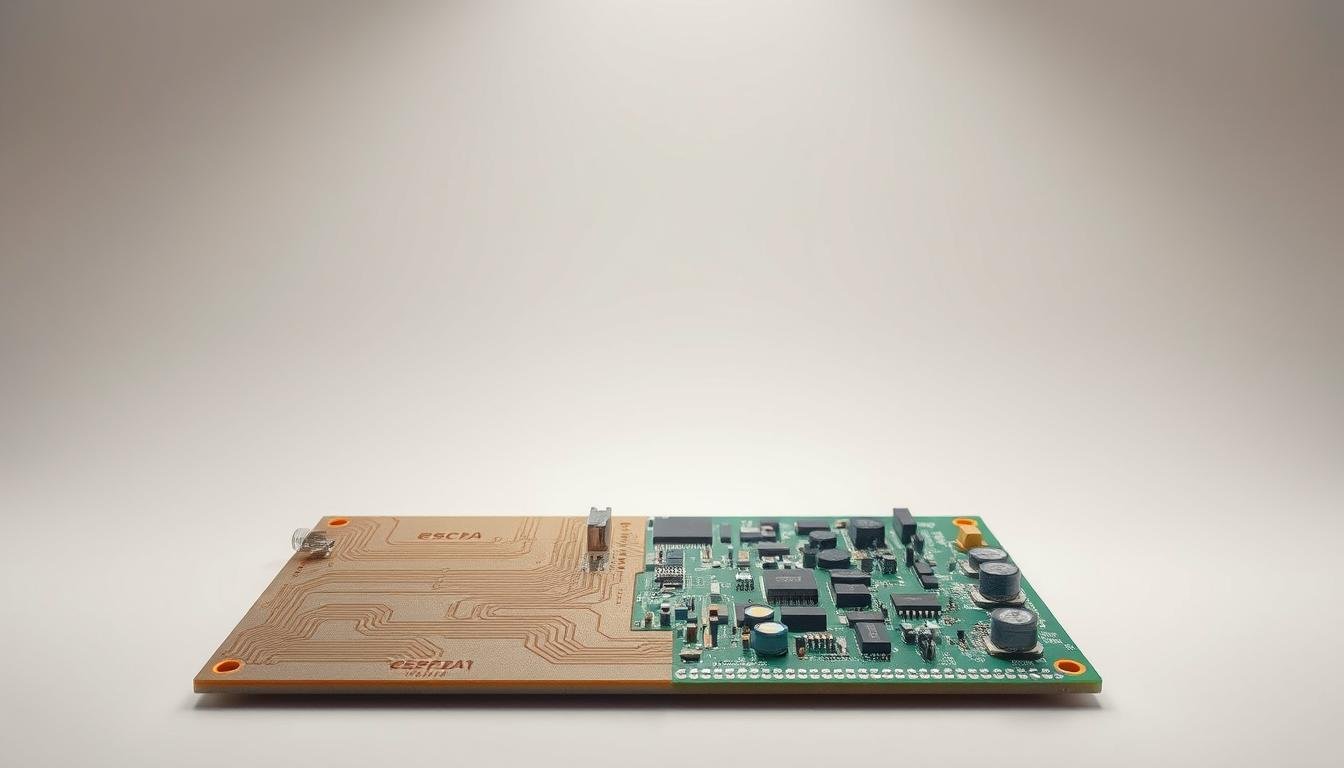
Have you ever wondered what’s inside the electronic devices that power our daily lives? When you peek inside a smartphone or a computer, you’re likely to see a flat, green circuit board with copper lines and chips soldered onto it. But what’s the difference between the bare board and the fully assembled product?
The terms PCB (Printed Circuit Board) and PCBA (Printed Circuit Board Assembly) are often used interchangeably, but they represent different stages in the lifecycle of a circuit board. Understanding this distinction is crucial for engineers, procurement specialists, and anyone involved in electronics manufacturing.
As we explore the world of electronics manufacturing, we’ll clarify how a bare PCB transforms into a functional PCBA through the assembly process, highlighting the distinct characteristics and purposes of each. This understanding is key to ensuring clear communication and proper specification in the industry.
Key Takeaways
- Understanding the distinction between PCB and PCBA is crucial for clear communication in electronics manufacturing.
- A PCB becomes a PCBA after the assembly process, where components are mounted onto the board.
- The terms represent different stages in the lifecycle of a circuit board, impacting functionality and production processes.
- Clear understanding of PCB and PCBA is essential for engineers and procurement specialists.
- The assembly process transforms a bare PCB into a functional PCBA, enhancing its capabilities.
Understanding the Basics of Circuit Boards
Circuit boards are the backbone of electronic devices, and understanding their basics is essential for anyone involved in electronics manufacturing. At its core, a circuit board is a platform that connects and supports various electronic components.
The Evolution of Electronic Circuitry
The journey of electronic circuitry has been remarkable, evolving from simple point-to-point wiring to complex printed circuit boards (PCBs). This transformation has revolutionized electronics manufacturing, enabling the production of smaller, more complex devices. Modern PCBs are fabricated with precision, using substrate materials and copper layers to create pathways for electrical signals.
Why Terminology Matters in Electronics Manufacturing
Precise terminology is crucial in electronics manufacturing, where miscommunication can lead to costly errors. Understanding the difference between a PCB and a PCBA (Printed Circuit Board Assembly) is vital. A PCB is the bare board, while a PCBA is a fully assembled board with components. Clear communication ensures that designers, manufacturers, and end-users are on the same page, reducing the risk of mistakes in procurement, design specifications, and production.
What is a PCB?
At its core, a Printed Circuit Board (PCB) is a flat board made of insulating materials with conductive copper pathways that enable the functioning of electronic components. This foundational platform provides both mechanical support and electrical connections, serving as the “skeleton” of electronic devices.
Definition and Core Components
A PCB typically consists of multiple layers: at minimum, a dielectric substrate and one or more copper layers that form circuit traces. The substrate material is usually a rigid fiberglass epoxy (commonly FR-4 for its flame-retardant properties), though flexible plastic film is used for flexible PCBs. Copper foil is laminated onto the substrate and then selectively etched to create copper traces that connect component pads.
The core components of a PCB include the substrate material, copper layers, solder mask, silkscreen, and various types of vias and pads that facilitate connections. A protective solder mask is applied to insulate and protect the copper traces, with openings where components will be soldered.
Types of PCBs
PCBs come in various types based on the number of layers and their construction:
-
Single-Layer PCBs
These feature copper traces on only one side of the board and are used in simple electronic applications like calculators and LED lighting.
-
Double-Layer PCBs
Offering greater routing density with copper on both sides of the board, these are commonly found in power supplies and industrial controls.
-
Multi-Layer PCBs
These advanced PCBs feature multiple copper layers separated by insulating material and are used in sophisticated devices like smartphones and computers.
The Role of PCBs in Electronics
PCBs play a critical role in modern electronics, enabling the miniaturization and reliability improvements that make today’s electronic devices possible. By providing a structured platform for components to be mounted and connected, PCBs are essential for the functioning of virtually all electronic devices.
What is a PCBA?
In essence, a PCBA is a functional electronic circuit created by assembling components on a PCB. This assembly process transforms a passive PCB into an active electronic system capable of performing specific functions.
Definition and Purpose
A Printed Circuit Board Assembly (PCBA) is the result of mounting and soldering electronic components onto a bare PCB. The purpose of a PCBA is to bring a circuit design to life by integrating all necessary components to perform specific electronic functions, such as processing data or controlling power.
The PCBA is essentially the final product of the assembly process, where a bare PCB is populated with various electronic components, including resistors, capacitors, and integrated circuits (ICs).
Components That Make Up a PCBA
A typical PCBA consists of various components, including active components like ICs, transistors, and diodes, as well as passive components such as resistors, capacitors, and inductors. Additionally, connectors are used to interface with other systems, enabling communication and data transfer.
From PCB to PCBA: The Assembly Process
The transformation of a bare PCB into a functional PCBA involves several sophisticated manufacturing processes. The assembly process includes solder paste application, component placement, reflow soldering, and quality control inspections to ensure the PCBA meets the required specifications.
By understanding the PCBA and its assembly process, we can appreciate the complexity and precision involved in creating functional electronic circuits that power various devices, from smartphones to medical equipment.
The Difference Between a PCB and a PCBA: A Common Point of Confusion
The terms PCB and PCBA are often used interchangeably, but they represent different stages in the electronics production process. A PCB (Printed Circuit Board) is a bare, unpopulated board that provides electrical connections, while a PCBA (Printed Circuit Board Assembly) is a populated PCB with electronic components, forming a functional circuit.
Functional Differences
The functional differences between PCBs and PCBAs are significant. A PCB serves as mechanical support and electrical pathways for components, whereas a PCBA performs a specific electronic function. In other words, a PCB is essentially passive infrastructure, while a PCBA is an active system capable of performing specific tasks. For instance, a PCB is like a highway system without cars, while a PCBA is the same highway system with cars moving on it, fulfilling its purpose.
Physical Differences
Physically, a PCB appears as a flat board with conductive tracks, pads, and holes, whereas a PCBA is a board with various electronic components attached and soldered onto it. The process of manufacturing a PCB involves etching copper layers onto a substrate and applying a solder mask. In contrast, PCBA manufacturing involves placing and soldering components onto the PCB using techniques like Surface Mount Technology (SMT) and through-hole technology.
Terminology Clarification in Industry Context
In the electronics industry, understanding the distinction between PCB and PCBA is crucial for clear communication and accurate project execution. While the terms are sometimes used interchangeably in casual conversation, they have distinct meanings in professional contexts. A PCB is the foundation upon which a PCBA is built, summarized by the formula: PCB + Components + Soldering = PCBA. This sequential relationship highlights the importance of understanding both concepts.
By clarifying the differences between PCBs and PCBAs, we can better appreciate the complexity and nuance involved in electronics manufacturing. Whether you’re a technical professional or a business decision-maker, understanding these distinctions is key to navigating the industry effectively.
PCB Manufacturing Process
As we delve into the world of electronics manufacturing, understanding the PCB manufacturing process becomes crucial. The PCB manufacturing process demands strict requirements, involving multiple complex steps to ensure the final product’s quality, performance, and reliability.
Design Phase
The design phase is a critical initial step in the PCB manufacturing process. Engineers create circuit layouts using specialized CAD software, generating Gerber files that serve as the manufacturing blueprint. This stage is essential for defining the PCB’s functionality and ensuring that it meets the required specifications.
Fabrication Steps
The fabrication steps in PCB manufacturing are chronological and intricate. The process begins with substrate preparation and copper cladding, followed by photoresist application, exposure, development, and etching to create the copper circuit patterns. Precision drilling creates holes for vias and through-hole components, while copper plating establishes electrical connections between different layers of the PCB.
Quality Control in PCB Production
Quality control measures are vital in PCB production to ensure that the manufactured PCBs meet design specifications and industry standards. Automated optical inspection (AOI), electrical testing, and impedance testing are some of the methods used to verify the quality and reliability of the PCBs.
| Stage | Description | Importance |
|---|---|---|
| Design Phase | Circuit layout creation using CAD software | Defines PCB functionality |
| Fabrication Steps | Substrate prep, copper cladding, drilling, plating | Creates PCB structure and connections |
| Quality Control | AOI, electrical testing, impedance testing | Ensures PCB quality and reliability |
PCBA Manufacturing Process
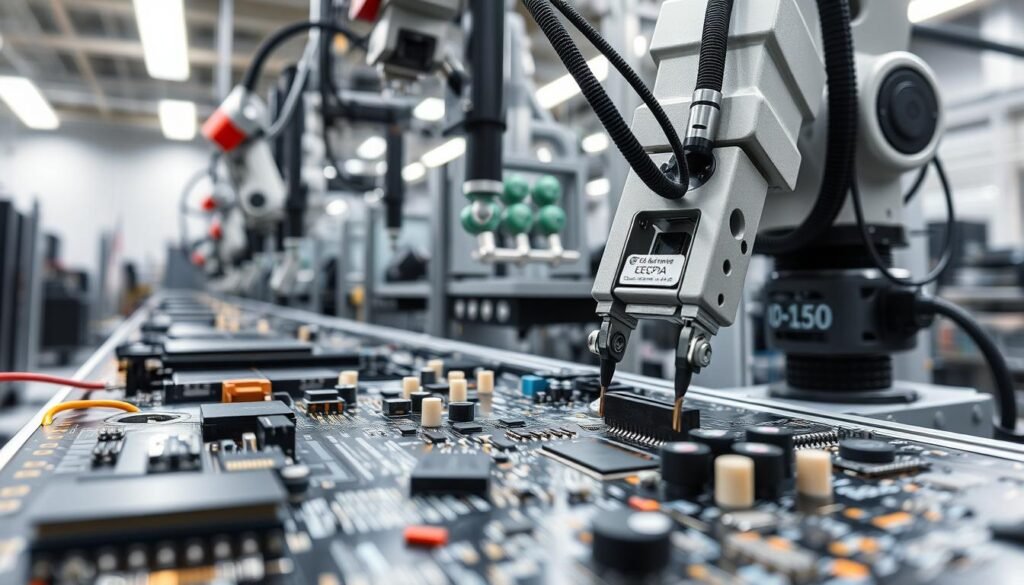
The journey from a bare PCB to a complete PCBA involves multiple precise steps, each requiring specialized equipment and expertise. The PCBA manufacturing process is complex and multifaceted, involving several critical stages to produce a fully functional electronic assembly.
Component Procurement and Preparation
The first step in the PCBA manufacturing process is component procurement and preparation. This involves sourcing the necessary components, verifying their authenticity, and preparing them for assembly. High-quality components are crucial for the overall quality of the final PCBA.
Assembly Techniques
The assembly process involves several techniques, primarily Surface-Mount Technology (SMT) and Through-Hole Technology (THT).
Surface-Mount Technology (SMT)
SMT is a modern assembly technique where components are mounted directly onto the PCB’s surface. The process includes solder paste application, component placement using automated machines, and reflow soldering to create reliable connections.
Through-Hole Technology (THT)
THT is a traditional assembly method where component leads are inserted through holes in the PCB and soldered. This technique provides stronger mechanical connections and is used for certain applications.
Testing and Quality Assurance
After assembly, the PCBA undergoes rigorous testing and quality assurance procedures. This includes Automated Optical Inspection (AOI), X-ray inspection for hidden solder joints, in-circuit testing (ICT), and functional testing to ensure the PCBA operates as designed.
The PCBA manufacturing process transforms a bare PCB into a functional electronic assembly through a series of precise, controlled steps. By leveraging advanced assembly techniques and thorough testing, manufacturers can ensure high-quality PCBAs that meet stringent industry standards.
Key Differences in Design Considerations
In electronic product development, the design stages of PCB and PCBA are pivotal and require distinct approaches. The design workflow for electronic products clearly distinguishes between PCB and PCBA stages. Engineers initiate the process by meticulously designing the PCB layout using Computer-Aided Design (CAD) tools.
PCB Design Priorities
When designing a PCB, several key factors must be considered to ensure optimal performance. These include trace width and spacing, layer stackup planning, impedance control, and thermal management. Additionally, designers must balance electrical requirements, such as signal integrity and power distribution, with mechanical constraints like board size and mounting holes. Design for manufacturability (DFM) considerations are also crucial to ensure that the bare board can be reliably produced.
PCBA Design Priorities
In contrast, PCBA design priorities focus on component selection, placement optimization, and thermal considerations for active components. Design for assembly (DFA) principles are applied to facilitate efficient and reliable manufacturing. PCBA design must also consider factors like component availability, solderability, testability, and rework accessibility. These considerations go beyond the basic PCB layout and are critical for the successful production of the final electronic product.
The interdependence of PCB and PCBA design cannot be overstated. Decisions made at the PCB design stage significantly impact the success of the PCBA manufacturing process and the performance of the final electronic product. By understanding the distinct priorities of each stage, designers and manufacturers can work together to produce high-quality electronic products.
Cost Comparison: PCB vs PCBA
In electronics manufacturing, the distinction between the cost of a bare PCB and a fully assembled PCBA is substantial. The process of converting a bare board into a functional assembly involves various factors that significantly impact the overall cost.
PCB Cost Factors
The cost of a PCB is influenced by several key factors, including board size, layer count, material selection, and manufacturing volume. Standard materials like FR-4 are generally less expensive than specialized substrates. Additionally, the choice of copper weight and surface finish options can also affect the final cost. For instance, a simple, single-layer PCB with a standard finish can be relatively inexpensive, while a multi-layer PCB with heavy copper and specialized finishes can be significantly more costly.
PCBA Additional Expenses
Assembling a PCBA involves additional expenses beyond the cost of the bare PCB. These include the cost of components, assembly labor, and testing procedures. Component costs can vary widely depending on factors like component type, sourcing, and availability. Furthermore, the complexity of the assembly process and the need for specialized equipment can also drive up costs.
Total Cost of Ownership Considerations
When evaluating the total cost of ownership, it’s essential to consider not just the initial production costs but also long-term expenses such as design revisions, rework, warranty claims, and end-of-life recycling. These hidden costs can significantly impact the overall cost of both PCBs and PCBAs. By understanding these factors, manufacturers can make informed decisions to optimize their production processes and reduce costs.
Industry Applications and Use Cases
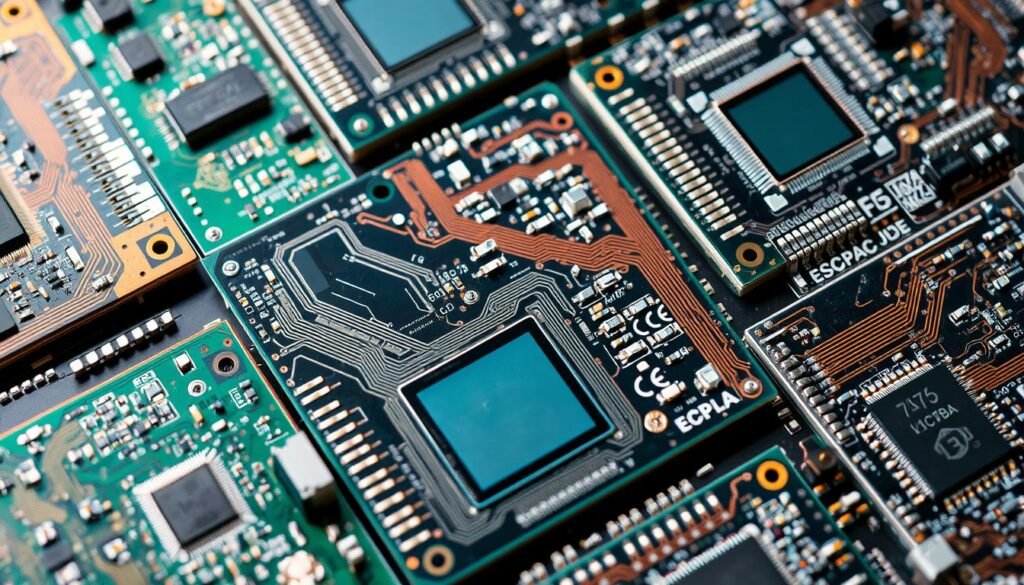
The versatility of PCBs and PCBAs is evident in their widespread adoption across various industries, from consumer electronics to aerospace. These electronic foundations enable countless devices and systems in our modern world.
Consumer Electronics Applications
Consumer electronics, such as smartphones, laptops, TVs, gaming consoles, and appliances, all contain one or several PCBAs. For instance, a smartphone mainboard is a high-density multi-layer PCBA carrying the processor, memory, radios, and sensors. These devices push PCB technology to have fine traces and many layers, and push PCBA technology to place tiny components with high precision.
Industrial and Automotive Uses
Modern vehicles are full of electronics, including engine control units (ECUs), anti-lock brake systems, infotainment systems, sensors, and battery management systems in electric cars, all of which use PCBAs. Automotive PCBAs often must endure wide temperature ranges and vibrations, so they may use thicker PCBs or special materials and a mix of SMT and through-hole for reliability. Similarly, factory equipment, robotics, and industrial controllers use PCBAs for control and power electronics.
Medical and Aerospace Applications
Medical devices, from small implants like pacemakers to large imaging machines (MRI, ultrasound), rely on reliable PCBAs. A pacemaker has a tiny PCBA that must work flawlessly for years inside the body, requiring strict standards on PCB material and assembly quality. For more information on the process of completing a PCBA, visit Mokotechnology. Aerospace systems also demand high-reliability PCBAs that can withstand extreme conditions.
| Industry | Applications | Requirements |
|---|---|---|
| Consumer Electronics | Smartphones, laptops, TVs | High-density, fine traces |
| Automotive | ECUs, infotainment systems | Temperature resistance, vibration endurance |
| Medical | Pacemakers, imaging machines | Biocompatibility, high reliability |
When to Choose PCB vs PCBA Services
To make informed decisions, it’s essential to know when to choose PCB versus PCBA services for your electronics manufacturing needs. The decision between these two services depends on several factors, including your project’s stage, technical complexity, available resources, and timeline constraints.
Scenarios Best Suited for PCB Orders
Ordering bare PCBs is advantageous in certain scenarios. If you’re in the prototyping phase and need to test circuit designs, a bare PCB is the way to go. This approach allows for greater flexibility for design iterations and the ability to perform staged assembly for testing and validation before committing to full production.
Additionally, if you have in-house assembly capabilities, sourcing components separately can be more cost-effective. You’re also likely to choose bare PCBs if you’re building a custom solution with specialized components that require direct control over the assembly process.
| Scenario | Benefits of Choosing Bare PCB |
|---|---|
| Prototyping Phase | Flexibility for design iterations, staged assembly |
| In-house Assembly Capabilities | Cost savings on assembly, control over component sourcing |
| Custom Solutions with Specialized Components | Direct control over assembly, tailored to specific needs |
Scenarios Best Suited for PCBA Orders
On the other hand, PCBA services are ideal for projects that require a turnkey solution ready for integration into your product. If you lack assembly equipment or expertise, or if your design requires specialized assembly techniques such as fine-pitch SMT or BGA, opting for PCBA is the better choice.
Furthermore, PCBA services streamline the supply chain by consolidating component procurement, assembly, testing, and even packaging under a single vendor. This can reduce management overhead and often improve quality through integrated processes.
| Scenario | Benefits of Choosing PCBA |
|---|---|
| Need for Turnkey Solution | Ready-to-use product, reduced management overhead |
| Lack of Assembly Equipment/Expertise | Access to specialized assembly techniques, improved quality |
| Complex Assemblies | Streamlined supply chain, reduced risk of assembly errors |
Common Misconceptions About PCBs and PCBAs
Misconceptions about PCBs and PCBAs are common in the electronics industry, often resulting in miscommunication and procurement errors. The terms PCB (Printed Circuit Board) and PCBA (Printed Circuit Board Assembly) are frequently used interchangeably, but they represent different stages in the lifecycle of a circuit board.
Terminology Confusion in the Industry
Terminology confusion is a significant issue in the electronics industry. Terms like “PCB,” “PCBA,” “board,” and “assembly” are often used imprecisely or interchangeably in casual conversation. This imprecision can lead to misunderstandings between designers, manufacturers, and customers. For instance, a “PCB” refers specifically to the bare board, while a “PCBA” includes the components assembled on the board. Clarifying these terms is essential for accurate communication and successful project outcomes.
Performance and Quality Misconceptions
Several misconceptions surround the performance and quality of PCBs and PCBAs. One common myth is that all PCBs are created equal, ignoring the differences in materials, manufacturing processes, and components used. Another misconception is that higher layer counts in PCBs always result in better performance, which is not necessarily true as it depends on the design and application. Additionally, the assumption that automated assembly is always superior to manual assembly overlooks the complexity of certain circuit requirements.
By understanding these misconceptions and clarifying the terminology used in the industry, we can improve the quality and efficiency of electronics manufacturing projects. Accurate communication about PCBs and PCBAs is crucial for achieving the desired performance and quality in the final product.
Selecting the Right Manufacturing Partner
Choosing the right manufacturing partner is crucial for the success of your PCB and PCBA projects. The decision significantly impacts product quality, cost, and time-to-market. We emphasize the importance of a collaborative relationship with your manufacturing partner, where open communication, mutual trust, and shared quality objectives create a foundation for successful electronic product development and production.
Key Qualifications to Look For
When evaluating potential manufacturing partners, several key qualifications should be considered. Look for manufacturers with industry experience relevant to your specific needs, as well as certifications such as ISO9001 and IPC-A-610, which indicate adherence to industry standards. Advanced technical capabilities and comprehensive quality control processes are also essential. Additionally, consider their supply chain management capabilities and ability to meet your project schedule with flexible turnaround times.
- Industry experience and relevant certifications
- Advanced technical capabilities for complex designs
- Comprehensive quality control processes
- Effective supply chain management
- Flexible turnaround times to meet project schedules
Questions to Ask Potential Manufacturers
To further assess potential manufacturing partners, it’s essential to ask the right questions. Inquire about their design for manufacturability (DFM) support, typical lead times, quality metrics, and communication protocols. Understanding their approach to intellectual property protection is also crucial. By asking these questions, you can gain a clearer understanding of their capabilities and determine whether they are the right fit for your PCB and PCBA manufacturing needs.
Conclusion
As the electronics industry continues to evolve, grasping the fundamentals of PCBs and PCBAs is essential for anyone involved in design, manufacturing, or procurement. Understanding the distinction between PCB and PCBA is crucial, as it impacts every stage of electronics production, from initial design to final assembly.
We’ve explored the fundamental differences between PCBs and PCBAs, clarifying that while a PCB is the bare board with copper traces that provides the foundation, a PCBA is the completed assembly with electronic components that delivers actual functionality. This understanding is vital for effective communication, accurate specification, and successful project outcomes in the electronics industry.
- The manufacturing processes for PCBs and PCBAs differ significantly, with PCB fabrication focusing on creating the bare board and PCBA assembly involving the placement of components onto the PCB.
- Design considerations for PCBs and PCBAs also vary, with PCB design prioritizing the layout of circuit traces and PCBA design focusing on the placement of components and their interaction.
- Selecting the right manufacturing partner is critical, requiring careful evaluation of technical capabilities, quality systems, and collaborative potential.
By considering your specific application requirements, budget constraints, and production timeline, you can make informed decisions about whether to source bare PCBs, assembled PCBAs, or turnkey solutions. Partnering with an experienced manufacturer is key to achieving reliable, high-quality results, whether you need a simple single-layer PCB for a hobby project or a complex multi-layer PCBA for industrial equipment.
In conclusion, understanding the differences between PCBs and PCBAs is not just about terminology; it’s about recognizing the unique roles they play in bringing electronic products to life. As we continue to push the boundaries of what’s possible in electronics, this knowledge will remain fundamental for engineers, procurement specialists, and anyone involved in bringing electronic products from concept to reality.
FAQ
What is the main difference between a PCB and a PCBA?
How do I know if I need a PCB or a PCBA?
What is the manufacturing process for PCBs?
What is involved in the PCBA assembly process?
How do design considerations differ between PCBs and PCBAs?
What are the key cost factors for PCBs and PCBAs?
Can any manufacturer produce both PCBs and PCBAs?
How do I ensure quality in my PCB or PCBA production?
What are some common applications for PCBs and PCBAs?
How do I choose between PCB and PCBA services for my project?
About The Author
