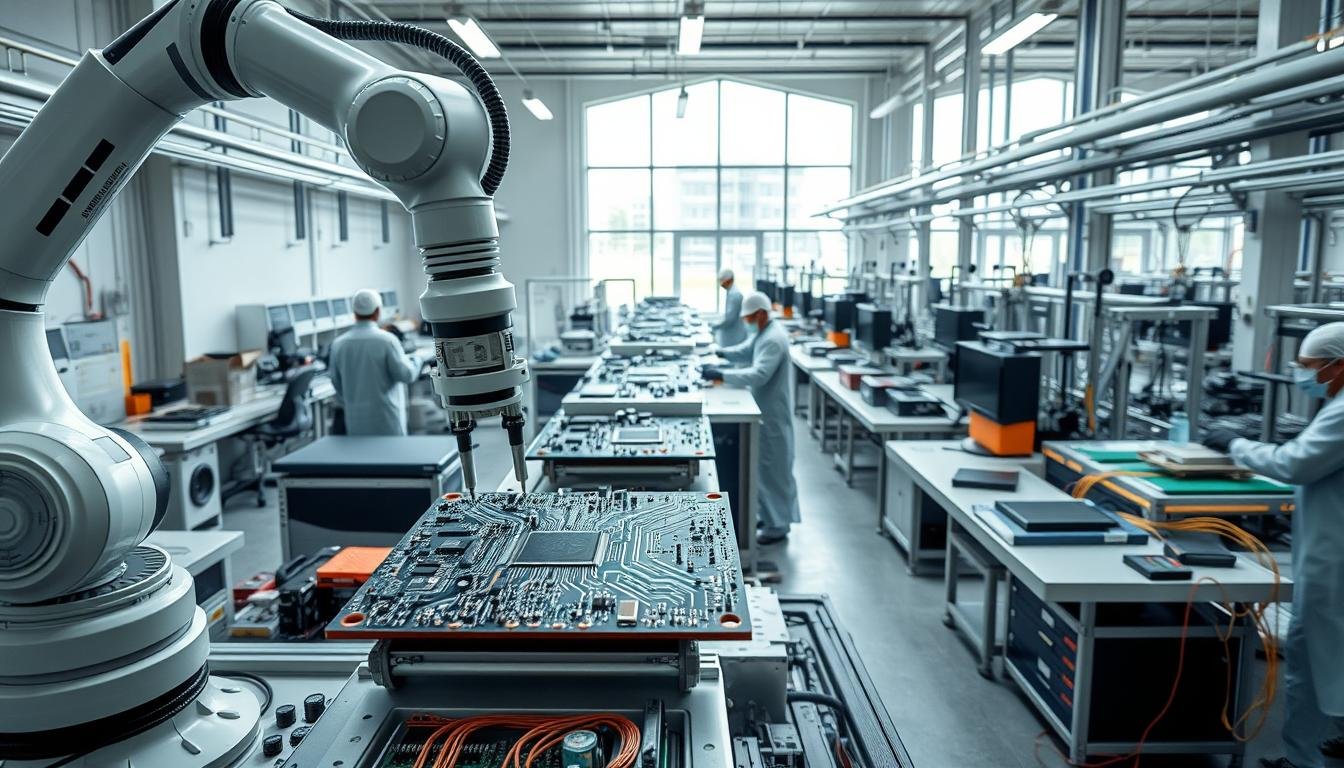
As technology continues to assimilate into every aspect of our lives, concerns are rising about the environmental impacts of various electronic gadgets. Can the electronics manufacturing industry transform to address these growing concerns?
Printed Circuit Boards (PCBs) are a core component of most modern electronics, and their production contributes significantly to electronic waste. According to various studies, the world currently generates over 40 million tons of electronic waste, with PCBs accounting for a substantial portion of this waste.
We’re witnessing a shift towards sustainable electronics manufacturing, driven by the need to reduce environmental degradation and resource depletion. By adopting eco-friendly practices, manufacturers can not only minimize their environmental footprint but also achieve cost savings and improve their brand reputation.
Key Takeaways
- The electronics manufacturing industry is evolving to address environmental concerns through sustainable PCBA manufacturing practices.
- Sustainable practices have become essential for responsible manufacturing in today’s eco-conscious market.
- Traditional PCBA manufacturing processes contribute to environmental degradation and resource depletion.
- Adopting eco-friendly practices can lead to cost savings, improved brand reputation, and compliance with regulations.
- Sustainable electronics manufacturing can transform the industry while maintaining high-quality standards.
The Environmental Impact of Traditional PCBA Manufacturing
The environmental impact of traditional PCBA manufacturing is a pressing concern for the electronics industry. As we continue to rely heavily on electronic devices, the need to understand and mitigate the ecological footprint of their production becomes increasingly important.
Chemical Hazards and Waste Generation
Traditional PCBA manufacturing involves the use of various chemicals, many of which are hazardous to both human health and the environment. The process generates significant amounts of waste, including toxic substances that can contaminate soil and water if not disposed of properly. We examine the substantial waste generated during PCB production, including chemical byproducts and hazardous materials that require specialized disposal. To minimize environmental harm, many manufacturers are now adopting cleaner production techniques and improving their waste management practices.
Energy Consumption and Resource Depletion
The production of PCBs is an energy-intensive process, relying heavily on fossil fuels and contributing to carbon emissions. We analyze how resource-intensive PCB production depletes valuable natural materials, particularly focusing on copper extraction, which requires extensive mining operations that damage ecosystems and biodiversity. For businesses looking to reduce their environmental impact, choosing the right PCB assembly factory is crucial, as it can significantly influence the overall sustainability of the manufacturing process.
Sustainable and Eco-Friendly Practices in PCBA Manufacturing
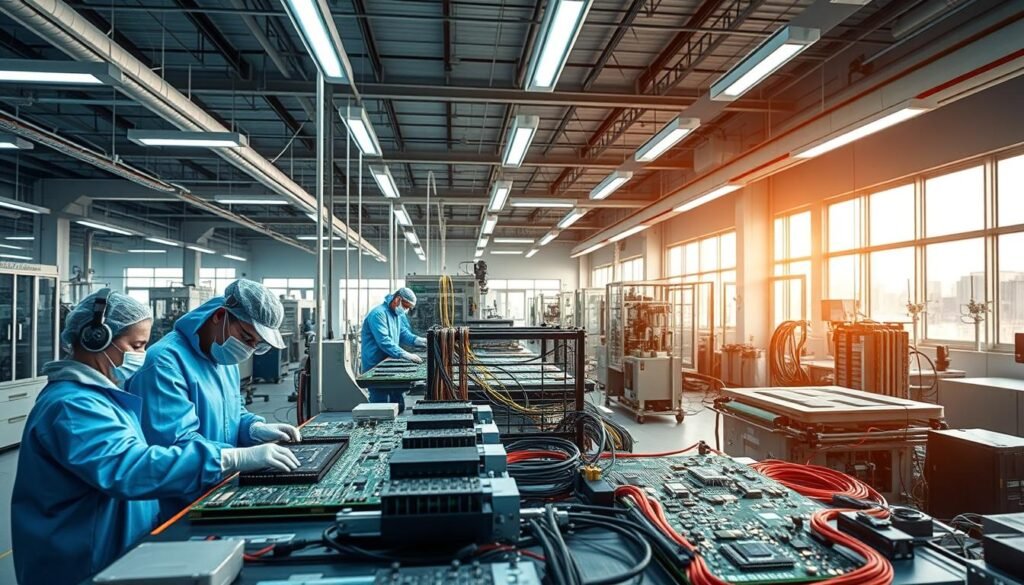
As we continue to navigate the complexities of PCBA manufacturing, it’s becoming increasingly clear that sustainable practices are no longer a choice, but a necessity. The environmental impact of traditional manufacturing processes has led to a significant shift towards eco-friendly practices in the industry.
Implementing Green Manufacturing Processes
We are witnessing a significant transformation in PCBA manufacturing with the adoption of green manufacturing processes. This involves the use of energy-efficient equipment and machinery that reduces power consumption while maintaining or improving production capabilities. By integrating renewable energy sources such as solar, wind, and geothermal power into manufacturing facilities, companies can reduce their carbon footprint and operational costs simultaneously.
Optimizing Chemical Usage and Waste Management
Optimizing chemical usage and waste management is crucial in minimizing the environmental impact of PCBA manufacturing. Manufacturers are now focusing on reducing chemical waste by implementing efficient processes and recycling programs. This not only helps in reducing the environmental footprint but also results in cost savings.
| Chemical Usage Optimization | Waste Reduction Strategies | Environmental Benefits |
|---|---|---|
| Efficient chemical processes | Recycling programs | Reduced environmental footprint |
| Minimal chemical waste | Waste minimization techniques | Cost savings |
Energy-Efficient Production Techniques
Energy-efficient production techniques are being adopted to reduce the energy consumption associated with PCBA manufacturing. Techniques such as low-temperature soldering require less energy while providing reliable connections. Additionally, smart energy management systems optimize power usage throughout production facilities by monitoring consumption patterns and automatically adjusting to maximize efficiency.
“The adoption of energy-efficient production techniques is a critical step towards sustainable PCBA manufacturing. It’s not just about reducing energy consumption, but also about creating a more sustainable and environmentally friendly production process.”
By implementing these sustainable practices, manufacturers can not only reduce their environmental impact but also improve their bottom line. As the industry continues to evolve, we can expect to see even more innovative solutions emerge.
Eco-Friendly Materials for Sustainable PCB Production
The shift towards sustainability in PCB manufacturing is driven by the adoption of eco-friendly materials. As we strive to minimize the environmental footprint of electronic products, the use of sustainable materials in PCB production plays a crucial role. We are witnessing a significant transformation in the electronics industry with the introduction of eco-friendly materials in PCB manufacturing.
Biodegradable Substrates and Alternatives
Traditional PCB substrates are often made from non-renewable resources and can contribute to environmental waste. Biodegradable substrates offer a promising alternative, reducing the ecological impact of PCB production. We are exploring various biodegradable materials, such as plant-based composites, that can replace conventional substrates. These alternatives not only reduce waste but also provide a more sustainable lifecycle for PCBs.
Lead-Free Solder and Non-Toxic Components
The use of lead-free solder and non-toxic components is another critical aspect of eco-friendly PCB production. Lead-free soldering has become a standard practice, reducing the toxicity of electronic waste. We are also seeing a shift towards the use of non-toxic components, which further minimizes the environmental impact of PCBs. By adopting these practices, manufacturers can create more sustainable electronic products.
Recycled and Recyclable Materials
The incorporation of recycled and recyclable materials in PCB production is gaining traction. Copper, a key conductor in PCBs, can be recycled and reused, reducing the need for primary copper extraction. According to a study on eco-friendly printed circuit boards, many OEMs are now considering recycled copper in their PCBs to minimize their carbon footprint. We are also seeing the development of closed-loop recycling systems that enable the recovery and reprocessing of valuable materials from end-of-life products.
- Manufacturers are increasingly incorporating recycled copper, aluminum, and other metals into PCB production, reducing the environmental impact of resource extraction.
- Closed-loop recycling systems are being developed to recover and reprocess valuable materials from end-of-life products.
- Designing PCBs with recyclability in mind facilitates more efficient material recovery at end-of-life, creating a more sustainable product lifecycle.
By adopting eco-friendly materials and practices, we can significantly reduce the environmental impact of PCB production. As the industry continues to evolve, we expect to see further innovations in sustainable materials and manufacturing processes.
Design Strategies for Sustainable Electronics
As we strive towards sustainable electronics, design strategies play a pivotal role in minimizing environmental impact. The way electronic products are designed can significantly influence their recyclability, energy efficiency, and overall ecological footprint.
Modular PCB Architecture for Extended Product Life
We are witnessing a significant shift towards modular designs in PCBA manufacturing, which enables the selective replacement of components during maintenance or upgrades. This approach not only extends the product life but also reduces electronic waste. By assembling PCBs for quicker disassembly, manufacturers can facilitate easier component separation during recycling or refurbishment.
- Modular designs allow for the replacement of faulty components, reducing the need for complete product disposal.
- Easier disassembly simplifies the recycling process, making it more efficient and cost-effective.
Design for Disassembly and Recycling
Design for disassembly is a critical strategy that manufacturers are adopting to enhance the recyclability of their products. This involves using standardized fasteners, avoiding permanent adhesives, and clearly marking materials for identification during recycling. By designing with material compatibility in mind, manufacturers can prevent contamination during recycling processes, thereby increasing the purity and value of recovered materials.
- Using standardized fasteners simplifies the disassembly process.
- Avoiding permanent adhesives facilitates the separation of components.
- Clear labeling of materials aids in their identification and sorting during recycling.
Furthermore, manufacturers are creating comprehensive documentation and labeling systems that provide recyclers with critical information about material composition and disassembly procedures. Industry collaborations and standardization efforts are also underway to create consistent design for recycling guidelines across the electronics manufacturing sector.
By embracing these design strategies, manufacturers can significantly reduce electronic waste, promote recycling, and move towards a more sustainable future.
Conclusion: The Future of Sustainable PCBA Manufacturing
As we look to the future, it’s clear that sustainable practices in PCBA manufacturing are no longer a choice but a necessity. The electronics industry is embracing emerging trends that prioritize environmental responsibility and technological advancement.
The circular economy model is gaining traction, with manufacturers designing products for reuse, repair, and recycling, minimizing electronic waste and conserving resources. The integration of AI and blockchain technologies is also opening up new avenues for sustainable manufacturing, enhancing energy efficiency and supply chain transparency.
By adopting sustainable practices, manufacturers can drive innovation, reduce costs, and enhance their brand reputation. As the industry continues to evolve, it’s essential for manufacturers to stay ahead of the curve, embracing new technologies and recycling programs to remain competitive.
FAQ
What are the benefits of using biodegradable substrates in PCB production?
How do green manufacturing processes reduce energy consumption?
What is the significance of lead-free solder in sustainable electronics?
How does modular PCB architecture contribute to sustainability?
What role do recycling programs play in minimizing electronic waste?
How can manufacturers optimize chemical usage during the PCB etching process?
What are the advantages of designing electronics for disassembly and recycling?
About The Author
