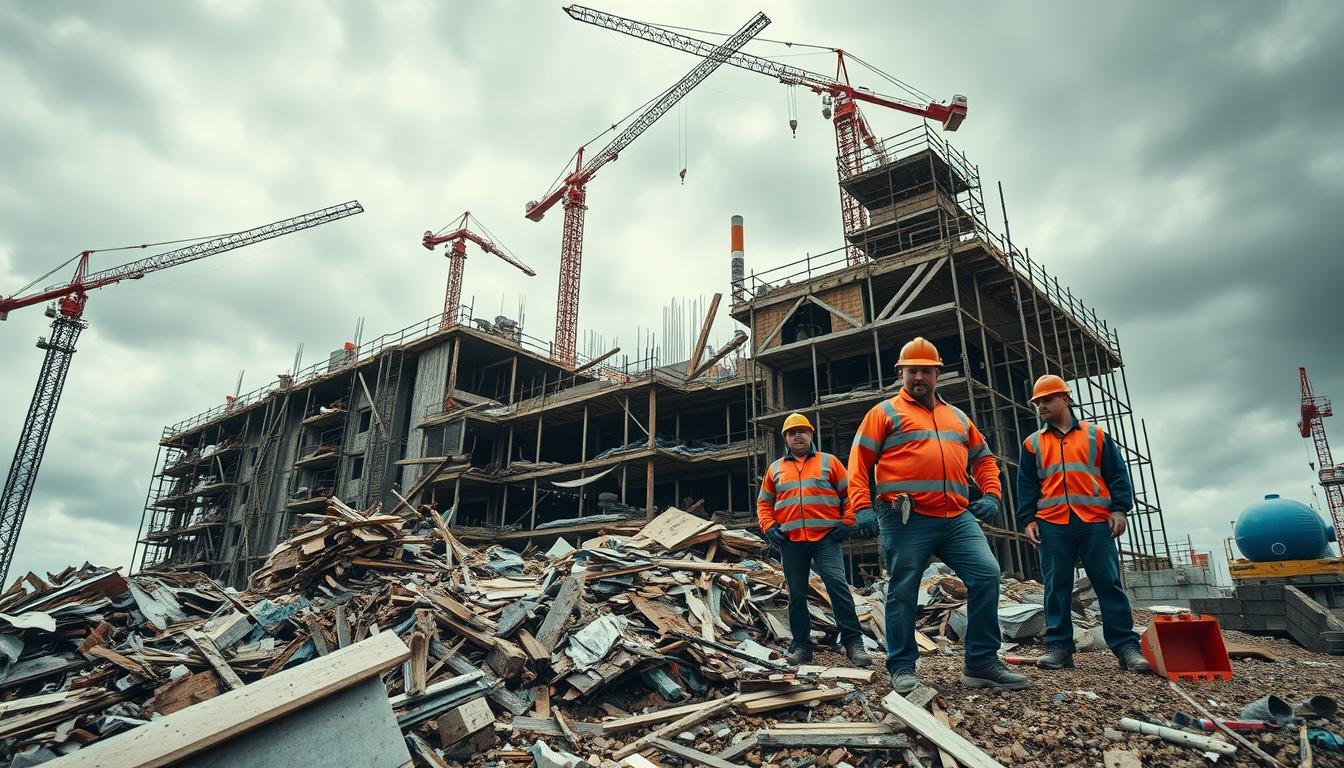
Are costly project delays and budget overruns due to rework eating into your construction project’s profitability? We’re about to explore the significant financial and operational implications of rework across the construction industry.
Rework in construction refers to the need to redo tasks that weren’t done correctly the first time, encompassing errors in design, workmanship, communication, and planning. This can have far-reaching consequences, including delays, eroded client trust, and disrupted schedules.
Industry studies show that rework can account for 3-12% of a project’s total costs, significantly impacting the bottom line. By understanding the true cost of rework, we can highlight the importance of getting it right the first time.
Key Takeaways
- Rework represents a significant challenge in the construction industry, with substantial financial and operational implications.
- The ripple effects of rework extend beyond just redoing tasks, impacting project timelines and client relationships.
- Prevention strategies are essential investments to mitigate the costs associated with rework.
- Understanding the true cost of rework requires considering long-term impacts on business reputation and market competitiveness.
- Getting work right the first time is increasingly critical in today’s competitive business landscape.
Understanding Rework: Definition and Significance
Rework is a multifaceted challenge that demands attention and action to reduce its occurrence and mitigate its consequences in the construction industry. It is essential to comprehend the nature and implications of rework to develop effective strategies for its minimization.
What Constitutes Rework in Different Industries
Rework varies across industries but generally refers to the process of redoing tasks or activities that were not done correctly the first time. In construction, rework can result from design errors, poor workmanship, or changes in project scope. Effective project management is critical in minimizing rework by ensuring that all stakeholders are aligned and that quality control measures are in place.
Why Rework Is a Persistent Industry Challenge
Several factors contribute to the persistence of rework in the construction industry. These include:
- The complexity of modern projects and the numerous stakeholders involved.
- Aggressive deadlines that lead to rushed work, increasing the likelihood of errors.
- Siloed organizational structures that contribute to communication breakdowns.
- Evolving client requirements and scope changes throughout project lifecycles.
- The challenge of balancing quality with speed and cost considerations.
| Factors Contributing to Rework | Impact on Projects |
|---|---|
| Complexity and multiple stakeholders | Increased likelihood of miscommunication and errors |
| Aggressive deadlines | Rushed work leading to mistakes |
| Siloed organizational structures | Communication breakdowns and misaligned expectations |
By understanding these factors, construction industry stakeholders can develop targeted strategies to mitigate rework and improve project outcomes.
The True Cost of Rework: Why Getting It Right the First Time Matters

In the construction industry, rework is a persistent challenge that directly affects project profit margins. “Rework is a silent killer of profitability,” as it not only inflates project costs but also jeopardizes business sustainability. We will explore the multifaceted costs associated with rework and its broader implications on project management and quality.
Direct Financial Costs of Rework
The direct financial costs of rework are a significant concern for project managers. Rework directly erodes profitability by inflating project costs. This can lead to a situation where a potentially profitable project becomes a break-even or loss-generating endeavor, especially in industries with thin profit margins. The financial implications are far-reaching, with rework costs potentially pushing projects into financial distress if not managed effectively.
Hidden and Indirect Costs
Beyond the direct financial costs, rework also incurs hidden and indirect costs that can further strain project finances. These include costs associated with delays, resource reallocation, and potential contractual penalties. Moreover, rework can lead to cash flow disruptions, threatening business sustainability, particularly for smaller organizations with limited financial reserves.
Impact on Profit Margins and Business Sustainability
The impact of rework on profit margins and business sustainability cannot be overstated. As rework transforms profitable projects into less viable ones, it complicates competitive bidding processes. Companies must factor in potential rework costs, which can price them out of market opportunities. Furthermore, recurring rework issues can signal operational inefficiencies to potential investors or acquirers, affecting long-term business valuation. As a result, it is crucial for businesses to prioritize quality and minimize rework to ensure sustainable revenue streams.
As emphasized by industry experts, “Getting it right the first time is not just a mantra; it’s a business imperative.” By understanding the true cost of rework and implementing effective strategies to mitigate it, businesses can improve their bottom line and enhance their competitiveness in the market.
Common Causes of Rework Across Industries
Understanding the root causes of rework is crucial for industries looking to minimize costs and maximize efficiency. Rework can arise from various factors, impacting project timelines and budgets.
Design and Planning Errors
Errors in design and planning phases can lead to significant rework. In construction, for instance, incorrect blueprints or miscalculations can result in costly adjustments later on. Ensuring meticulous planning and design can mitigate these issues.
Communication Breakdowns
Effective communication is vital in any project. Breakdowns in communication can lead to misunderstandings, mistakes, and ultimately, rework. Implementing robust communication protocols can help prevent such issues.
Quality Control Failures
Quality control problems often arise due to insufficient oversight during construction. This can lead to mistakes such as substandard installations and inadequate attention to detail, necessitating costly rework. Strengthening quality control measures is essential to preventing these failures.
Some common issues that lead to rework include insufficient inspection protocols, inadequate testing methodologies, and pressure to meet deadlines, which can lead to quality shortcuts. Unclear quality standards and lack of accountability in control processes also contribute to the problem.
By addressing these causes, industries can reduce the incidence of rework and improve overall project efficiency. This involves enhancing quality assurance, improving communication, and ensuring rigorous control over construction processes.
Beyond Financial Impact: The Ripple Effects of Rework

The true cost of rework is not limited to financial expenses; it also encompasses schedule delays, reputational damage, and decreased team morale. Rework can have a cascading effect on project management, influencing various aspects of a project’s lifecycle.
Schedule Disruptions and Timeline Extensions
Rework often leads to significant schedule disruptions, causing delays that can extend project timelines. According to a study on construction rework, such delays can have a ripple effect, impacting not just the immediate project but also subsequent projects and overall business operations.
Reputation Damage and Client Relationships
Repeated instances of rework can damage a company’s reputation and strain client relationships. When projects are consistently delayed or require significant rework, clients may lose trust in the service provider, potentially leading to lost business opportunities.
Team Morale and Productivity Consequences
Rework can significantly affect team morale and productivity. When teams must redo work they’ve already completed, it can create frustration, burnout, and decreased motivation. This can lead to decreased productivity beyond just the rework tasks themselves, as team momentum and focus are disrupted across projects.
To mitigate these effects, it’s essential to address the root causes of rework and implement strategies to minimize its occurrence. By doing so, teams can maintain their morale, and projects can be completed on time, preserving client trust and company reputation.
Strategies to Minimize Rework and Improve First-Time Quality
Minimizing rework and ensuring first-time quality are critical for the success of construction projects, requiring a multifaceted approach. We must adopt a combination of strategic planning, effective communication, and continuous improvement to achieve this goal.
Pre-Project Planning and Quality Assurance
Effective pre-project planning is the foundation of minimizing rework. This involves thorough quality assurance planning to identify potential issues before they arise. Utilizing quality assurance planning tools can significantly enhance this process.

Effective Communication Protocols
Clear and consistent communication is vital for preventing misunderstandings that can lead to rework. Implementing effective communication protocols ensures that all stakeholders are aligned and informed throughout the project lifecycle.
Continuous Training and Skill Development
Investing in the workforce through continuous training and skill development is crucial. This includes technical skills training, quality awareness programs, lessons-learned sessions, mentorship programs, and cross-training initiatives. By enhancing the capabilities of our team members, we can significantly reduce the likelihood of rework.
- Technical Skills Training: Ensures team members have the necessary capabilities to execute work correctly the first time.
- Quality Awareness Programs: Foster a culture where excellence is valued and quality is everyone’s responsibility.
- Lessons-Learned Sessions: Capture improvement opportunities for immediate implementation after project phases or milestones.
- Mentorship Programs: Pair experienced practitioners with newer team members to transfer knowledge and best practices.
- Cross-Training Initiatives: Build versatility in teams and improve understanding of how individual work affects the broader project.
By implementing these strategies, we can minimize rework, improve first-time quality, and enhance overall project efficiency.
Technological Solutions for Preventing Rework
We recognize that rework is a persistent challenge in construction, and technology offers a promising path forward. By harnessing the power of data and technology, we can significantly reduce the incidence of rework, thereby improving project outcomes.
Digital Tools for Project Management and Quality Control
Digital tools, such as construction management software, are revolutionizing the way we manage construction projects. These tools enable real-time monitoring, enhanced collaboration, and streamlined quality control processes, all of which contribute to minimizing rework.
Some of the key features of these digital tools include:
- Predictive analytics to identify potential issues before they arise
- Real-time monitoring systems to track quality metrics and flag potential problems
- Root cause analysis tools to help organizations address systemic issues
Data Analytics for Identifying Rework Patterns
Data analytics plays a crucial role in identifying patterns that lead to rework. By analyzing historical project data, we can uncover trends and correlations that inform preventive strategies. This information is invaluable in helping us improve our construction process and reduce the likelihood of rework.
Some of the ways data analytics can help include:
- Performance dashboards that provide visibility into quality metrics across projects
- Machine learning algorithms that identify subtle patterns and relationships that human analysis might miss
Conclusion
Ultimately, minimizing rework is crucial for construction projects to succeed. The pervasive issue of construction rework and quality control exerts a significant toll on the construction industry, impacting both project economics and reputation. As we’ve discussed, the true cost of rework extends far beyond direct financial impacts, creating ripple effects throughout organizations and projects.
By investing in quality processes, effective communication, and appropriate technologies, organizations can minimize rework construction and improve overall quality. According to a study on the Impact of Rework on Construction, understanding the causes and consequences of rework is essential for reducing its occurrence. By doing so, they can gain competitive advantages through improved efficiency, higher quality, and stronger client relationships, ultimately reducing costs and saving time.
FAQ
What are the primary causes of rework in construction projects?
How can effective communication protocols reduce rework?
What role does pre-project planning play in minimizing rework?
How can digital tools help in preventing rework?
What is the impact of rework on project timelines and schedules?
How can data analytics help in identifying rework patterns?
What are the benefits of continuous training and skill development in reducing rework?
How does rework affect team morale and productivity?
About The Author
