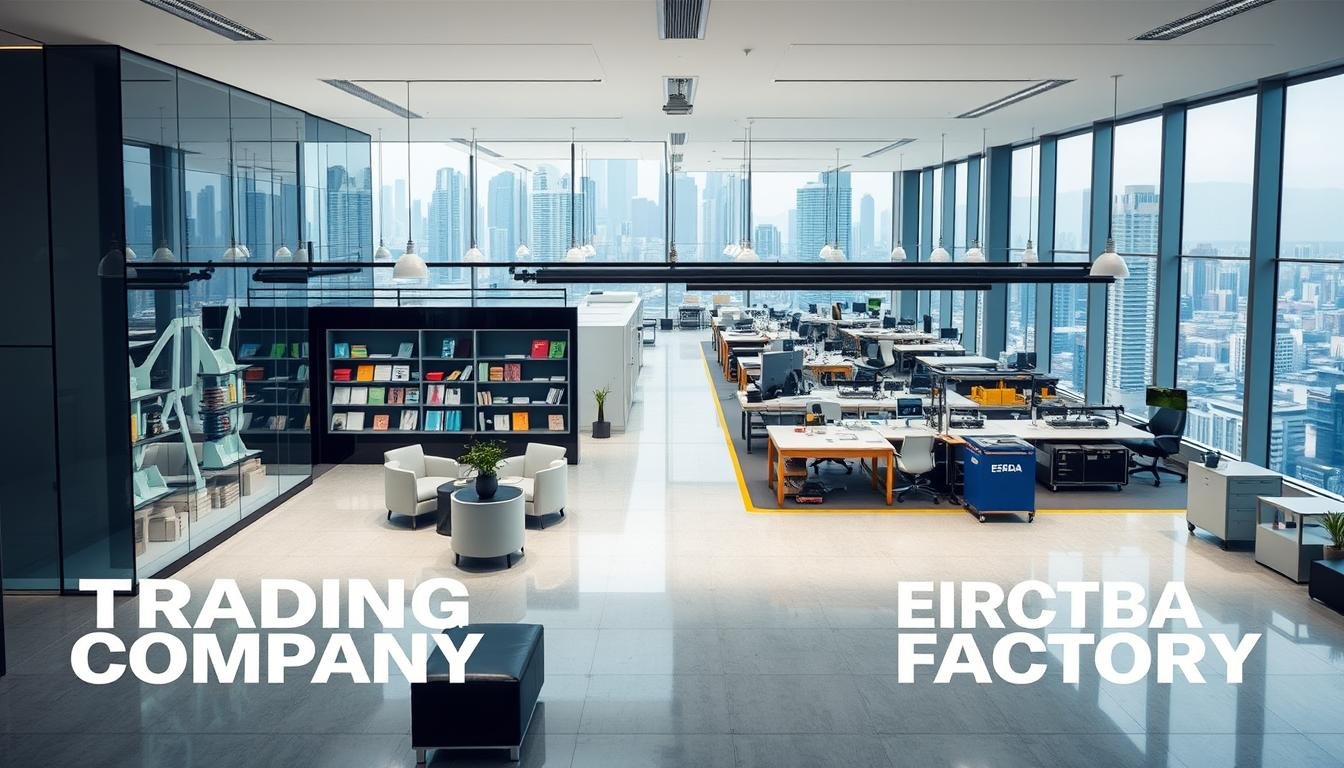
When it comes to electronics manufacturing, one crucial decision can make or break your business: whether to partner with a trading company or work directly with a factory. This choice significantly impacts your product quality, pricing, and overall supply chain efficiency.
As business decision-makers, you’re likely no strangers to the complexities of sourcing. But are you leveraging the best approach for your needs? We explore the critical differences between these two sourcing options and their implications for your business operations.
By examining the strengths and weaknesses of each option, we aim to guide you toward an informed decision that aligns with your production goals and long-term strategy.
Key Takeaways
- Understand the fundamental differences between trading companies and direct factories.
- Learn how each sourcing option affects product quality and pricing.
- Discover the impact on your supply chain management and communication processes.
- Identify scenarios where each option is the optimal choice.
- Gain insights to make an informed decision aligning with your business strategy.
Understanding Trading Companies and Direct Factories
To make informed sourcing decisions, it’s vital to comprehend the roles of trading companies and direct factories. These two entities play distinct roles in the supply chain, and understanding their differences is crucial for businesses looking to source products efficiently.
What is a Trading Company?
Atrading companyis a business entity that specializes in the buying and selling of goods rather than engaging in manufacturing. These companies act as intermediaries in the supply chain, connectingmanufacturerswith various types of buyers, including retailers, wholesalers, and end consumers. Their primary function is to sourceproductsfrom multiplemanufacturers, manage inventory, and distribute these products to market efficiently. By leveraging their extensive networks and industry expertise,trading companiessimplify the procurement process for buyers and providemanufacturerswith access to a broader market.
What is a Direct Factory?
Adirect factory, on the other hand, is a manufacturing entity that handles the entire production process from raw materials to finished products. This means they have control overproductquality and production specifications. Direct factories specialize in specificproductcategories where they have developed expertise, allowing them to offer high-quality products with customized specifications.
| Characteristics | Trading Companies | Direct Factories |
|---|---|---|
| Role in Supply Chain | Intermediaries between manufacturers and buyers | Manufacturers handling production from raw materials to finished goods |
| Product Range | Typically offer a broader range of products sourced from multiple manufacturers | Specialize in specific product categories with customized specifications |
| Control Over Production | Limited control over production processes | Full control over production quality and specifications |
Key Differences Between Trading Companies and Direct Factories
In the realm of product sourcing, trading companies and direct factories exhibit fundamental differences that businesses must consider. These differences impact various aspects of the sourcing process, from production capabilities to product range and business models.
Production Capabilities
Manufacturers typically operate from large production facilities equipped with specialized machinery and technology designed for mass production. These facilities often house advanced equipment such as CNC machines, assembly lines, molding machines, and robotics, enabling them to produce goods efficiently and at scale. In contrast, trading companies do not have production facilities; instead, they rely entirely on third-party manufacturers to produce the goods they sell.
This fundamental difference in production capabilities affects the control over the manufacturing process. Factories maintain control over the entire process, ensuring quality and consistency, while trading companies coordinate between multiple production facilities, which can lead to variability in product quality.
Business Models
The business models of trading companies and direct factories differ significantly. Trading companies generate revenue through markups on products they source from manufacturers, while factories profit directly from their manufacturing operations. This difference impacts pricing structures, with factories potentially offering more competitive pricing due to the absence of intermediary markups.
- Trading companies: Revenue through markups, diverse product catalogs.
- Direct factories: Profit from manufacturing, specialized product categories.
Product Range and Specialization
Trading companies typically offer diverse product catalogs sourced from multiple manufacturers, providing a one-stop-shop for buyers. In contrast, factories focus on specialized product categories where they’ve developed technical expertise, potentially offering higher quality and customization options within their niche.
The differences in product range and specialization between trading companies and direct factories impact the buyer’s ability to source products. While trading companies offer variety, factories provide depth and expertise in specific product categories.
Advantages of Working with Trading Companies
For businesses navigating the complexities of international sourcing, trading companies present a compelling option with several key advantages. One of the primary benefits is their ability to accommodate the needs of businesses with varying order sizes and requirements.
Lower Minimum Order Quantities
Trading companies often have existing relationships with manufacturers, enabling them to negotiate lower minimum order quantities (MOQs). This flexibility is particularly beneficial for businesses with lower volume requirements or those testing new products in the market. By working with a trading company, businesses can avoid the stringent MOQs typically imposed by manufacturers, allowing for more agile and responsive product sourcing.
Better Communication and Language Support
Effective communication is crucial in international trade, and trading companies excel in this area due to their stronger language capabilities and customer service orientation. They act as a liaison between the buyer and the manufacturer, ensuring that communication is clear and efficient. This support is invaluable for businesses without dedicated procurement teams or those unfamiliar with the local language, facilitating smoother transactions and reducing the risk of misunderstandings.
Product Variety and One-Stop Shopping
Trading companies offer the convenience of one-stop shopping, allowing businesses to source multiple product categories through a single point of contact. This simplifies the procurement process, as businesses do not need to manage relationships with several specialized factories. By consolidating their sourcing needs with a trading company, businesses can streamline their operations, reduce administrative burdens, and potentially lower costs through consolidated shipping and handling.
In summary, working with trading companies provides businesses with flexibility in order quantities, enhanced communication, and the convenience of sourcing a wide range of products from a single supplier. These advantages make trading companies an attractive option for businesses looking to simplify their international sourcing processes.
Disadvantages of Working with Trading Companies

The use of trading companies in your supply chain can introduce several disadvantages, including increased costs and limited technical knowledge. While they may offer convenience and a range of products, these benefits come with significant drawbacks.
Higher Pricing Due to Markups
One of the primary disadvantages of working with trading companies is the higher pricing due to markups. When you work directly with a manufacturer, you get the best possible price, as there is no middleman. However, when you go through a trading company, you have to pay them a commission on top of what you are already paying the manufacturer. This means your overall costs will be significantly higher, affecting your profit margins, especially for businesses with price-sensitive products.
Limited Technical Expertise
Trading companies typically focus on sales and logistics rather than deep product knowledge or manufacturing processes. This limited technical expertise can be a significant disadvantage, particularly for businesses requiring highly customized products or those where technical precision and manufacturing knowledge are critical success factors.
Less Control Over Production
Working with trading companies can result in reduced control over the production process, including limited visibility into manufacturing operations and potential quality control challenges. These intermediaries can sometimes create communication barriers between the end customer and the actual manufacturer, potentially leading to misunderstandings about product specifications.
Advantages of Working with Direct Factories
When considering a manufacturing partner, understanding the benefits of working directly with a factory is crucial. We will explore how direct factories can offer significant advantages over traditional trading companies, enhancing your business’s efficiency and product quality.
Lower Pricing and Better Margins
Working directly with a factory eliminates the markups added by intermediaries in the supply chain, resulting in lower pricing and better profit margins for your business. By dealing in larger volumes, Original Equipment Manufacturer (OEM) factories can offer more competitive pricing compared to trading companies. This cost-saving advantage is particularly beneficial for businesses with high-volume orders.
Direct Communication with Manufacturers
Direct communication with the actual manufacturers ensures faster response times to technical questions and more accurate information about production capabilities and timelines. This direct line of communication helps in avoiding misunderstandings and ensures that your specific requirements are met, leading to higher quality products and more efficient production processes.
Greater Customization Options
Direct factories offer greater customization options and flexibility in product development, allowing businesses to create truly differentiated products tailored to specific market needs. By working closely with the manufacturer, businesses can gain deeper insights into the manufacturing process, enabling better quality control and more informed decision-making about product specifications.
Disadvantages of Working with Direct Factories
When considering direct factories for product manufacturing, several disadvantages come to the forefront. While direct factories can offer cost savings and direct communication with manufacturers, there are challenges that businesses must navigate.
Higher Minimum Order Requirements
One significant disadvantage of working with direct factories is the typically higher minimum order requirements. These can be prohibitive for smaller businesses or those testing new products in the market. For instance, many factories have minimum order quantities that must be met, which can strain resources and limit flexibility.
Potential Communication Challenges
Communication challenges are another significant drawback. Language barriers, time zone differences, and cultural misunderstandings can complicate the manufacturing process. We have seen instances where communication problems have led to delays and increased costs. Ensuring clear and effective communication is crucial when working with overseas factories.
Limited Product Range
Direct factories often specialize in specific product categories, resulting in a limited product range compared to trading companies. This can require businesses to manage relationships with multiple factories when sourcing diverse products. Consequently, this can increase complexity and administrative burdens.
To mitigate these disadvantages, businesses must carefully assess their needs and capabilities. Working with direct factories requires a thorough understanding of production processes and communication strategies. By being aware of these challenges, companies can better navigate the complexities of international sourcing.
How to Choose Between a Trading Company and a Direct Factory
The decision to work with a trading company or a direct factory hinges on understanding your specific business requirements. Whether you should partner with a trading company, manufacturer, or import agent depends on the specific needs of your business.
Assessing Your Order Volume and Requirements
One of the primary factors in deciding between a trading company and a direct factory is your order volume. Trading companies are typically more suitable for smaller orders of commonly sold goods, as they can provide the necessary flexibility and lower minimum order quantities. On the other hand, direct factories are more economical for larger volumes, as they can offer better pricing for bulk orders.
- Evaluate your typical order size and frequency.
- Consider the product range and variety you need.
- Assess whether your order volume aligns with the capabilities of trading companies or direct factories.
Evaluating Your Technical Knowledge and Support Needs
Your internal technical knowledge and support requirements also play a crucial role in this decision. If you have the expertise to work directly with factories, you can benefit from lower pricing and greater customization options. However, if you lack the technical knowledge or resources, a trading company can provide the necessary support and guidance.
- Assess your team’s technical capabilities and experience.
- Determine the level of support you need for sourcing and manufacturing.
- Consider whether a trading company can provide the support you lack.
Considering Your Timeline and Budget
Your timeline and budget are also critical factors. Trading companies often have more flexible lead times and can handle smaller, more varied orders, which can be beneficial if you need products quickly or have changing demand. Direct factories, while potentially more cost-effective for large orders, may have longer lead times and more rigid production schedules.
By carefully assessing your order volume, technical knowledge, timeline, and budget, you can make an informed decision that aligns with your business objectives. We recommend evaluating these factors comprehensively to ensure you select the manufacturing partner that best meets your needs.
How to Identify Whether You’re Working with a Trading Company or a Factory

Understanding whether your supplier is a trading company or a manufacturer is key to avoiding potential misrepresentations. When sourcing products, it’s crucial to differentiate between these two entities to ensure you’re getting the best deal and the quality you expect.
Researching Company Background and Facilities
To verify if you’re dealing with a trading company or a factory, start by researching their background and facilities. Check their business registration documents and look for any certifications that indicate manufacturing capabilities. A visit to their facilities, either virtually or in-person, can also provide insights into their operations. Look for production equipment and a clear organizational structure, which are typically indicative of a manufacturing facility.
Analyzing Product Range and Specialization
Another effective way to determine the nature of your supplier is by analyzing their product range. Trading companies typically offer a diverse range of products, often unrelated to each other. In contrast, manufacturers usually specialize in a specific product category or production process. If the supplier’s product catalogue includes a wide variety of unrelated items, it’s likely a trading company. Conversely, a limited range of similar products suggests a manufacturer.
| Characteristics | Trading Company | Direct Factory |
|---|---|---|
| Product Range | Diverse, unrelated products | Limited, specialized products |
| Manufacturing Facilities | No or limited production equipment | Advanced production equipment |
| Business Model | Intermediary between buyers and suppliers | Produces goods directly |
Asking the Right Questions
To further clarify whether you’re dealing with a trading company or a factory, ask strategic questions. Inquire about their production capabilities, lead times, and quality control processes. Manufacturers should be able to provide detailed information about their production processes and quality assurance measures. Trading companies, on the other hand, might not be able to offer the same level of detail regarding manufacturing specifics.
Conclusion
Ultimately, the choice between a trading company and a direct factory depends on your business needs and capabilities. We have explored the key differences between these two options, highlighting their respective advantages and disadvantages in terms of product sourcing, manufacturing, and supply chain management.
There is no universally “better” option; the optimal choice hinges on your specific business requirements, resources, and long-term manufacturing strategy. For businesses looking to navigate these choices effectively, we recommend starting with a thorough vetting process, requesting necessary documentation, and establishing clear expectations. For more insights on how to make an informed decision, visit our page on why choose us for your manufacturing needs.
A hybrid approach can also be beneficial, beginning with a trading company for smaller orders before transitioning to direct factory relationships as volumes increase. As global supply chain trends continue to evolve, understanding these dynamics will be crucial for making decisions that remain viable in the future.
FAQ
What are the primary differences in product range between trading companies and direct factories?
How do minimum order quantities vary between trading companies and direct factories?
What are the implications of working with a trading company versus a direct factory in terms of quality control?
Can trading companies provide the same level of customization as direct factories?
What are the potential communication challenges when working with direct factories?
Are there any benefits to using a trading company for small or prototype orders?
How can buyers verify whether they are working with a trading company or a direct factory?
What factors should be considered when deciding between a trading company and a direct factory for a specific order?
About The Author
