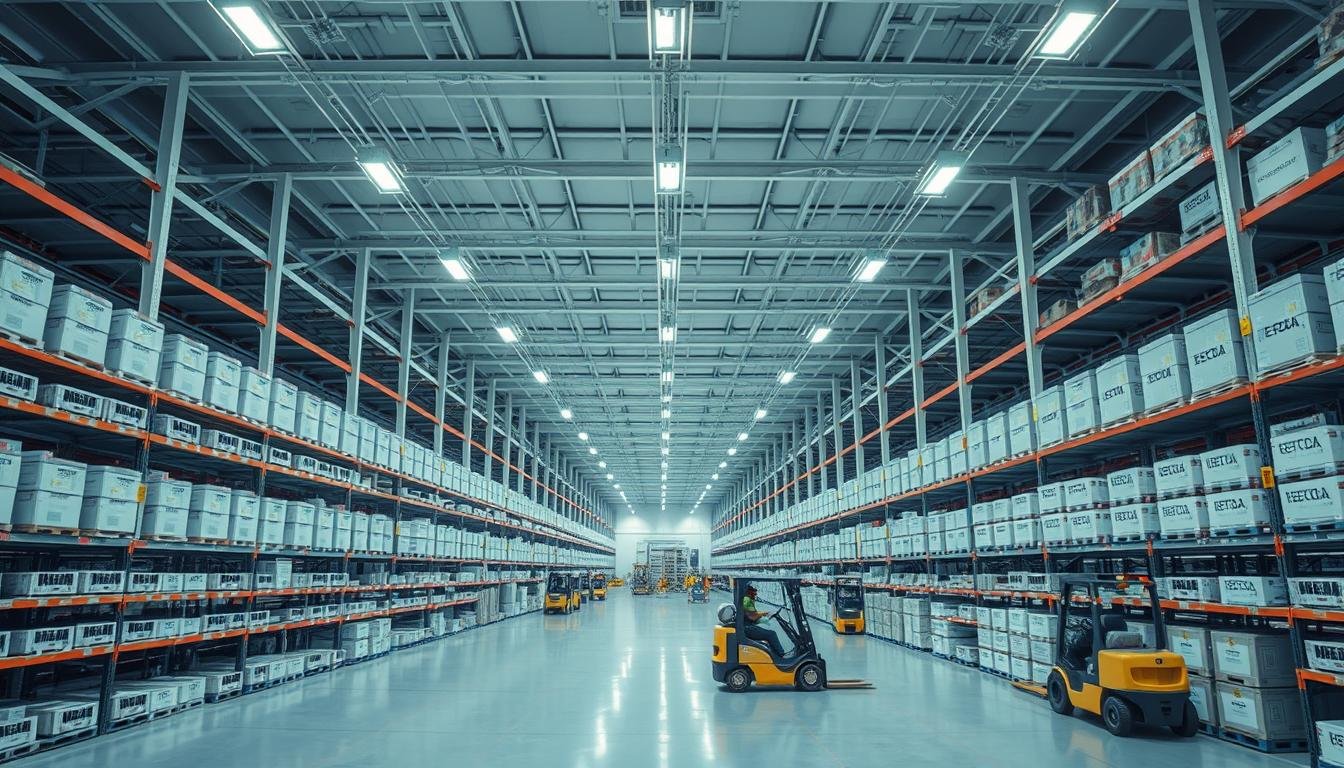
Maintaining the integrity of sensitive electronic components is crucial in today’s advanced technologies. Fluctuations in temperature and humidity can significantly impact the quality and reliability of these components.
We understand that consistent environmental conditions are not just about preservation, but about ensuring the longevity of critical parts. Our state-of-the-art climate-controlled warehouse is designed to provide optimal storage conditions, precisely regulating temperature and humidity to protect sensitive components.
By investing in advanced environmental control systems, we create a stable environment that safeguards the quality of stored components, ultimately supporting the reliability of the technologies they power.
Key Takeaways
- Climate-controlled storage is critical for maintaining the integrity of sensitive electronic components.
- Advanced environmental control systems regulate temperature and humidity to optimal levels.
- Consistent environmental conditions ensure the quality and reliability of stored components.
- Our climate-controlled warehouse provides comprehensive protection against environmental fluctuations.
- Specialized storage solutions support the longevity of critical parts used in advanced technologies.
Understanding Climate-Controlled Warehousing
Climate-controlled warehousing represents a sophisticated storage solution that maintains precise environmental conditions. This type of warehousing is crucial for storing sensitive components that are vulnerable to environmental fluctuations.
What Defines a Climate-Controlled Warehouse
A climate-controlled warehouse is defined by its ability to maintain a consistent and precise range of interior factors, including temperature, humidity, and air quality. These conditions are designed to preserve the quality and integrity of stored goods. The key characteristics of a climate-controlled warehouse include:
- Simultaneous management of multiple environmental factors, including temperature, humidity, air quality, and air circulation.
- Precise control over temperature and humidity levels to prevent issues like oxidation, corrosion, and electrostatic discharge.
- Advanced systems to regulate environmental conditions, providing superior protection for moisture-sensitive components.
Our climate-controlled facility maintains optimal conditions within the 56°F-75°F (13.3°C-23.9°C) range while regulating humidity levels between 40-50%. This comprehensive approach to environmental management represents a significant advancement over standard warehousing or basic temperature control.
Climate Control vs. Temperature Control: Key Differences
While a temperature-controlled warehouse maintains a consistent temperature range, a climate-controlled warehouse goes beyond this by maintaining stable temperature, humidity, and air quality. This distinction is particularly important for electronic components and precision-engineered parts, which can be damaged by humidity fluctuations even when temperature remains constant.
| Feature | Temperature-Controlled Warehouse | Climate-Controlled Warehouse |
|---|---|---|
| Temperature Control | Maintains consistent temperature range | Maintains stable temperature within a precise range |
| Humidity Control | No control over humidity levels | Regulates humidity levels between 40-50% |
| Air Quality | No control over air quality | Maintains high air quality to prevent contamination |
The Technology Behind Our Climate-Controlled Component Warehouse
The foundation of our climate-controlled component warehouse is a robust system that tightly controls temperature, humidity, and air quality. This ensures the ideal storage environment for sensitive electronic and precision components.
Temperature Regulation Systems
Our temperature regulation infrastructure includes redundant HVAC systems with zoned controls. These maintain consistent temperatures throughout the facility, preventing hot or cold spots that could create microclimates within the warehouse. This ensures that components are stored at optimal temperatures, reducing the risk of damage.
Humidity Control Mechanisms
We utilize advanced humidity control mechanisms featuring industrial-grade dehumidifiers and humidifiers. These respond dynamically to environmental changes, maintaining optimal moisture levels that prevent both condensation damage and static electricity buildup.
Air Quality Management
Our air quality management system incorporates HEPA filtration technology that removes particulates down to 0.3 microns. This eliminates dust and other contaminants that could compromise component integrity or interfere with precision mechanisms.
Advanced Monitoring and Automation
We’ve implemented a comprehensive monitoring network with sensors placed strategically throughout the facility. This provides real-time data on temperature, humidity, air quality, and pressure differentials. Our automation platform can make immediate adjustments to environmental controls when conditions begin to drift outside optimal parameters.
- Multiple integrated systems work together to maintain optimal storage conditions.
- Redundant HVAC systems ensure consistent temperatures throughout the warehouse.
- Advanced humidity control mechanisms prevent condensation damage and static electricity buildup.
- HEPA filtration technology removes contaminants, ensuring high air quality.
- A comprehensive monitoring network provides real-time environmental data.
Components That Require Climate-Controlled Storage

Components that require precise temperature and humidity control are stored in our state-of-the-art climate-controlled warehouse. Our facility is designed to accommodate a wide range of sensitive components that demand strict environmental control to preserve their quality and functionality.
Electronics and Sensitive Circuit Boards
Electronic components and circuit boards are particularly vulnerable to humidity fluctuations, which can cause oxidation, corrosion of conductive pathways, and degradation of solder joints. We store microprocessors, memory modules, and other semiconductor-based components in our climate-controlled environment to prevent moisture absorption that can compromise their electrical properties and lead to performance issues.
Precision-Engineered Parts
Precision-engineered mechanical components, including bearings, gears, and calibrated assemblies, benefit from our controlled environment that prevents dimensional changes due to thermal expansion and contraction or humidity-induced swelling. This ensures that these parts maintain their precise specifications and functionality.
Materials Vulnerable to Environmental Fluctuations
Materials with specialized coatings or surface treatments often have strict environmental requirements to maintain their protective or functional properties. Our climate-controlled facility is ideal for preserving the intended characteristics of such materials, including those that are hygroscopic or sensitive to temperature variations.
By storing these sensitive components in our climate-controlled warehouse, we ensure that they remain in optimal condition, thereby safeguarding the integrity of the final products they are used in. This level of control is crucial for maintaining the quality and reliability of the products that flow through our supply chain.
The Benefits of Our Climate-Controlled Component Warehouse

Our state-of-the-art climate-controlled component warehouse is engineered to maintain precise environmental conditions, ensuring the highest quality of stored components. By controlling temperature and humidity, we provide a storage environment that significantly enhances the lifespan and reliability of sensitive components.
Extended Component Lifespan
Components stored in our climate-controlled environment maintain their original specifications and performance characteristics for substantially longer periods. This extended shelf life reduces waste from degraded inventory and ensures that components remain usable for their intended applications.
Consistent Product Quality and Reliability
The consistent environmental conditions in our facility ensure that components maintain uniform quality from batch to batch. By eliminating variables that can affect manufacturing outcomes, we enhance final product reliability and performance.
Reduced Risk of Environmental Damage
Our climate-controlled storage significantly reduces the risk of hidden damage from environmental factors. This preventive measure helps avoid costly field failures and warranty claims resulting from compromised components.
Regulatory Compliance and Industry Standards
For components used in critical systems, our climate-controlled warehouse helps maintain compliance with stringent regulatory requirements. Our facility adheres to industry standards such as IPC/JEDEC J-STD-033 for moisture-sensitive devices, ensuring components remain within manufacturer-specified environmental parameters.
| Benefits | Description | Impact |
|---|---|---|
| Extended Shelf Life | Components maintain original specifications longer | Reduced waste and inventory costs |
| Uniform Quality | Consistent environmental conditions | Enhanced product reliability and performance |
| Reduced Environmental Damage | Climate-controlled storage | Lower risk of field failures and warranty claims |
| Regulatory Compliance | Adherence to industry standards | Ensured compliance for critical components |
Conclusion: Ensuring Component Integrity Through Climate Control
The use of climate-controlled storage facilities is essential for maintaining the highest standards of quality and reliability in the electronics manufacturing industry. Our climate-controlled component warehouse represents a critical link in the supply chain for high-reliability electronic and precision-engineered components, providing the environmental stability necessary to preserve their inherent quality and functionality.
By maintaining precise control over temperature, humidity, and air quality, we ensure that components arrive at your manufacturing facility in the same condition they left the original manufacturer. This level of control eliminates environmental variables that can compromise performance, thereby reducing component failure rates and improving manufacturing yields.
As components become increasingly sophisticated and miniaturized, their sensitivity to environmental conditions only increases, making proper climate-controlled storage more essential than ever. We invite you to tour our climate-controlled component warehouse facility to see firsthand how our environmental management systems protect your valuable inventory. By partnering with us, you can trust that your sensitive components are maintained in optimal conditions from receipt to delivery, preserving their integrity throughout their storage lifecycle.
FAQ
What is the ideal temperature range for a climate-controlled warehouse storing electronics components?
How do climate-controlled warehouses manage humidity levels to protect stored products?
What types of products benefit from climate-controlled storage?
How does climate-controlled warehousing ensure regulatory compliance and industry standards?
Can climate-controlled warehouses be customized to meet specific storage requirements?
What are the benefits of using a climate-controlled warehouse for storing sensitive components?
About The Author
