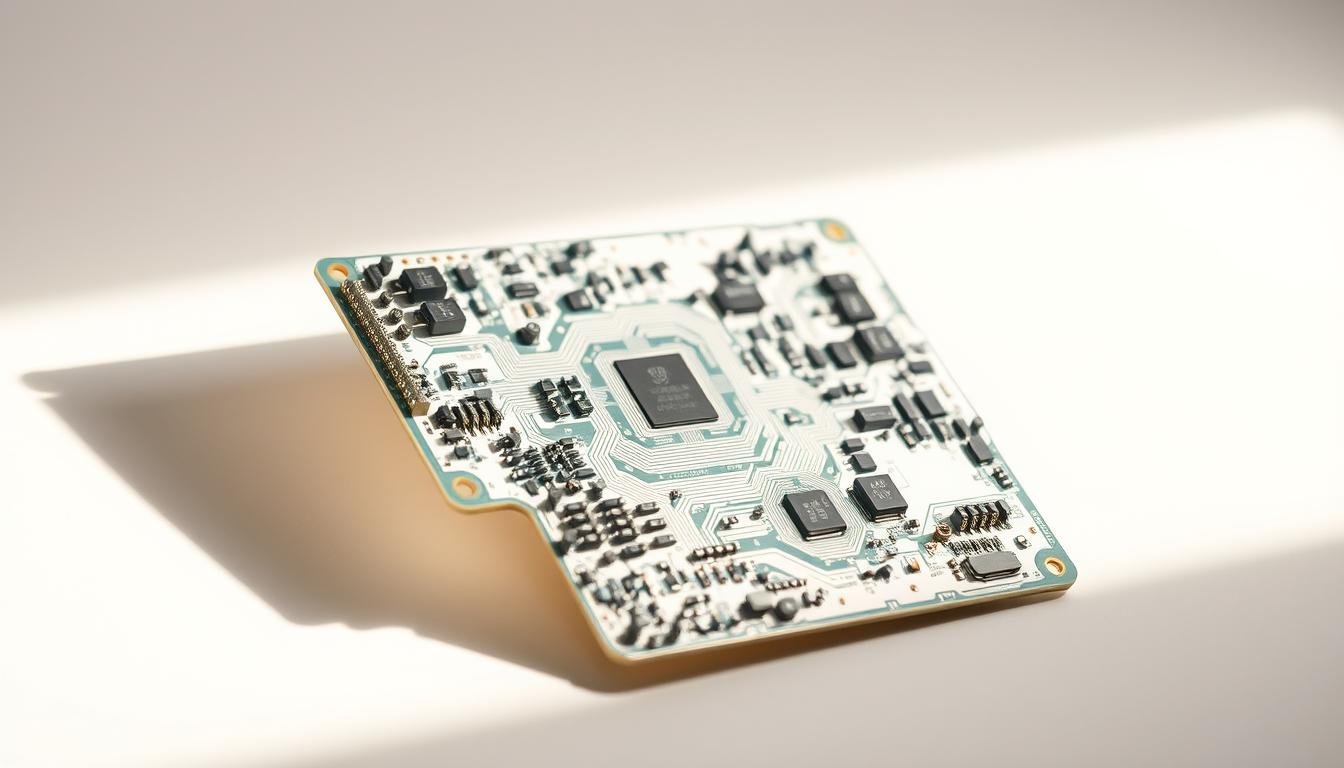
Can a single speck of dust compromise the functionality of a life-saving medical device? The answer lies in understanding the stringent cleanliness standards that govern the manufacturing of Printed Circuit Board Assemblies (PCBAs) for medical and optical applications.
The quality and reliability of PCBAs are paramount in these high-stakes fields, where device performance can be a matter of life and death. Ensuring that PCBs are free from contaminants like flux residues and dust is crucial for preventing issues such as corrosion and electrical shorts.
We will explore the critical importance of adhering to rigorous standards in the manufacturing of PCBAs for medical and optical devices, highlighting the specialized requirements that differentiate these applications from consumer electronics.
Key Takeaways
- Understanding the importance of cleanliness in PCBA manufacturing for medical and optical devices.
- The role of industry-specific standards in ensuring device reliability and performance.
- Specialized requirements for medical and optical PCBAs compared to consumer electronics.
- Effective cleanliness controls throughout the production process.
- Regulatory compliance in manufacturing high-quality PCBAs.
The Critical Importance of PCBA Cleanliness in Medical and Optical Applications
Maintaining cleanliness in PCBA for medical and optical applications is not just a best practice, but a necessity for ensuring device reliability and safety. Unclean boards are more prone to failure over time, especially in harsh environments. For industries such as medical, aerospace, and telecommunications, where reliability is non-negotiable, adhering to strict PCBA cleaning standards is essential.
Impact on Performance and Reliability
The cleanliness of PCBAs directly affects their performance and reliability. Contamination can lead to corrosion of critical circuit pathways, creating intermittent faults that are difficult to diagnose. In medical applications, such faults can be catastrophic. We examine how residual flux and other contaminants can create electrical leakage paths that may compromise patient safety in medical electronics.
Consequences of Inadequate Cleaning
Inadequate cleaning of PCBAs can lead to premature device failure, erratic performance, and potential safety hazards. The consequences of contamination include accelerated degradation of PCBs, particularly in medical environments where devices are exposed to unique factors like sterilization processes. We discuss the regulatory and liability implications of device failures traced to cleanliness issues, highlighting the business case for investing in proper cleaning protocols.
Understanding Industry Standards for PCBA Cleanliness
To ensure the highest quality and reliability, manufacturers of medical and optical PCBAs must comply with rigorous industry standards for cleanliness. We will examine the key standards and certifications that govern PCBA cleanliness in these sensitive applications.
IPC Standards for Medical and Optical PCBAs
The Institute for Printed Circuits (IPC) provides critical standards for PCBA manufacturing, including cleanliness requirements. IPC standards, such as IPC-A-610 and IPC-7711/7721, outline the acceptability criteria for electronic assemblies and the procedures for rework and repair. For medical and optical PCBAs, these standards are particularly important as they directly impact the performance and reliability of the final product. By adhering to IPC standards, manufacturers can ensure that their PCBAs meet the necessary cleanliness requirements.
ISO13485 and Other Relevant Certifications
ISO13485 certification is a critical benchmark for medical device manufacturers, indicating that they have established a quality management system that meets international standards. This certification encompasses requirements for product consistency, risk control, and regulatory compliance, all of which are essential for maintaining PCBA cleanliness. Additionally, manufacturers may need to comply with other certifications and regulations, such as FDA requirements and international standards for optical devices.
| Certification/Standard | Description | Relevance to PCBA Cleanliness |
|---|---|---|
| ISO13485 | Quality management system for medical devices | Ensures product consistency and risk control |
| IPC-A-610 | Acceptability standard for electronic assemblies | Outlines cleanliness and quality requirements |
| FDA Requirements | Regulatory compliance for medical devices in the US | Ensures safety and effectiveness of medical devices |
By understanding and complying with these industry standards and certifications, manufacturers can ensure the highest level of cleanliness and quality in their PCBAs, ultimately contributing to the reliability and performance of medical and optical devices.
Cleanliness Standards for Medical and Optical PCBAs
The importance of cleanliness in medical and optical PCBAs cannot be overstated, as it directly impacts their functionality and performance. For industries such as medical, aerospace, and telecommunications, where reliability is non-negotiable, adhering to strict PCBA cleaning standards is essential.
Medical Device Requirements
Medical devices require PCBAs that meet stringent cleanliness standards to ensure patient safety and device reliability. The presence of contaminants can lead to device failure, compromising patient health. We examine the unique cleanliness requirements for medical device PCBAs, focusing on the removal of contaminants that could affect device performance and the integrity of components.
- Strict protocols for handling and cleaning PCBAs to prevent contamination.
- The use of cleaning methods that are compatible with the materials used in medical devices.
- Verification processes to ensure that PCBAs meet the required cleanliness specifications.
Optical Equipment Specifications
Optical equipment, such as that used in medical imaging and diagnostic equipment, demands high levels of cleanliness to maintain signal integrity and equipment calibration. Even microscopic contaminants can significantly impact optical performance and precision. We analyze the cleanliness considerations for optical applications and the impact on PCBS used in these sensitive equipment.
- Specialized cleaning considerations for optical components sensitive to particulate matter and residues.
- The impact of cleanliness on critical optical parameters such as signal-to-noise ratios and resolution.
- Guidance on establishing cleanliness specifications for different categories of optical equipment.
Common Contaminants and Their Effects

The presence of contaminants on medical and optical PCBAs can have far-reaching consequences on their functionality and reliability. In the manufacturing process, various contaminants can be introduced, affecting the overall quality of the final product.
Flux Residues and Ionic Contamination
Flux residues are a common contaminant resulting from the soldering process. These residues can lead to ionic contamination, which may cause corrosion or electrical failures on the PCBA surface. To mitigate this, manufacturers must implement thorough cleaning protocols as part of their quality policy.
Particulate Matter and Environmental Contaminants
Particulate matter, including dust and skin cells, can significantly impact the performance of sensitive components in medical and optical PCBAs. Environmental contaminants, such as airborne chemicals, can also settle on the PCBAs, compromising their cleanliness. Effective controls during the manufacturing process are crucial to minimize these contaminants and ensure the reliability of the PCBAs.
Testing and Verification Methods
To guarantee the quality of medical and optical PCBAs, it’s essential to implement rigorous testing and verification methods throughout the manufacturing process. Every medical PCB must undergo strict inspection to ensure defect-free products, as required by many customers and regulatory bodies.
Ionic Contamination Testing
Ionic contamination testing is a critical method used to detect the presence of ionic residues on PCBA surfaces. These residues can lead to electrical failures and compromise the reliability of the device. We use this testing to ensure that our PCBAs meet the required cleanliness standards.
Surface Insulation Resistance (SIR) Testing
SIR testing is employed to evaluate the electrical insulation properties of the PCBA surface. This method involves measuring the resistance between conductors on the board under specific environmental conditions. For more information on cleanliness control standards, we recommend exploring industry guidelines.
Visual Inspection Techniques
Visual inspection is a fundamental method used to verify cleanliness in medical and optical PCBAs. We examine a range of techniques, from basic microscopy to advanced automated optical inspection systems, to detect various contaminants. Different magnification levels and lighting techniques are utilized to reveal subtle cleanliness issues.
Some of the key aspects of visual inspection include:
- Utilizing various magnification levels to detect contaminants
- Employing different lighting techniques to reveal subtle issues
- Implementing automated optical inspection systems for efficiency
- Training inspection personnel to recognize cleanliness issues specific to medical and optical applications
| Testing Method | Description | Application |
|---|---|---|
| Ionic Contamination Testing | Detects ionic residues on PCBA surfaces | Ensuring cleanliness and reliability |
| SIR Testing | Evaluates electrical insulation properties | Assessing PCBA surface insulation |
| Visual Inspection | Verifies cleanliness using microscopy and automated systems | Detecting contaminants and ensuring quality |
Effective Cleaning Processes and Technologies

Advanced cleaning technologies are revolutionizing the way PCBA are cleaned and prepared for use in critical applications. We explore various cleaning methods and technologies that cater to the demanding requirements of medical and optical PCBAs.
Aqueous Cleaning Methods
Aqueous cleaning methods utilize water-based solutions to remove contaminants from PCBA. This cleaning technique is effective for removing ionic and particulate contaminants. It’s a cost-effective and environmentally friendly option, suitable for many PCBA boards.
Solvent-Based Cleaning
Solvent-based cleaning uses organic solvents to dissolve and remove contaminants. This method is particularly effective for removing flux residues and other organic contaminants. However, it requires careful handling due to the potential environmental and health impacts.
Advanced Cleaning Technologies
The industry is adopting advanced cleaning technologies like plasma cleaning, supercritical CO2, and laser ablation for high-reliability PCBA. Plasma cleaning, for instance, uses ionized gas to remove organic contaminants at a molecular level, making it ideal for complex pcb design and high-density component assemblies. These technologies address cleanliness challenges that traditional methods struggle with, particularly for intricate pcba.
Implementing Cleanliness Controls in Manufacturing
To maintain the highest standards of quality and safety in PCBA manufacturing, implementing robust cleanliness controls is essential. This involves a multi-faceted approach that encompasses cleanroom requirements, process validation, and comprehensive staff training.
Cleanroom Requirements
Cleanrooms are controlled environments that are crucial for minimizing contamination risks during PCBA manufacturing. We recommend adhering to industry standards such as IPC-A-610 for cleanroom classification and operation. Proper cleanroom design and maintenance are vital for ensuring the production of high-quality PCBAs.
Process Validation and Monitoring
Effective process validation and monitoring are critical for ensuring that cleanliness protocols are consistently applied. This involves regular testing and inspection to verify that the cleaning processes are effective and that the PCBAs meet the required cleanliness standards. By leveraging advanced testing tools and methodologies, manufacturers can ensure the quality of their products over time.
Staff Training and Protocol Development
Comprehensive staff training is essential for the successful implementation of cleanliness controls. We provide a framework for developing staff training programs focused on cleanliness protocols for medical and optical PCBA manufacturing. This includes creating clear, effective protocols for handling, cleaning, and inspecting PCBAs, as well as establishing a quality-focused culture that prioritizes cleanliness and safety.
Conclusion: Ensuring Long-Term Reliability Through Proper Cleanliness Standards
As we’ve explored throughout this guide, cleanliness is a cornerstone of quality assurance in the manufacturing of medical and optical PCBAs. By adhering to stringent cleanliness standards, manufacturers can significantly enhance the reliability and performance of their products. Our comprehensive guide has demonstrated that implementing effective cleanliness controls is not merely a regulatory requirement but a fundamental quality assurance measure that directly impacts product performance and patient safety.
We’ve highlighted how manufacturers who invest in appropriate cleaning technologies, testing methodologies, and process controls can achieve consistent cleanliness results that meet the most demanding standards for medical and optical applications. By following the best practices outlined in this guide, manufacturers can minimize the risk of field failures, reduce warranty claims, and build a reputation for quality that distinguishes them in the competitive medical and optical device markets.
We encourage all stakeholders in the medical and optical PCBA manufacturing process to view cleanliness not as a burdensome requirement but as a competitive advantage that delivers value to both manufacturers and end-users through enhanced reliability and performance.
FAQ
What are the key factors that determine the cleanliness requirements for PCBA used in medical devices?
How do IPC standards impact the manufacturing of PCBAs for optical equipment?
What is the significance of ISO13485 certification in the production of medical PCBAs?
How do flux residues and other contaminants affect the reliability of PCBAs?
What cleaning processes are most effective for removing contaminants from PCBAs?
How do cleanroom environments contribute to the production of high-reliability PCBAs?
What role does process validation play in ensuring PCBA cleanliness?
How do staff training and protocol development impact PCBA cleanliness?
About The Author
