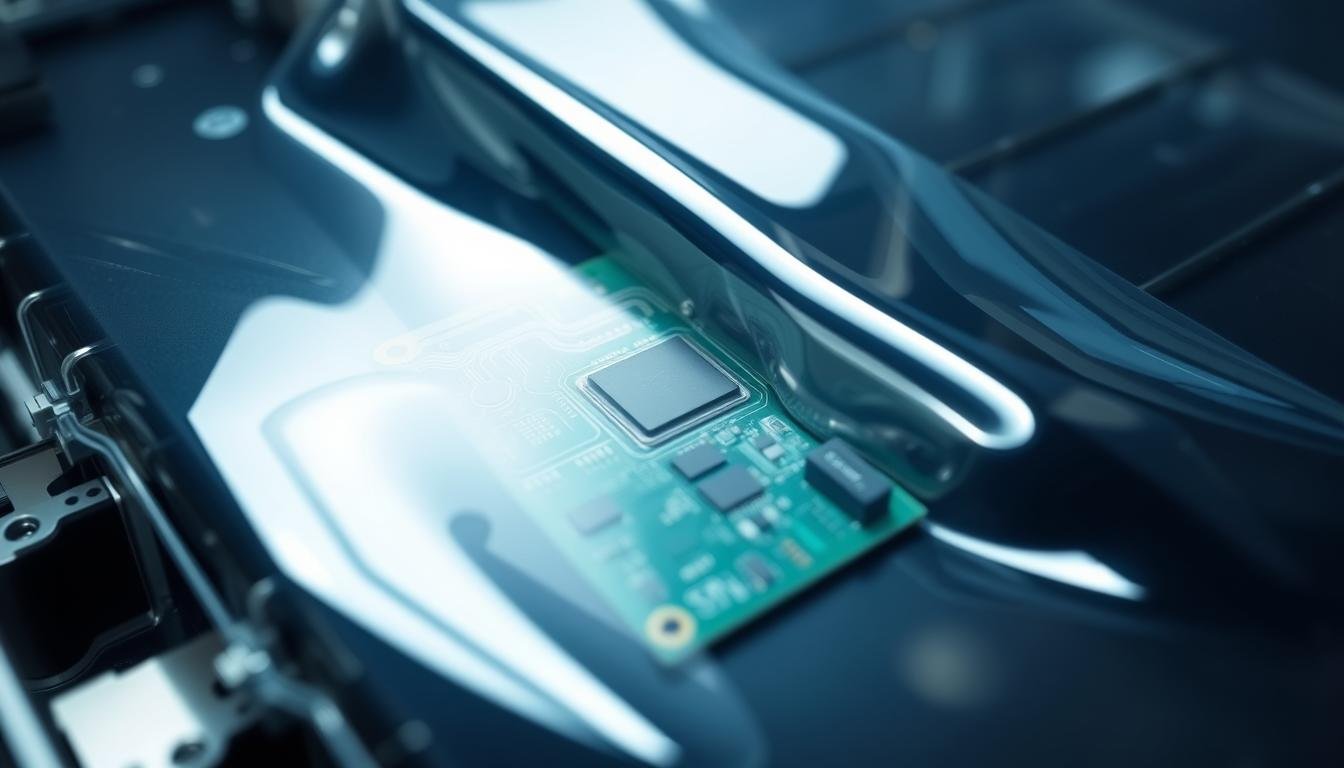
As electronic assemblies become increasingly complex and densely populated, the importance of conformal coating cannot be overstated. This protective layer shields electronics from environmental stressors, ensuring the reliability and longevity of the assembly.
We understand that achieving optimal results requires careful design considerations from the outset of PCB development. The relationship between board design, component placement, and coating flow is critical in determining the effectiveness of the coating.
By optimizing your design for automated conformal coating, you can significantly enhance the protection and reliability of your electronic assemblies.
Key Takeaways
- Conformal coating is crucial for protecting electronic assemblies from environmental factors.
- Careful design considerations are necessary for optimal coating results.
- The relationship between board design and coating flow is critical.
- Optimizing design for automated conformal coating enhances assembly reliability.
- Proper coating design is essential for long-term performance in harsh environments.
Understanding Conformal Coating Fundamentals
Conformal coating is a critical component in the manufacturing of electronic assemblies, providing a protective layer against various environmental factors. As we delve into the world of conformal coating, it’s essential to understand its fundamentals and significance in ensuring the reliability of printed circuit boards (PCBs).
What Is Conformal Coating and Why It Matters
Conformal coating is a specialized coating applied to PCBs to protect them from environmental stressors such as moisture, chemicals, dust, and thermal stress. By conforming to the topography of the board assembly, it creates a barrier that prevents electrical failures, corrosion, or physical damage to sensitive components. This layer of protection is crucial in harsh environments, where exposure to such elements can significantly impact the performance and lifespan of electronic devices.
Key Benefits of Proper Coating Design
Proper coating design offers numerous benefits, including enhanced board reliability and extended operational lifespan. By selecting the appropriate coating type and ensuring its correct application, manufacturers can significantly improve the durability of their electronic assemblies. This not only provides protection against environmental factors but also maintains the electrical and thermal characteristics necessary for optimal performance. Understanding the fundamental properties of different coating types is essential for selecting the right protection strategy based on specific application requirements.
PCB Design Considerations for Optimal Coating

Conformal coating success starts with PCB design, where strategic component placement and zone management are essential. “A well-designed PCB is the backbone of any successful conformal coating process,” as it directly impacts the coating’s effectiveness and the overall performance of the electronic assembly.
Component Placement Strategies
Effective PCB design for conformal coating begins with strategic component placement. Positioning elements that must not be coated, such as connectors and test points, along one edge of the board simplifies masking and application processes. We recommend maintaining a minimum spacing of 2-3mm between components to allow for proper coating flow.
Managing Keep-Out Zones
Creating clearly defined “must-coat,” “must-not-coat,” and “don’t care” zones in your design documentation helps manufacturing teams optimize the coating process. This clarity reduces production time and ensures that coating is applied correctly. Specifying these zones is crucial for avoiding coating issues.
Edge and Via Considerations
Edge and via management is crucial in PCB design for conformal coating. Coating the edges of assemblies is generally not considered value-added unless dealing with V-scored, punched, or sheared edges where inner layers might be exposed. For boards with BGAs or CSPs, consider tenting or filling vias to prevent coating from wicking through to the opposite side.
By considering these design factors, we can significantly improve the conformal coating process, ensuring a high-quality finish that enhances the reliability of the electronic assembly.
Selecting the Right Conformal Coating Material
Choosing the appropriate conformal coating material is crucial for ensuring the reliability and longevity of electronic assemblies. We need to consider various factors, including the operating environment, mechanical stresses, and the need for reworkability.
Acrylic-Based Coatings
Acrylic-based conformal coatings are known for their low cost and ease of application, making them ideal for hobby electronics and applications with moderate environmental challenges. They offer excellent moisture resistance and UV stability.
Silicone-Based Coatings
Silicone-based conformal coatings retain elasticity after curing, providing superior flexibility and thermal resistance up to 200°C. They are optimal for applications experiencing mechanical stress, vibration, or extreme temperature fluctuations.
Polyurethane Coatings
Polyurethane conformal coatings deliver exceptional chemical and solvent resistance with good moisture protection, making them suitable for industrial environments where exposure to harsh chemicals is a concern.
Epoxy and Parylene Coatings
Epoxy coatings create a hard, durable surface with excellent abrasion resistance, while Parylene coatings offer exceptional uniformity and penetration through vapor deposition for specialized applications.
Material Selection Criteria
When selecting a conformal coating material, we must consider the specific application requirements, including operating temperature range, exposure to chemicals, mechanical stress factors, and the need for rework capabilities. The coating material’s thermal properties should also be considered in relation to the board’s thermal management strategy.
How to Optimize Your Design for Automated Conformal Coating Process

Optimizing your design for automated conformal coating processes is crucial for achieving high-quality, reliable PCBs. We will explore how to tailor your PCB design to work seamlessly with automated coating systems, enhancing the overall efficiency and effectiveness of the coating process.
Designing for Selective Coating
When designing for selective coating, it’s essential to consider the specific requirements of automated selective coating systems. These systems deposit coating material in precise patterns, typically in stripe widths of 8-15mm, to avoid areas that must not be coated, such as switches, connectors, and test points. We should position components requiring similar coating thickness in clusters to minimize programming complexity and reduce production cycle time.
Automated selective coating systems require specific design considerations, including minimum stripe widths for accurate deposition and sufficient clearance around keep-out zones. By doing so, we can achieve optimal results and minimize overspray and splashing.
Optimizing for Dip Coating
Dip coating optimization requires careful consideration of board orientation, component placement, and gravitational flow patterns to ensure consistent coverage. We recommend placing non-coated components along one edge to facilitate even coating. This approach helps in achieving a uniform coating application.
By optimizing the design for dip coating, we can reduce the risk of coating defects and ensure that the PCB is properly protected.
Spray Coating Considerations
For spray coating processes, designs that minimize shadowing effects are crucial. We should avoid tall components near critical areas requiring protection and maintain consistent component heights where possible. Implementing fiducial markers or reference points in the PCB design can improve coating machine alignment accuracy and repeatability across production runs.
By considering these factors, we can optimize our design for spray coating and achieve a high-quality finish.
Managing Coating Thickness and Coverage
Effective conformal coating application requires precise control over coating thickness and coverage. The performance and reliability of electronic assemblies depend significantly on these factors.
Specifying Proper Thickness Requirements
Specifying the correct coating thickness is crucial for ensuring the desired performance and protection of electronic components. Industry standards recommend measuring nominal thickness on flat, unencumbered areas of the assembly. It’s essential to understand that the nominal thickness, typically ranging from 25 to 50 microns, may not accurately represent the actual coverage on component leads and corners, which can be as thin as 1 micron.
- Proper coating thickness specification is critical for performance.
- Material viscosity, application method, and curing conditions influence final coating thickness and coverage.
Ensuring Complete Coverage in Critical Areas
Ensuring complete coverage in critical areas is vital for the protection of electronic assemblies. Design documentation should identify areas requiring complete coverage, enabling manufacturing teams to adjust application parameters accordingly. Techniques such as using witness coupons or process control samples can help monitor coating consistency in production.
- Critical areas requiring complete coverage should be identified in design documentation.
- Excessive coating thickness can lead to defects, while insufficient thickness compromises protection.
For more detailed information on the conformal coating process, we recommend visiting our comprehensive guide on PCB conformal coating.
Pre-Coating Preparation Best Practices
To achieve optimal conformal coating results, it’s essential to follow best practices in pre-coating preparation. Effective preparation is critical for ensuring the reliability and performance of conformal coated PCBs. We emphasize the importance of a thorough pre-coating process to minimize the risk of defects and failures.
Cleaning Protocols for Maximum Adhesion
Thorough cleaning before conformal coating application is vital for eliminating flux residues, fingerprints, and other contaminants that can compromise coating adhesion and long-term reliability. No-clean flux residues, in particular, require attention, as they can significantly impact coating adhesion. Compatibility testing between flux systems and conformal coating materials should be conducted before implementation. Ensuring the substrate is free from contaminants is crucial for the conformal coating to adhere properly.
Handling and Environmental Controls
Complete drying after cleaning is critical to prevent moisture entrapment beneath the coating, which can lead to delamination, bubbling, or corrosion under the protective layer. Environmental controls during the preparation and coating processes help manage humidity, temperature, and particulate contamination that could otherwise compromise coating quality. Manufacturing facilities should implement proper handling protocols to prevent contamination from skin oils, which can create adhesion issues and potentially lead to coating failures in the field.
By implementing these best practices, manufacturers can ensure consistent preparation quality across production runs and help identify potential issues before they impact product reliability. Effective preparation and management of the coating environment are key to achieving high-quality conformal coating outcomes.
Overcoming Common Coating Challenges
The process of conformal coating is not without its challenges, including managing capillary flow and addressing shadowing effects. As we navigate these complexities, it’s essential to understand the root causes of these issues and implement effective solutions.
Managing Capillary Flow Issues
Capillary flow, or wicking, presents significant challenges in conformal coating applications, particularly with closely spaced components or when critical areas requiring coating are adjacent to keep-out zones. To mitigate this, we must carefully design our PCBs, avoiding the placement of components that must not be coated near those that must be coated.
Addressing Shadowing Effects
Shadowing effects can be addressed by considering component height variations and orientation. Techniques such as angled spray applications or multiple passes may be necessary to ensure coverage in shadowed areas. This requires a thorough understanding of the coating process and the geometry of our components.
Preventing Coating Defects
Common coating defects include bubbles, delamination, orange peel, and cracking. These issues can be mitigated through proper material selection, application technique refinement, and environmental control. For instance, a study on conformal coating challenges can be found in a report that highlights various coating defects and potential solutions.
By understanding and addressing these challenges, we can improve the overall quality and reliability of our conformal coatings. Effective management of flow and careful consideration of components and their placement are crucial solutions to achieving optimal conformal coatings.
| Challenge | Description | Potential Solution |
|---|---|---|
| Capillary Flow | Wicking of coating into unwanted areas | Careful PCB design, component placement |
| Shadowing Effects | Insufficient coverage in shadowed areas | Angled spray applications, multiple passes |
| Coating Defects | Bubbles, delamination, orange peel, cracking | Material selection, technique refinement, environmental control |
Conclusion
As we conclude our comprehensive guide on optimizing designs for automated conformal coating, it’s clear that a holistic approach is essential. By considering conformal coating from the earliest stages of PCB development through material selection and application method determination, engineers can significantly improve coating quality and product reliability.
The success of conformal coating applications depends on careful consideration of component placement, keep-out zones, and material properties. By implementing the design strategies outlined in this guide, engineers can reduce production cycle times and enhance the long-term reliability of their electronic systems.
We emphasize that conformal coating is not merely an add-on process but an integral part of the overall protection strategy for electronic assemblies. By following the best practices outlined in this guide, design engineers can create PCB layouts optimized for automated coating processes, resulting in more consistent protection and improved manufacturing efficiency.
FAQ
What is the ideal coating thickness for PCBs?
How do I ensure complete coverage in critical areas of the PCB?
What are the most common coating defects, and how can they be prevented?
Can I use conformal coating on PCBs with sensitive components?
What are the benefits of using automated conformal coating systems?
How do I choose the right conformal coating material for my application?
What are the key considerations for managing keep-out zones during coating?
Can conformal coating be used in high-temperature applications?
About The Author
