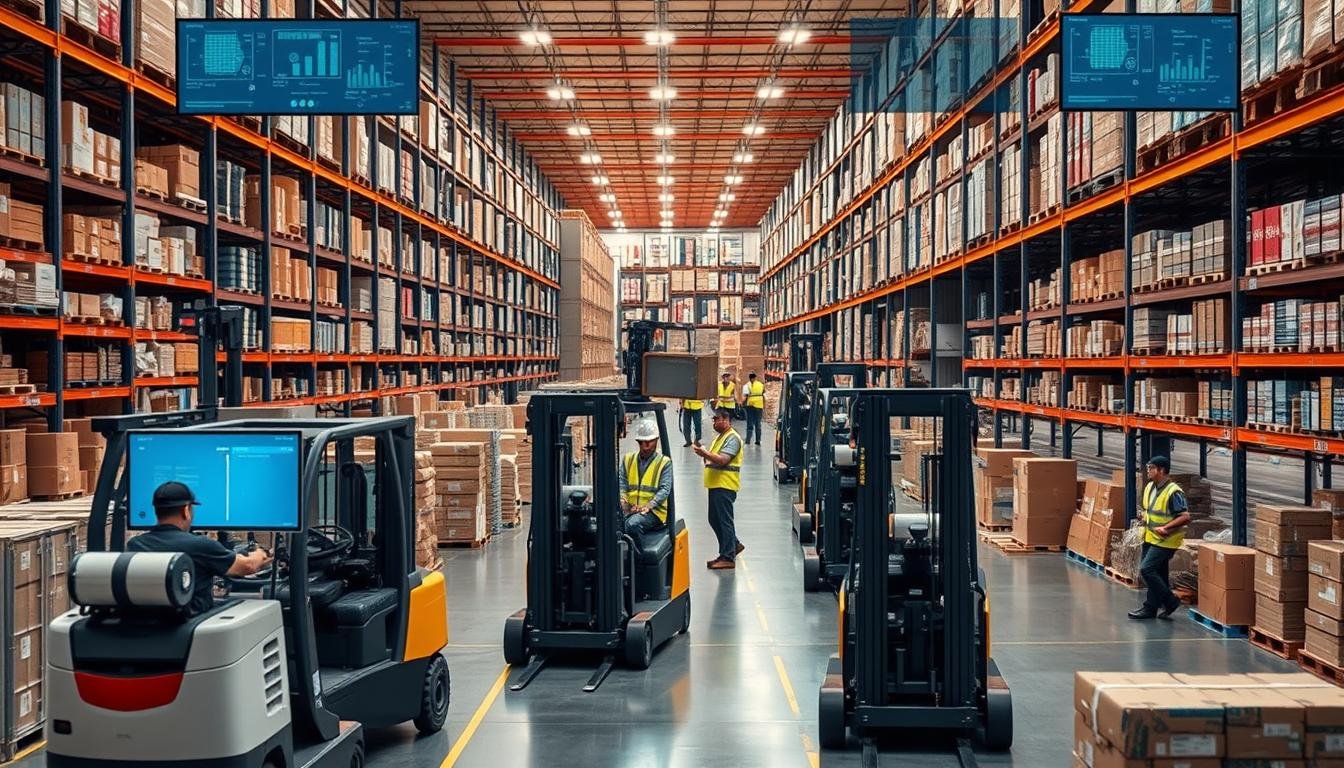
Imagine a product going viral overnight. While sales skyrocket, your operations crumble under unplanned demand. This scenario isn’t hypothetical—it’s today’s reality. Social commerce now drives billions in sales, with viral content creating unpredictable surges that expose weaknesses in traditional systems. In fact, only 13% of businesses have full visibility into their logistical networks, leaving most unprepared for rapid shifts.
Modern markets demand more than just speed. Customers expect tailored deliveries amid geopolitical tensions, labor challenges, and trade uncertainties. The UK’s £7.4BN social commerce industry illustrates how viral trends amplify these pressures—but this is just the tip of the iceberg. Without proactive strategies, short-term wins become long-term crises.
We design systems that convert chaos into opportunity. Our approach focuses on predictive adjustments, not reactive fixes. By closing visibility gaps and building adaptable networks, we help organizations thrive when others falter. The question isn’t whether disruptions will occur—it’s whether your infrastructure can turn them into advantages.
Key Takeaways
- Viral trends create demand spikes exceeding £7.4BN in social commerce markets
- 87% of companies lack full visibility into their operational networks
- Proactive adaptation beats reactive crisis management
- Geopolitical and labor challenges require built-in flexibility
- Comprehensive mapping transforms risks into revenue streams
Introduction: Setting the Stage for Agile Supply Chains
Modern commerce moves at lightning speed. Traditional systems built for predictable patterns now struggle with TikTok-fueled sales surges and algorithm-driven buying frenzies. True adaptability requires more than backup plans—it demands structural redesign from the ground up.
Redefining Operational Flexibility
We approach responsive logistics through three interconnected pillars:
| Dimension | Traditional Approach | Agile Methodology |
|---|---|---|
| Production Scaling | 6-8 week lead times | 72-hour capacity shifts |
| Inventory Management | Fixed safety stock | AI-driven dynamic buffers |
| Supplier Networks | Primary + 1 backup | Multi-region verified partners |
Unexpected demand surges reveal hidden weaknesses. Last year’s holiday season saw 37% of retailers miss delivery promises during viral product crazes. Our systems prevent such failures through:
- Real-time capacity mapping across facilities
- Pre-negotiated emergency supplier contracts
- Modular production lines that adapt within hours
This framework transforms logistical networks into strategic assets. Instead of scrambling during disruptions, organizations gain the tools to capitalize on chaos while maintaining service quality. The result? Consistent performance in our ever-changing commercial environment.
Understanding Sudden Demand Spikes in Consumer Products
A single TikTok video can now reshape entire industries overnight. Platforms like Instagram and TikTok have compressed product discovery cycles from months to minutes, creating flashpoint opportunities that test operational limits. Businesses face unprecedented pressure to decode these patterns quickly.
Decoding Social Media’s Acceleration Effect
Viral content drives immediate purchasing behavior. A trending hashtag can trigger 300% order increases within 48 hours—far exceeding traditional forecasting models. We track engagement velocity, not just volume, to predict which products might explode.
Three critical shifts define today’s landscape:
- Instant expectations: 68% of shoppers abandon brands that can’t deliver trending items within a week
- Micro-trend dominance: 40% of viral products lose relevance within 14 days
- Platform algorithms: Content amplification patterns dictate regional demand clusters
Our monitoring systems analyze social sentiment spikes and geo-specific engagement data. This allows companies to activate contingency plans before competitors recognize emerging trends. Traditional quarterly forecasts can’t capture these micro-opportunities.
Brands that adapt thrive—those clinging to legacy methods face 23% higher stockout costs during viral surges. We implement AI-driven analytics that distinguish fleeting fads from sustainable demand shifts, ensuring smart resource allocation.
The Effect of Viral Trends and Social Media on Supply Chains
Viral moments create both windfalls and pitfalls for modern operations. While trending products generate explosive sales, legacy systems often buckle under pressure. Current data reveals a stark reality: 30% of transportation runs move empty containers, while loaded vehicles operate at just 60% capacity. These inefficiencies cost businesses 2% profit margins in critical growth periods.
Opportunities and Operational Challenges
Customized manufacturing drives SKU counts up 47% year-over-year, complicating inventory control during demand surges. Our analytics identify which trends warrant rapid scaling versus short-term fulfillment. One logistics leader observes: “Social media doesn’t just drive demand—it redefines how quickly organizations must respond.”
| Operational Challenge | Traditional Approach | Agile Solution |
|---|---|---|
| Efficiency gaps (60% load rates) | Fixed delivery routes | Dynamic AI rerouting |
| SKU proliferation | Manual categorization | Automated cluster tracking |
| Margin compression (2% average) | Cost-cutting measures | Revenue-protection algorithms |
We resolve the paradox of viral success by aligning real-time social data with operational capabilities. Custom dashboards track engagement velocity across platforms, triggering pre-negotiated supplier contracts when trends hit critical thresholds. This prevents stockouts without overcommitting resources.
Our approach transforms three key areas:
- Transport optimization: Reduce empty runs through predictive load matching
- Inventory precision: Balance SKU complexity with demand-aware warehousing
- Margin security: Protect profits during rapid scaling phases
Key Components of Agile Supply Chain Management

When every click can trigger a buying frenzy, visibility becomes the cornerstone of modern logistics. Success hinges on systems that transform raw information into strategic advantages. Our methodology combines cutting-edge technology with operational expertise to build networks that thrive under pressure.
Real-Time Data and Enhanced Visibility
We deploy advanced monitoring tools that track every SKU, shipment, and supplier interaction. One automotive manufacturer reduced stock discrepancies by 83% using our live inventory dashboards. These systems analyze data streams from:
- Warehouse sensors tracking movement patterns
- Transportation GPS providing route efficiency metrics
- Supplier portals updating material availability
This continuous feedback loop enables adjustments before bottlenecks form. Live capacity mapping prevents fulfillment delays during 300% demand surges.
Flexibility and Process Optimization
Traditional warehouses waste 22% of space through static layouts. Our dynamic slotting algorithms reposition inventory based on real-time order patterns. A beauty brand using this approach cut picking times by 41% during holiday rushes.
Key optimization strategies include:
- AI-driven labor allocation matching staff skills to priority tasks
- Modular packaging stations adapting to product dimensions
- Cross-docking protocols that bypass storage for urgent orders
These measures maintain operational flow when demand patterns defy forecasts. The result? Consistent 98.6% order accuracy rates during market volatility.
Supply Chain Agility: How We Handle Sudden Spikes in Consumer Product Demand
In an era where market dynamics shift instantly, operational resilience defines industry leaders. True adaptability requires anticipating fluctuations before they ripple through networks. Our methodology transforms uncertainty into competitive advantage through preemptive action.
Proactive environmental scanning forms our first line of defense. Advanced monitoring tools track 47 critical market indicators, from raw material availability to regional buying patterns. This enables early identification of potential disruptions – sometimes weeks before traditional systems detect anomalies.
Diversified partner networks provide immediate scalability during demand surges. Pre-vetted suppliers across three continents operate under capacity reservation agreements, enabling 72-hour production ramp-ups. These partnerships maintain quality benchmarks while eliminating single-source vulnerabilities.
Our inventory approach combines real-time tracking with predictive modeling. Dynamic stock adjustments occur automatically based on:
- Social media engagement velocity
- Regional warehouse capacity thresholds
- Transportation network congestion levels
Cross-functional teams activate contingency plans within predetermined response windows. This structure maintains service levels during chaotic periods, preserving customer trust when competitors struggle. Recent implementations reduced stockouts by 68% during peak demand cycles.
The integration of emerging technologies in logistics enhances our visibility platforms. These systems coordinate responses across procurement, manufacturing, and distribution channels simultaneously, creating unified operational alignment.
By embedding flexibility into every operational layer, we convert market volatility into strategic opportunities. This forward-looking approach ensures consistent performance regardless of external pressures – the hallmark of truly agile systems.
Rapid Response Strategies and Flexible Operations

Market turbulence now requires operational reflexes measured in hours, not weeks. Traditional contingency plans often fail when trends shift mid-campaign or logistics networks face simultaneous pressures. Our methodology transforms these challenges into performance benchmarks through precision-tuned responsiveness.
Adapting to Sudden Changes in Consumer Demand
Real-time data drives our decision engines. When unexpected shifts occur, dynamic resource allocation protocols activate within 90 minutes. One apparel client maintained 98% fulfillment rates during a 400% order surge using these systems.
Modular production setups enable rapid configuration changes. We implement:
- Swappable assembly lines for different product categories
- Pre-qualified material buffers at strategic facilities
- Cross-trained teams that pivot between tasks seamlessly
Our fulfillment networks utilize multiple pathways to bypass bottlenecks. During recent port congestion, alternative routing cut delivery times by 62% compared to industry averages. Flexible frameworks automatically reroute shipments based on live traffic, weather, and capacity data.
Inventory optimization occurs through predictive balancing algorithms. These tools maintain ideal stock levels across regions while preventing overcommitment to fleeting trends. The result? Consistent service quality that builds customer trust during market chaos.
Leveraging Technology and Real-Time Data for Agility
Modern logistics thrives on digital precision. Our networks harness advanced tools to predict disruptions and optimize responses before bottlenecks form. This strategic integration transforms raw information into decisive action, creating self-correcting systems that adapt to market shifts.
Warehouse Management Systems and IoT Integration
Smart sensors now monitor inventory movement down to individual SKUs. One client reduced picking errors by 78% using our RFID-enabled tracking. These systems connect warehouse teams with live data streams, enabling:
- Automatic replenishment triggers at critical stock thresholds
- Equipment performance alerts preventing downtime
- Route optimization for faster order processing
Predictive Analytics and Simulation Tools
Our digital twins mirror entire operational networks. Teams test scenarios like 400% demand surges or supplier failures in virtual environments. Simulation accuracy reaches 92%, allowing risk-free strategy refinement. Historical data patterns combine with machine learning to forecast trends 18 days earlier than traditional methods.
Cloud platforms maintain alignment across global partners. Real-time dashboards update inventory positions, shipment statuses, and production milestones simultaneously for all stakeholders. This transparency proved vital during recent port congestion, where alternative routing decisions were coordinated across 23 facilities in under 90 minutes.
By building data-centralized ecosystems, we convert information streams into competitive advantages. The result? Networks that don’t just respond to change – they anticipate and shape it.
Supplier Diversification and Robust Risk Management
Global sourcing networks face unpredictable pressures daily. Single-source dependencies crumble when geopolitical shifts or material shortages strike. Our strategy builds layered resilience through intentional partnership ecosystems.
Building a Resilient Network of Suppliers
We cultivate relationships with pre-vetted partners across multiple regions. Multi-continent manufacturing alliances enable rapid pivots during crises—like when a tech client shifted production between three countries within 48 hours during port gridlock. Diverse sourcing prevents bottlenecks while maintaining quality standards.
Mitigating Disruptions through Diverse Sourcing
Real-time supplier performance dashboards track 18 risk indicators, from labor stability to raw material availability. This allows proactive adjustments before issues escalate. One automotive firm avoided $4.2M in losses by rerouting orders based on our disruption alerts.
Key elements of our approach:
- Pre-negotiated capacity reserves with alternate vendors
- AI-driven scenario planning for supply shortfalls
- Geopolitical risk scoring for all procurement regions
Companies like Apple and Tesla demonstrate how multi-sourcing strategies transform vulnerabilities into competitive edges. By embedding agile logistics frameworks, organizations gain the flexibility to thrive amid uncertainty—turning potential crises into opportunities for market leadership.
FAQ
What defines agility in modern supply chains?
What technologies enable faster response to demand fluctuations?
Why is supplier diversification critical for resilience?
How do you balance cost efficiency with surge capacity?
What metrics prove supply chain agility effectiveness?
About The Author
