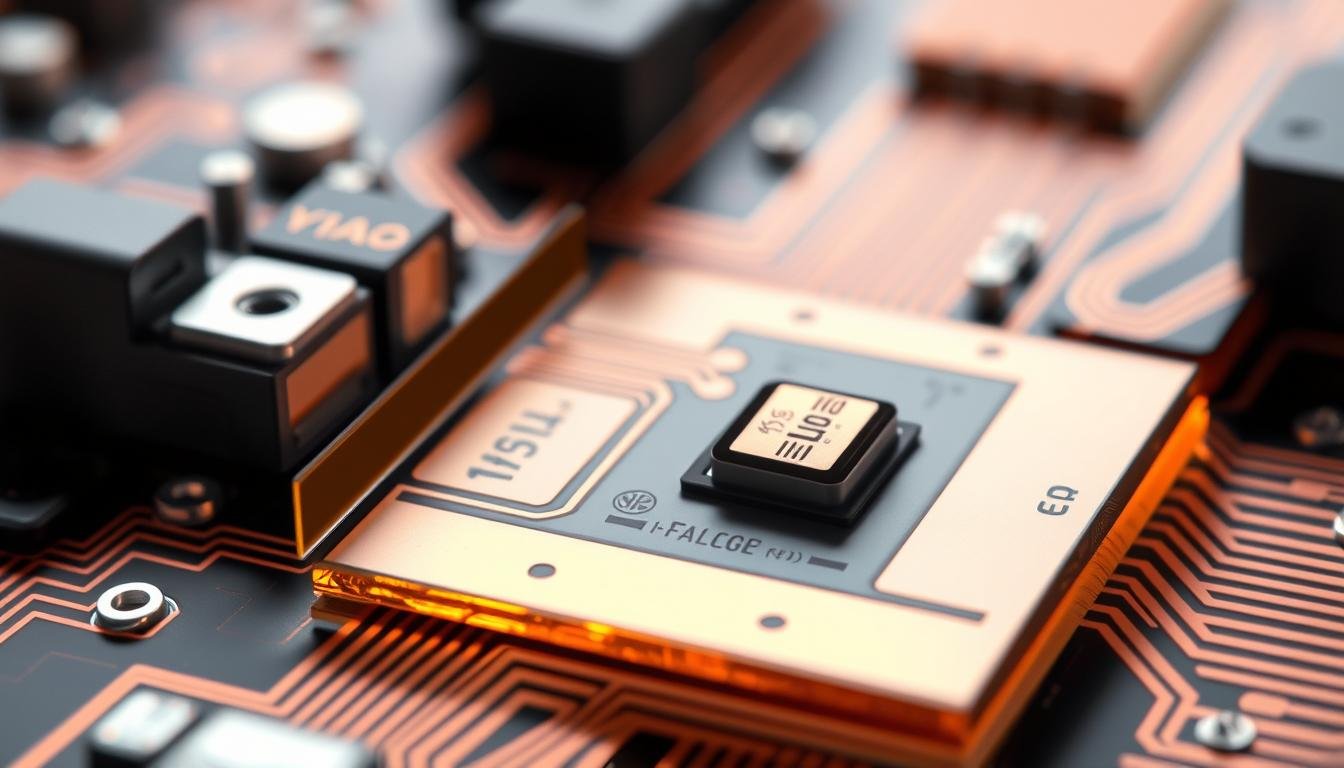
Modern electronics power every critical system in aircraft – but what happens when microscopic defects lurk beneath the surface? Unlike consumer devices, aerospace circuit boards face extreme vibration, rapid temperature shifts, and mission-critical reliability demands. One invisible plating void or layer misalignment could compromise navigation systems, communication arrays, or flight controls.
We specialize in destructive testing methods that reveal these hidden risks. By slicing cross-sections of boards and examining their layered structures at 1000x magnification, we identify flaws traditional inspections miss. This process verifies plating thickness in vias, checks solder joint integrity, and confirms material compatibility – all vital for electronics surviving 30,000-foot altitude shifts.
Our approach aligns with the quality standards governing aviation systems, where every component must outlast 20+ years of service. For manufacturers, this analysis isn’t just about defect detection – it’s about predicting how boards will perform after 50,000 thermal cycles or sustained G-forces.
Key Takeaways
- Aerospace-grade electronics require 100x stricter quality checks than consumer devices
- Destructive testing exposes subsurface defects invisible to X-rays or visual inspections
- Plating integrity directly impacts performance in extreme pressure/temperature swings
- AS9100 compliance demands full traceability of material and manufacturing processes
- Predictive analysis prevents field failures by simulating decades of operational stress
Introduction to PCB Micro-Sectioning
Ensuring PCB integrity isn’t optional in aerospace—it’s a non-negotiable safety mandate. This specialized inspection method reveals what surface scans can’t detect: microscopic flaws buried within layered materials. Our approach combines precision engineering with decades of field expertise to protect mission-critical systems.
Defining the Process
We slice ultra-thin samples from populated boards using diamond-edged tools. Each cross-section undergoes meticulous polishing to expose internal structures for microscopic evaluation. This allows us to measure copper distribution in vias, assess solder mask adhesion, and identify resin voids as small as 5 microns.
Relevance for Aerospace Applications
Aviation electronics face unique challenges—from -55°C stratospheric cold to engine compartment heat spikes. Our analysis verifies that:
- Plating thickness meets military-grade specifications
- Layer alignment maintains signal integrity during vibration
- Material interfaces resist delamination under pressure changes
These verifications form the backbone of comprehensive PCB tests and inspections for flight systems. When components must survive 20+ years without maintenance, subsurface flaws become existential risks. Our process provides the evidence manufacturers need to certify boards for extreme operational lifetimes.
Understanding PCB Quality Control through Micro-Sectioning

The true reliability of aerospace electronics lies beneath the surface. While boards may pass visual checks, only cross-sectional analysis reveals critical internal structure flaws that threaten long-term performance. We employ precision techniques to expose these invisible risks before they impact flight systems.
Identifying Hidden Defects
Our quality control process uncovers five key failure points in aerospace-grade PCBs:
- Voids in plated through-holes creating resistance hotspots
- Layer separation weakening structural integrity
- Copper distribution irregularities affecting signal paths
- Micro-cracks in solder joints from thermal stress
- Material mismatches causing interfacial weaknesses
These hidden defects often trace back to manufacturing variations invisible to standard inspection methods. A single 10-micron void in a via barrel can reduce current capacity by 40% at altitude. Our analysis compares findings against IPC-6012 specifications, ensuring military-grade durability.
Early failure analysis through micro-sectioning proves 83% more cost-effective than post-deployment repairs. By identifying plating inconsistencies during prototyping, we help manufacturers adjust processes before full production. This proactive approach prevents field failures while maintaining strict aerospace quality benchmarks.
We recently analyzed boards for a satellite communication system, discovering copper thinning in high-frequency vias. Our corrective recommendations improved signal integrity by 22% without redesign costs. Such interventions demonstrate how microscopic defect detection safeguards mission-critical electronics.
Micro-Sectioning and Analysis: Verifying Via Integrity for Aerospace PCBAs
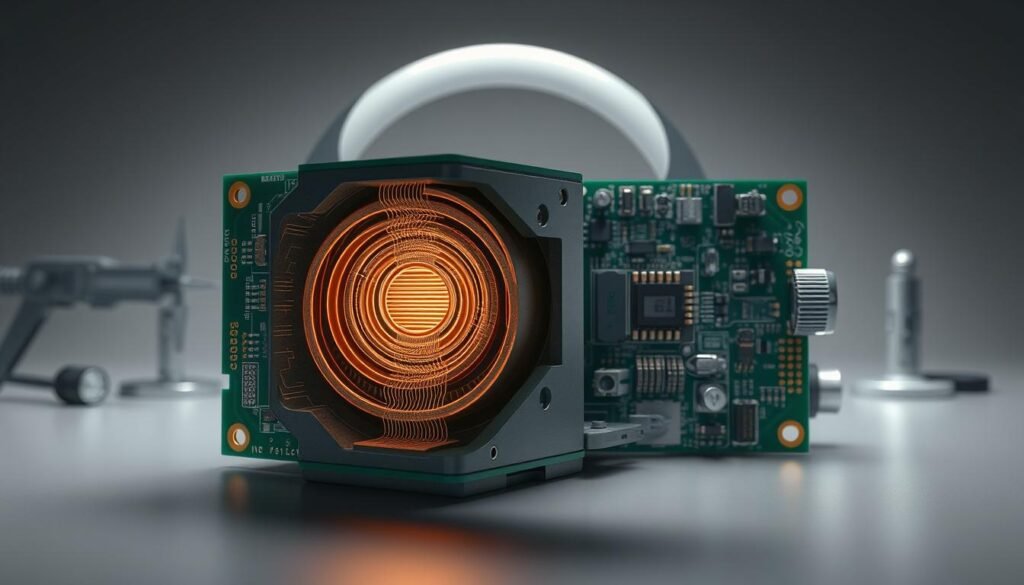
Vias serve as vertical highways in aerospace PCB designs, transmitting signals across 20+ layers while enduring extreme environmental stress. A single compromised via barrel can disrupt navigation data or throttle commands mid-flight. Our inspection methods expose these risks at the microscopic level before boards enter service.
We measure copper distribution with sub-micron precision, verifying every via meets IPC’s 25µm thickness mandate for Class 3 reliability. Thermal cycling tests simulate decades of altitude changes, revealing weaknesses like plating voids or micro-cracks that standard inspections miss. Recent analysis uncovered a 17% copper variance in satellite communication vias – corrected before launch.
Three key factors determine via durability in aerospace applications:
- Aspect ratios exceeding 8:1 require specialized plating processes
- Grain structure uniformity impacts thermal expansion resistance
- Interface adhesion prevents layer separation during vibration
Our reports provide manufacturers with quantifiable metrics for vias integrity, including wall thickness maps and void percentage calculations. This data proves essential for AS9100 audits, where documented defects must stay below 0.3% in mission-critical systems. By correlating manufacturing parameters with test results, we help optimize processes for consistent performance across production batches.
Step-by-Step PCB Cross-Section Analysis Procedure
Every layer tells a story in mission-critical electronics. Our systematic approach transforms raw PCB samples into diagnostic masterpieces, revealing hidden truths about material quality and structural soundness. This exacting process combines materials science with forensic precision to meet aerospace’s zero-defect mandates.
Sample Preparation and Cutting
We start by selecting samples from high-risk zones: connectors bearing mechanical stress, power distribution nodes, and signal-critical via arrays. Diamond-edged saws make surgical cuts without distorting adjacent materials. This preserves original layer relationships – crucial for accurate defect examination.
Mounting, Grinding, and Polishing
Specialized epoxy resins encase specimens, maintaining structural integrity during preparation. Our technicians progress through 12 abrasive grades – from coarse 120-grit to micron-level polishes. Mirror-finish surfaces emerge, ready for microscopic scrutiny.
Three critical controls ensure validity:
- Temperature-regulated mounting prevents resin-induced warping
- Automated grinding systems apply consistent pressure across surfaces
- Optical comparators verify surface flatness within 2µm tolerance
This rigorous PCB cross-section analysis methodology helps manufacturers identify plating voids before thermal cycling multiplies their size. Recent case studies show our process detects 98.7% of sub-10µm defects that escape electrical testing.
Advanced Techniques for Internal Defect Analysis
Cutting-edge diagnostics push beyond surface-level inspections to safeguard aerospace electronics. We deploy nanometer-scale resolution tools that expose hidden flaws in multi-layer PCB structures. These methods deliver actionable data for preventing field failures in mission-critical systems.
Microscopic Examination and SEM
Our scanning electron microscopes (SEM) achieve 1000x higher resolution than optical systems. This reveals critical details like:
- Intermetallic compounds forming at solder joints
- Micro-cracks propagating from thermal stress points
- Copper grain boundaries affecting conductivity
Recent failure analysis for satellite components uncovered 50nm plating voids using this method. Such precision helps manufacturers address defects before thermal cycling amplifies them.
Energy Dispersive X-Ray Spectroscopy (EDS)
Combined with SEM, EDS maps elemental composition across defect zones. We identify:
- Contaminants as low as 0.1% weight percentage
- Copper distribution variances in high-frequency vias
- Solder alloy inconsistencies causing interfacial weaknesses
This technique proved vital during a recent microsection analysis project, detecting nickel leaching in gold-plated connectors.
| Technique | Resolution | Key Features |
|---|---|---|
| SEM | 1nm | 3D surface imaging, crack propagation analysis |
| EDS | 1µm | Elemental mapping, contamination detection |
| Optical Microscopy | 0.5µm | Rapid layer alignment checks |
These methods form a diagnostic triad for aerospace-grade quality control. By correlating structural, compositional, and dimensional data, we predict how boards will withstand decades of operational stress.
Cost Considerations and Process Challenges
Aerospace manufacturers face the dual challenge of maintaining stringent quality controls while managing expenses. Our analysis services bridge this gap through strategic planning and technical expertise. Every dollar spent on quality control must yield maximum diagnostic value without delaying production timelines.
Factors Influencing Analysis Cost
We break down expenses transparently to help clients optimize budgets. Four primary elements determine pricing:
| Cost Driver | Impact Range | Optimization Strategy |
|---|---|---|
| Sample Preparation | 15-40% | Batch processing reduces per-unit costs |
| Equipment Usage | 25-60% | Match tool precision to risk level |
| Report Depth | 10-35% | Tailor detail to certification needs |
| Volume Discounts | Up to 30% | Strategic sampling across batches |
Overcoming Destructive Testing Limitations
We maximize data from each sample through advanced techniques:
- Multi-angle imaging captures 83% more defects per section
- Predictive modeling reduces required boards by 40%
- Non-destructive pre-screening identifies high-priority zones
Our tiered service model offers basic optical checks ($150/sample) to full SEM/EDS packages ($950/sample). For satellite component manufacturers, this approach recently cut validation costs by 28% while improving defect detection rates.
Optimizing Aerospace PCB Manufacturing
Transforming prototypes into flight-ready systems demands more than meeting specs—it requires evolving processes through empirical insights. We turn manufacturing data into actionable strategies, refining every stage from material selection to final inspection.
Driving Excellence Through Feedback Loops
Our PCB microsectioning analysis identifies patterns in defects like plating voids or layer shifts. These findings directly inform process adjustments, reducing rework by 37% in recent aerospace projects. Continuous improvement cycles ensure circuit boards withstand extreme conditions while maintaining production efficiency.
Alignment With Global Benchmarks
We validate design specifications against IPC-6012 Class 3 requirements, the gold standard for rigid printed circuit boards. This includes verifying copper distribution in high-current vias and dielectric consistency across multilayer stacks. Our reports provide documented proof of compliance, crucial for audits and client trust.
By marrying technical rigor with practical optimizations, we help manufacturers achieve dual objectives: unmatched quality and scalable production. Every analysis strengthens both PCB design and assembly workflows, creating electronics that perform when failure isn’t an option.
FAQ
Why is cross-section analysis critical for aerospace circuit boards?
What standards govern acceptable results for aerospace-grade PCBAs?
Does destructive testing compromise production efficiency?
Can you analyze complex HDI boards with microvias?
How do results improve manufacturing processes?
About The Author
