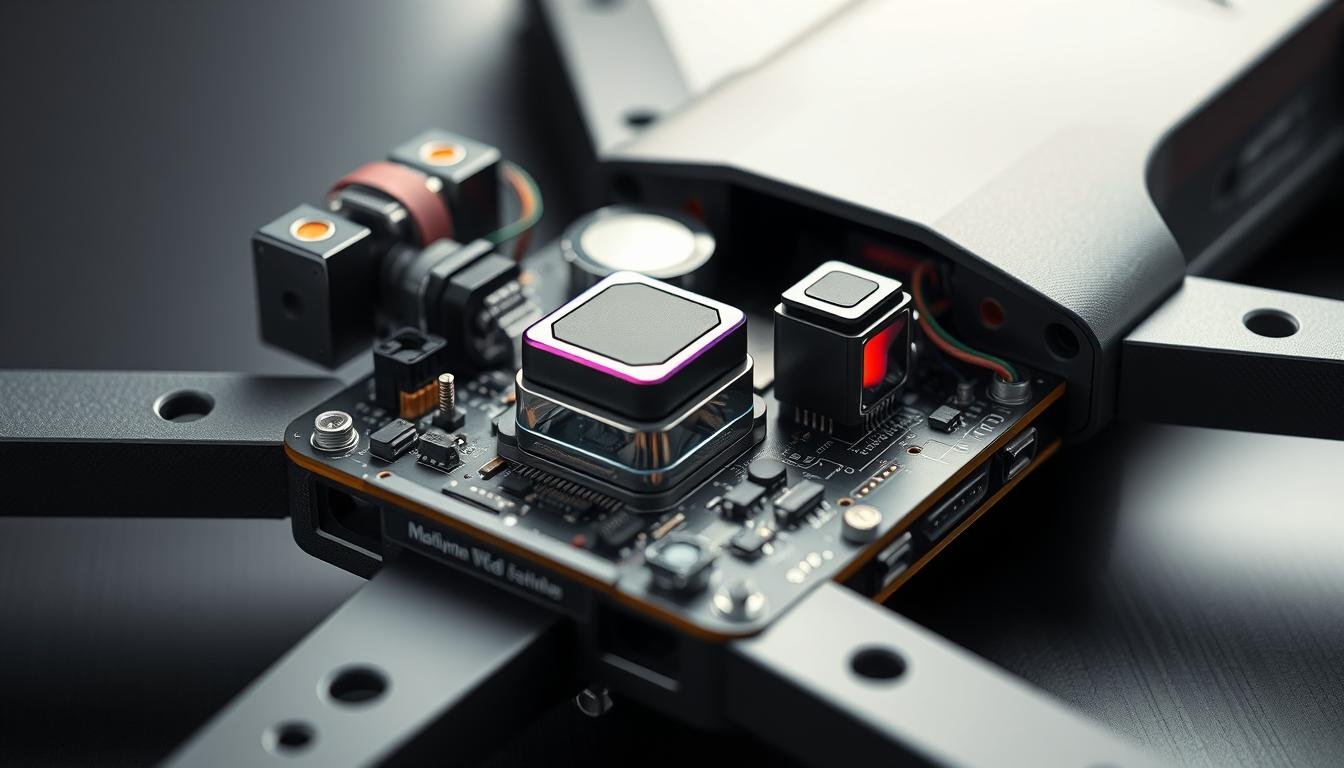
Modern unmanned systems rely on sensor arrays to capture mission-critical information – but what happens when imaging platforms can’t translate raw inputs into reliable insights? As industries from precision agriculture to infrastructure inspection demand higher-resolution data, manufacturers face mounting pressure to optimize electronic foundations.
We’ve identified three core challenges in developing robust imaging systems: component density conflicts with thermal constraints, electromagnetic interference distorts spectral readings, and calibration drift erodes measurement consistency. These issues become magnified when operating in extreme temperatures or vibration-intensive environments.
Our team addresses these hurdles through strategic integration of radiometric validation protocols and signal isolation techniques. By aligning circuit board architecture with sensor physics, we help create systems that maintain data fidelity from initial power-on through extended flight operations.
Key Takeaways
- Precision component placement ensures optimal thermal performance and signal clarity
- Radiometric calibration requires environmental simulation for field-ready accuracy
- Multi-spectral systems demand specialized interference mitigation strategies
- Component selection directly impacts long-term calibration stability
- Electromagnetic shielding must adapt to evolving sensor configurations
Overview of Drone PCBAs and Sensor Integration
Advanced sensor arrays transform unmanned systems into precision data platforms. Modern units combine multiple imaging technologies to deliver actionable insights across industries. From agricultural health assessments to critical infrastructure surveys, these systems rely on seamless sensor synchronization.
Understanding the Role of Advanced Sensors in Drones
Current systems employ specialized detectors for distinct operational needs. RGB units capture visible spectrum details, while multispectral models track plant health through invisible wavelengths. Thermal imagers detect heat signatures for emergency response missions, requiring unique sensor PCB solutions to handle infrared data streams.
LiDAR modules create precise 3D maps using laser pulse timing, demanding ultra-fast signal processing. Radar systems enable all-weather detection through millimeter-wave technology. Each sensor type introduces specific power, timing, and interference challenges during integration.
The Impact of Miniaturization on PCB Design
The push for compact drones forces radical PCB architecture changes. Designers now pack high-speed processors alongside sensitive analog components in shrinking layouts. This density creates thermal hotspots and electromagnetic interference risks that traditional designs never faced.
| Design Challenge | Traditional Approach | Modern Solution |
|---|---|---|
| Component Density | Single-layer layouts | 3D stacked modules |
| Thermal Management | Passive cooling | Micro-channel heat sinks |
| Signal Integrity | Shielded cables | Embedded EMI filters |
Leading manufacturers adopt hybrid stackup configurations to isolate sensitive circuits. Advanced materials like polyimide substrates help manage thermal expansion mismatches during flight operations. These innovations enable reliable performance in extreme environmental conditions.
Assembling and Calibrating PCBAs for Multi-Spectral and Thermal Drone Cameras
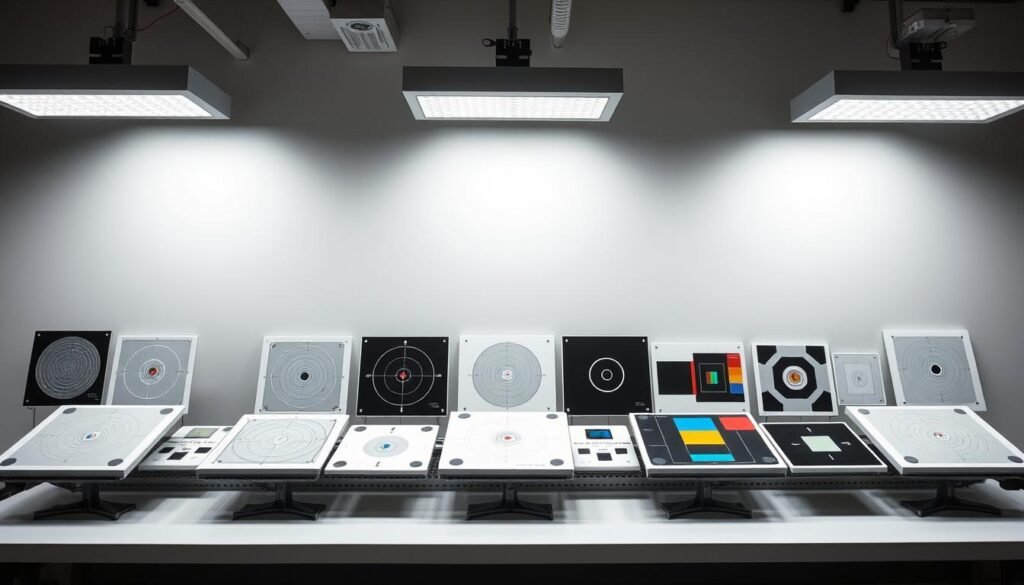
Precision imaging systems demand more than advanced sensors—they require meticulous calibration foundations. Atmospheric variables like aerosol density and solar angles distort spectral readings, making standardized reference points essential for reliable data.
Utilizing Calibration Panels for Radiometric Accuracy
We implement radiometric correction protocols using specialized reference panels. These tools account for light diffusion and absorption across different spectral bands, creating baseline measurements for field conditions. Our teams capture panel images at flight altitude to establish accurate ground truth references.
Manufacturer-provided panels with preloaded reflectance curves simplify multispectral camera calibration. These values convert raw sensor data into scientific-grade measurements. Consistent panel placement and lighting assessment ensure repeatable results across changing environments.
Guidelines for Reliable PCBA Manufacturing
Thermal management proves critical during calibration processes. We design boards with heat-resistant substrates and isolated power pathways to maintain signal integrity. Component layouts prioritize minimal electromagnetic interference between spectral channels.
Our quality checks validate performance across temperature extremes and vibration profiles. Automated testing confirms calibration stability from lab validation to real-world deployment. This approach ensures multispectral systems deliver consistent analysis-ready imagery throughout operational lifespans.
Challenges and Innovations in Drone Sensor Integration
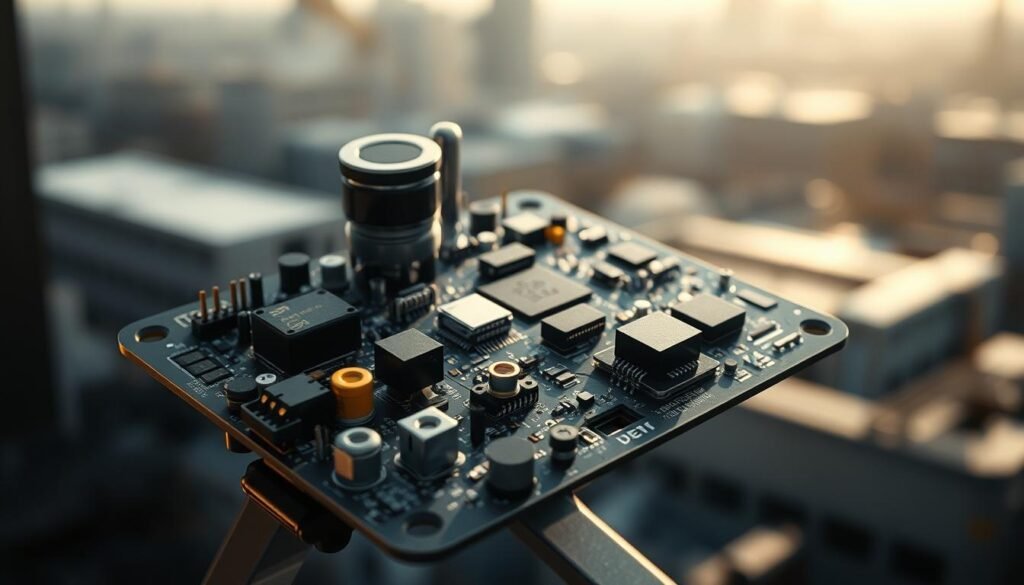
Modern sensor-packed drones face conflicting technical demands – shrinking sizes battle expanding data requirements. We’ve developed targeted solutions for these competing priorities through rigorous field testing and component innovation.
Maintaining Signal Integrity and Mitigating Thermoelectric Effects
Miniaturization creates thermal and electrical conflicts. Our teams combat crosstalk by:
- Manual routing of critical sensor traces
- Implementing copper-filled thermal vias
- Using matched CTE materials
Unwanted thermocouple junctions can distort readings by 12-18mV in compact layouts. We address this through strategic component isolation and nickel alloy shielding.
Strategies for Efficient Power Management and Data Processing
Extended flight hours require smart energy use. Our power architecture combines:
| Component | Power Saving | Implementation |
|---|---|---|
| BLE Controllers | 83% idle reduction | Event-driven wake cycles |
| Solar Harvesters | 22% charge boost | Flexible thin-film cells |
| Vibration Generators | 9W continuous | Piezoelectric prop mounts |
For data handling, we balance local storage with cloud processing. SD cards handle 72-hour missions, while encrypted uplinks enable real-time analysis. This dual approach maintains operational flexibility across connectivity conditions.
These innovations help manufacturers overcome critical integration hurdles while meeting strict size and performance targets. Our methods have proven effective across agricultural mapping and infrastructure inspection platforms.
Conclusion
Next-generation aerial imaging systems redefine what’s possible in field data collection. We bridge the gap between sensor physics and production realities through collaborative engineering. Our approach combines technical rigor with cross-industry partnerships to solve persistent integration challenges.
Success demands more than component expertise. Thermal management innovations and spectral calibration protocols work together to ensure reliable performance. We optimize power efficiency without compromising image quality, extending operational hours while maintaining scientific accuracy.
For manufacturers scaling operations, our high-volume production solutions maintain precision across batches. This ensures consistent results whether mapping crop health or monitoring infrastructure. Through material science advancements and electromagnetic shielding techniques, we help create drones that deliver mission-critical imagery in any environment.
Technical leadership requires balancing innovation with practicality. We continue refining calibration methods and sensor integration practices to meet evolving industry needs. Together, we’re building imaging platforms that transform raw data into actionable intelligence.
FAQ
Why is radiometric calibration critical for multispectral drone cameras?
How do thermal imaging PCBAs handle heat interference from drone components?
What design challenges arise when miniaturizing PCBAs for drone payloads?
What environmental tests ensure drone PCBAs survive field conditions?
How does pixel co-registration impact multispectral data accuracy?
About The Author
