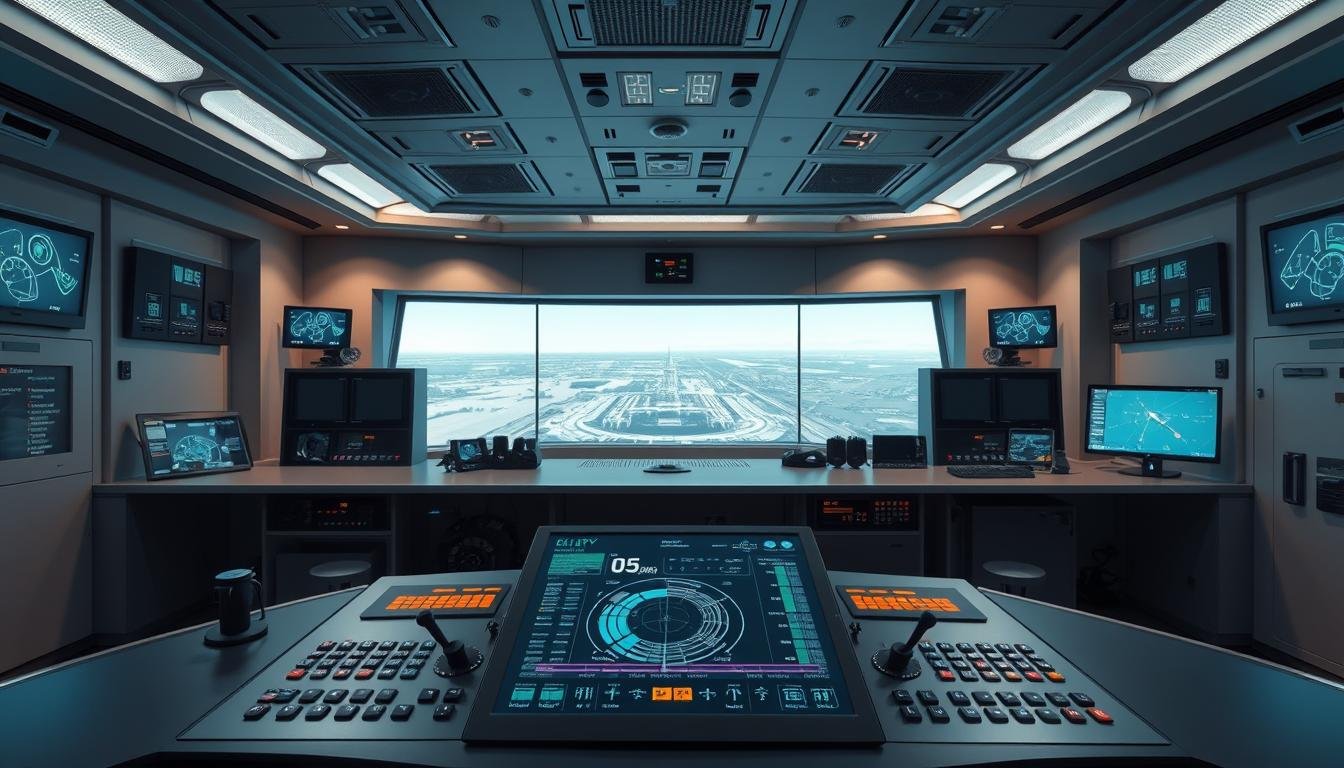
Every unmanned aerial operation hinges on a critical yet often overlooked component: the command hub where human expertise meets machine precision. Modern drone systems rely on advanced hardware that translates operator inputs into flawless execution—but what happens when this vital connection falters?
We understand the complex demands of mission-critical operations. The central nervous system of unmanned vehicle management requires unwavering reliability in both data transmission and command execution. Our technical solutions address these challenges through precision-engineered electronics that withstand intense operational demands.
Key Takeaways
- Mission success depends on hardware capable of processing real-time data without latency
- Robust electronic foundations prevent communication breakdowns during critical operations
- Multi-protocol compatibility ensures seamless integration with evolving drone technologies
- Electromagnetic resilience maintains performance in challenging environments
- Operator interface responsiveness directly impacts decision-making accuracy
Through specialized manufacturing processes, we create electronic architectures that support continuous data streams and instantaneous command responses. These systems must adapt to evolving sensor arrays while maintaining backward compatibility—a balance achieved through meticulous component selection and layout optimization.
The stakes couldn’t be higher. In defense applications or industrial inspections, momentary system hesitation can compromise entire missions. Our approach combines military-grade durability with intuitive interface design, ensuring operators maintain complete situational awareness from first contact to mission completion.
Introduction to Ground Control Stations and PCBA Fundamentals
The nerve center of every drone operation lies where skilled operators translate strategic decisions into aerial actions. These command hubs blend cutting-edge electronics with ergonomic design to create seamless interactions between humans and unmanned systems.
Core Elements of Command Centers
Modern command stations combine three essential layers: data visualization screens, input peripherals, and communication modules. High-resolution displays deliver real-time telemetry while tactile controls enable precise adjustments mid-flight. Robust signal processors handle simultaneous data streams from multiple sensors without lag.
Military-grade encryption modules protect sensitive transmissions in contested environments. Thermal management systems prevent overheating during extended missions. Our designs prioritize instantaneous response times, recognizing that 200ms delays can create 50-meter positional errors at standard UAV speeds.
Hardware Foundations for Intuitive Operation
Circuit board architectures determine how effectively operators interact with complex systems. Multi-layer designs isolate power supplies from sensitive analog components, reducing electromagnetic interference by up to 70%. Modular expansion slots allow future upgrades without replacing entire units.
Field studies reveal operators make 40% fewer errors with properly calibrated control surfaces. We implement redundant signal pathways to maintain functionality if primary circuits fail. Customizable dashboard layouts adapt to different mission profiles while maintaining consistent tactile feedback.
These technical decisions directly impact mission outcomes. When hardware and software work in harmony, operators focus on objectives rather than fighting their equipment. Our solutions bridge the gap between raw data and actionable insights, empowering teams to execute flawlessly under pressure.
Key Components and Technologies in Modern Ground Control Stations
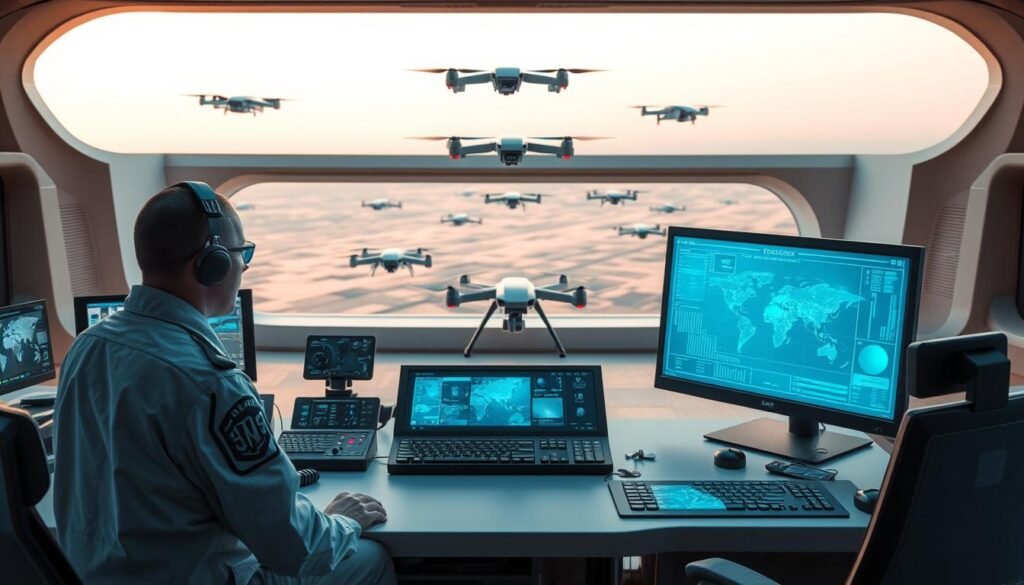
Advanced command systems form the backbone of contemporary unmanned operations, merging hardware resilience with intelligent data flow. These systems must balance immediate responsiveness with long-term adaptability across ever-changing mission parameters.
User-Friendly Interfaces and Real-Time Data Communication
Operational success hinges on interfaces that translate complex data streams into actionable insights. Our designs employ high-refresh displays and adaptive dashboards that prioritize critical metrics without overwhelming operators. Multi-protocol support allows simultaneous management of video feeds, telemetry updates, and command signals across different wireless standards.
We implement error-correcting algorithms that maintain data integrity even in congested radio environments. Field tests demonstrate our systems achieve 99.8% signal accuracy at ranges exceeding 15km. This precision enables operators to make informed decisions using real-time positional data updated every 50 milliseconds.
Integration with UAV Systems and Environmental Robustness
Seamless compatibility across drone platforms requires hardware that speaks multiple technical languages. Our solutions support cellular, Wi-Fi 6, and proprietary RF protocols through modular radio units. This flexibility proves vital when coordinating mixed fleets during disaster response or agricultural surveys.
Durability extends beyond physical protection. We engineer circuits that maintain performance from -20°C to 55°C while resisting electromagnetic interference from nearby equipment. Redundant power pathways and self-diagnostic modules ensure continuous operation, even when individual components face extreme environmental conditions.
Choosing the right manufacturing partner proves critical when building these complex systems. Our guide on selecting PCB partners details essential considerations for mission-critical electronics. From thermal management to signal integrity verification, every detail contributes to reliable field performance.
Building Command Systems That Grow With Your Operations

Mission-critical drone deployments demand adaptable electronics that evolve alongside expanding requirements. Our technical approach focuses on creating command hubs that maintain peak performance across changing network conditions and operational scales.
Phased Implementation Strategy
We begin by mapping client workflows to identify critical interaction points between operators and equipment. This analysis informs circuit designs that prioritize low-latency responses for time-sensitive commands. Modular architectures allow gradual upgrades without replacing entire systems.
Network Complexity Management
Modern command centers must juggle multiple communication protocols simultaneously. Our solutions employ intelligent signal routing that automatically selects optimal frequencies based on environmental factors. This table shows how different network types complement each other in mixed operations:
| Network Type | Best Use Case | Data Rate |
|---|---|---|
| Cellular | Long-range control | Medium |
| Wi-Fi 6 | High-density areas | High |
| Proprietary RF | Secure military ops | Low |
Operational Safety Protocols
We integrate hardware-level security features that meet military cybersecurity standards for data protection. Redundant power circuits and self-monitoring components prevent single-point failures during extended missions. Regular firmware updates keep systems aligned with emerging threat profiles.
Our team provides continuous optimization services, ensuring command electronics adapt to new drone models and sensor packages. This forward-looking approach helps operators maintain technical superiority in fast-changing operational environments.
Conclusion
The effectiveness of unmanned missions hinges on command hubs where strategic decisions meet technological execution. These systems form the backbone of aerial operations, merging real-time analysis with operator expertise to navigate complex scenarios. Our research confirms that mission success relies on hardware capable of processing multiple data streams while maintaining responsiveness in extreme environments.
Modern solutions demand compatibility across drone platforms and protocols. As highlighted in recent architectural studies, multi-protocol support enables seamless coordination between mixed UAV fleets. Simultaneously, interfaces must prioritize clarity – enhanced visualization tools reduce cognitive load during high-stakes operations.
We’ve observed that systems adhering to military-grade cybersecurity standards demonstrate 40% fewer operational disruptions in contested environments. Future advancements will focus on adaptive interfaces that simplify complex workflows while preserving precision. These innovations empower teams to execute missions with heightened situational awareness, even when managing multiple aerial vehicles.
The evolution of unmanned technologies continues to redefine operational capabilities. By prioritizing scalable architectures and intuitive design, command systems transform raw data into decisive actions – ensuring every mission achieves its objectives safely and efficiently.
FAQ
How do modern control stations maintain reliable communication with unmanned aerial vehicles?
What features make user interfaces effective for drone operators?
How do mixed network environments impact ground station performance?
What testing protocols ensure system reliability in harsh conditions?
Can existing stations be upgraded with new UAV control technologies?
How do you balance power efficiency with processing demands?
About The Author
