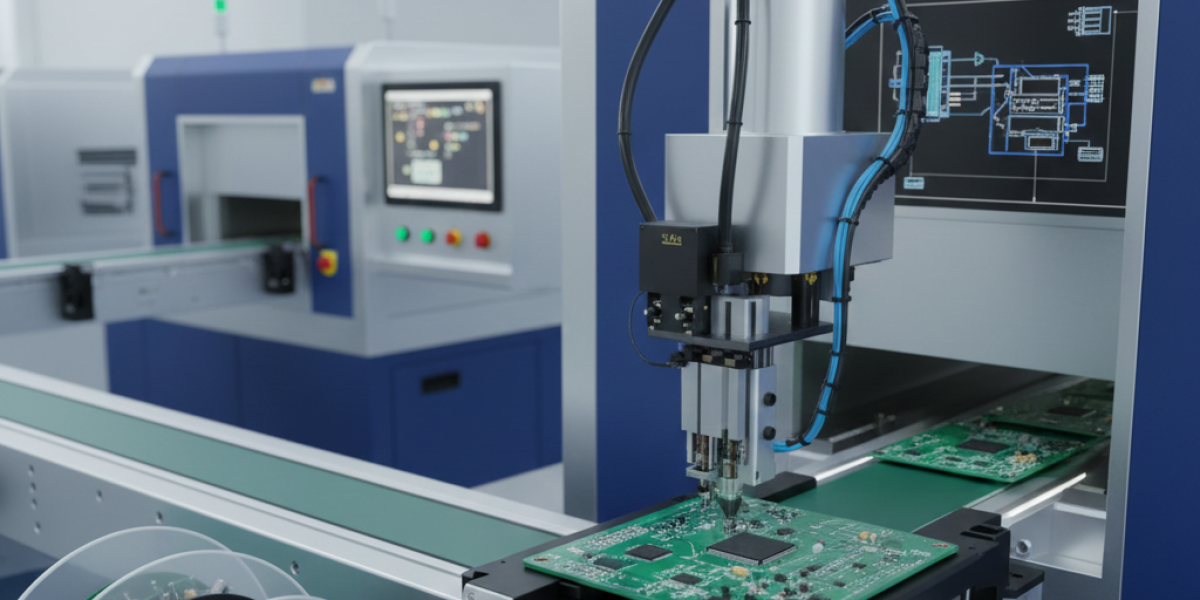
SMT Assembly Process: Complete Guide to Surface Mount Technology Manufacturing
Surface Mount Technology (SMT) revolutionized electronics manufacturing enabling high-speed automated assembly of complex boards. Modern smartphones, automotive systems, medical devices, and industrial equipment depend on sophisticated SMT assembly process delivering millions of components with micron-level precision. Understanding how professional assembly facilities execute SMT assembly reveals the engineering excellence transforming raw components into functional electronics. This comprehensive guide explores SMT technology, equipment, processes, and quality standards ESPCBA employs delivering manufacturing excellence.
Understanding SMT Assembly Fundamentals
SMT assembly process places electronic components directly on printed circuit board surfaces rather than inserting component leads through holes. This revolutionary technology enabled miniaturization, improved electrical performance, and automated high-speed manufacturing impossible with through-hole technology.
SMT components (surface mount devices or SMDs) range from tiny 0.4mm ball grid arrays containing complex integrated circuits to capacitors smaller than grains of sand. Precise positioning of these components with solder paste attachment creates reliable electrical connections. Automated systems perform placement at extraordinary speeds, handling thousands of components per hour with accuracy exceeding human capability.
Professional PCB assembly facilities maintain strict process control ensuring consistent quality across production runs. Temperature profiling, solder paste chemistry, component handling procedures, and inspection protocols guarantee reliable results regardless of board complexity or production volume.
Key Advantages of SMT Technology
SMT’s dominance in modern electronics reflects profound advantages over traditional assembly methods.
Miniaturization and High Density
Surface mounting enables extremely high component density impossible with through-hole technology. Multi-layer boards with components on both surfaces accommodate thousands of components in compact footprints. Smartphone processors containing billions of transistors, medical diagnostic equipment, and automotive control systems depend on SMT density enabling required functionality.
Automated High-Speed Production
Pick-and-place machines position components at extraordinary speeds. Modern equipment exceeds 300,000 placements per hour with consistent micron-level accuracy. High-speed production dramatically reduces per-unit labor costs enabling affordable consumer electronics. Rapid production cycles compress time-to-market accelerating competitive advantage.
Electrical Performance Enhancement
Shorter signal paths between components reduce parasitic inductance and capacitance improving signal integrity. Reduced interconnection lengths enable higher operating frequencies. Lower resistance in optimized current paths reduces power dissipation improving efficiency. Electrical performance advantages prove critical in high-speed digital and RF applications.
Improved Reliability
Smaller solder joints create stronger connections than through-hole designs. Consistent automated process eliminates human variation improving reliability. Smaller component size reduces thermal mass enabling efficient heat dissipation. Superior mechanical design accommodates vibration and thermal cycling stresses. Overall reliability improvements reduce field failures and warranty costs.
Cost Efficiency at Volume
Automated production dramatically reduces labor costs at volume. Optimized design enables material efficiency. Component standardization simplifies procurement. High yields reduce waste. Economies of scale reward high-volume production with progressively lower unit costs.
SMT Assembly Equipment and Automation
Professional assembly facilities invest heavily in specialized equipment enabling efficient high-quality SMT production.
Solder Paste Printing Systems
Precision printers apply exact solder paste amounts to component pads using stencil alignment. Advanced systems employ vision alignment achieving placement accuracy within 25 microns. Stencil design affects paste transfer directly impacting solder joint quality. Automated stencil cleaning maintains consistent performance. Real-time feedback adjusts parameters maintaining process stability.
Automated Pick-and-Place Machines
Pick-and-place equipment represents the production line core. Multi-head systems achieve extraordinary speed and accuracy. Vision systems verify component orientation and pad alignment before placement. Vacuum pickup removes components from tape or tray magazines sequentially feeding placement heads. Dual-placement head systems double throughput. Modern equipment accommodates component size ranges from sub-millimeter to large connectors.
Reflow Soldering Ovens
Reflow ovens provide precisely controlled heating profiles melting solder paste creating reliable interconnections. Multi-zone designs enable profile optimization. Temperature profiling ensures gradual heating preventing component thermal shock. Peak reflow temperatures briefly exceed solder melting point creating strong joints. Cooling zones minimize thermal stress. Board height adjustment accommodates varied board thicknesses.
Automated Optical Inspection Systems
High-resolution AOI systems scan assembled boards detecting defects. LED illumination and advanced cameras capture component placement accuracy. Software compares captured images against golden reference boards. Sub-millimeter resolution detects placement errors, missing components, and solder defects. Automated detection accelerates inspection enabling 100% coverage previously impossible manually.
X-Ray Inspection Equipment
X-ray systems reveal solder quality beneath components where optical inspection cannot penetrate. Ball grid array (BGA) solder joints especially benefit from X-ray verification. Images show solder ball distribution, voids, and cracks indicating joint reliability. Statistical analysis predicts failure likelihood identifying marginal defects.
The Seven-Step SMT Assembly Process
Professional SMT assembly follows proven processes ensuring consistent quality across diverse designs.
Step 1: Board Preparation and Storage
Bare printed circuit boards arrive at the assembly facility. Storage in controlled humidity environments prevents copper oxidation and component moisture absorption. Boards undergo visual inspection verifying no fabrication defects. Dimensional verification ensures board specifications compliance. Proper preparation prevents contamination affecting subsequent assembly steps.
Step 2: Solder Paste Application
Precision printing applies solder paste to component pads. Stencil alignment ensures paste deposits precisely on pads. Adequate paste volume creates proper solder joint formation. Insufficient paste causes cold joints and electrical failures. Excessive paste causes solder bridges and bridging faults. Real-time inspection verifies paste application before component placement.
Step 3: Component Pick and Placement
Automated pick-and-place systems sequentially remove components from supply reels and trays. Vision alignment verifies pad location and orientation. Vacuum pickup prevents component damage during handling. Precise placement ensures component pins align with solder pads. Placement accuracy directly affects solder joint formation and electrical reliability.
Step 4: Reflow Soldering
Reflow ovens subject assembled boards to carefully controlled thermal profiles. Preheat zones gradually raise board temperature preventing thermal shock. Thermal soak zones allow solder paste flux activation and board temperature equalization. Peak reflow zones exceed solder melting point creating solder joints. Cooling zones gradually reduce temperature minimizing thermal stress on components and solder joints.
Step 5: Automated Optical Inspection
AOI systems scan boards after reflow identifying potential defects. Placement accuracy verification ensures components align properly. Solder joint quality assessment verifies joint formation. Missing component detection catches assembly errors. Solder bridge detection prevents electrical failures. Statistical data enables process optimization.
Step 6: X-Ray and Advanced Inspection
Complex boards undergo X-ray inspection revealing solder joint quality beneath components. Subsurface void detection identifies weak joints. Ball grid array ball distribution assessment predicts reliability. Advanced testing catches defects optical inspection misses. Statistical sampling or 100% inspection ensures quality verification appropriate for application criticality.
Step 7: Functional Testing and Packaging
Assembled boards undergo functional testing verifying operation against specifications. In-circuit testing measures component values and connectivity. Functional testing exercises board capabilities. Flying probe testing provides continuity verification. Boards meeting specifications undergo packaging for shipment. Failed boards undergo rework correction or scrapping depending on defect severity.
Quality Control and Inspection Standards
Professional assembly facilities maintain rigorous quality standards ensuring customer satisfaction and reliability.
IPC Standards Compliance
Industry standards including IPC-A-610 define acceptable solder joint quality. IPC-6012 specifies PCB fabrication acceptance. IPC-620 covers cable and harness assembly. Adherence to standards ensures consistent quality meeting industry expectations. Certified inspectors trained in standard interpretation maintain objective evaluation. Regular standard updates ensure compliance with evolving requirements.
Process Control and Statistical Analysis
Statistical process control (SPC) monitors production parameters ensuring stability. Control charts track solder paste viscosity, reflow oven temperatures, and equipment performance. Out-of-control conditions trigger investigation and correction. Process capability studies verify consistent performance. Continuous improvement initiatives optimize parameters maximizing quality.
Defect Rate Monitoring
Defect tracking identifies failure trends enabling corrective action. Root cause analysis investigates defect causes. Corrective actions prevent recurrence. Quality metrics communicate performance to customers and stakeholders. Benchmark comparison against industry standards guides improvement initiatives.
SMT Challenges and Advanced Techniques
Modern electronics push SMT boundaries requiring advanced techniques addressing emerging challenges.
Fine-Pitch Component Assembly
0.4mm pitch ball grid arrays and fine-pitch QFP packages demand extreme precision. Advanced vision systems and placement equipment enable accurate positioning. Solder paste printing requires sophisticated stencil design. X-ray inspection becomes essential for reliable verification. ESPCBA maintains capabilities for demanding fine-pitch assembly.
Mixed-Technology Assembly
Many boards combine SMT and through-hole components. Specialized sequences ensure both technologies integrate properly. Wave soldering or selective soldering accommodates mixed designs. Board design must consider both assembly methods. Careful planning prevents thermal damage to surface-mounted components during through-hole soldering.
High-Temperature and Lead-Free Soldering
Lead-free solder requires higher reflow temperatures stressing components. Careful thermal management prevents excessive heating. Lead-free solder exhibits different mechanical properties affecting design requirements. Advanced materials address reliability concerns. Environmental regulations mandate lead-free soldering driving industry-wide adoption.
Component Sourcing and Handling
Component quality directly impacts assembly success requiring rigorous procurement and handling protocols.
Supplier Qualification and Verification
Established suppliers undergo qualification ensuring consistent quality. Component documentation verifies manufacturer, date code, and specifications. First article inspection validates sample units against specifications. Incoming inspection tests component functionality and specifications. Quality agreements establish expectations and remedies for defective components.
Component Moisture Management
Moisture absorption in components causes solder joint failures during reflow. Proper storage in dry cabinets maintains appropriate humidity levels. Components undergo baking before assembly activating moisture escape. Exposure time management prevents re-absorption after baking. Careful handling preserves component integrity preventing moisture reabsorption.
Electrostatic Discharge (ESD) Protection
Sensitive components suffer damage from static electricity. ESD protection protocols including grounded workstations, wrist straps, and static bags prevent damage. Trained personnel understand ESD risks and prevention methods. Regular equipment testing ensures protection systems function properly. Careful handling prevents premature component failure.
ESPCBA’s SMT Assembly Excellence and Capabilities
ESPCBA brings comprehensive SMT assembly capabilities serving diverse industries from consumer electronics to aerospace applications.
State-of-the-art equipment, experienced technicians, and proven processes deliver consistent quality across production volumes from prototypes to mass production. Flexible capacity accommodates project fluctuations. Advanced design support optimizes boards for SMT manufacturability. Responsive customer communication ensures project success.
From initial design consultation through final shipment, ESPCBA’s team partners with clients ensuring SMT assembly excellence. Request a quote discovering how ESPCBA solves your SMT assembly requirements.
Conclusion
SMT assembly represents sophisticated integration of precision engineering, automation, and quality discipline. Modern electronics depend on manufacturing excellence achieving consistent results across millions of components. Understanding SMT processes, equipment, and quality standards provides appreciation for technology transforming circuit designs into reliable products. ESPCBA’s SMT assembly expertise delivers manufacturing excellence enabling customers to bring innovative products to market with confidence and reliability.
Partner with ESPCBA for Superior SMT Assembly
Professional surface mount technology services delivering quality, reliability, and competitive pricing.
Discuss Your SMT Project Request SMT Quote
Advanced equipment, expert technicians, quality assurance—excellence in every assembly.
