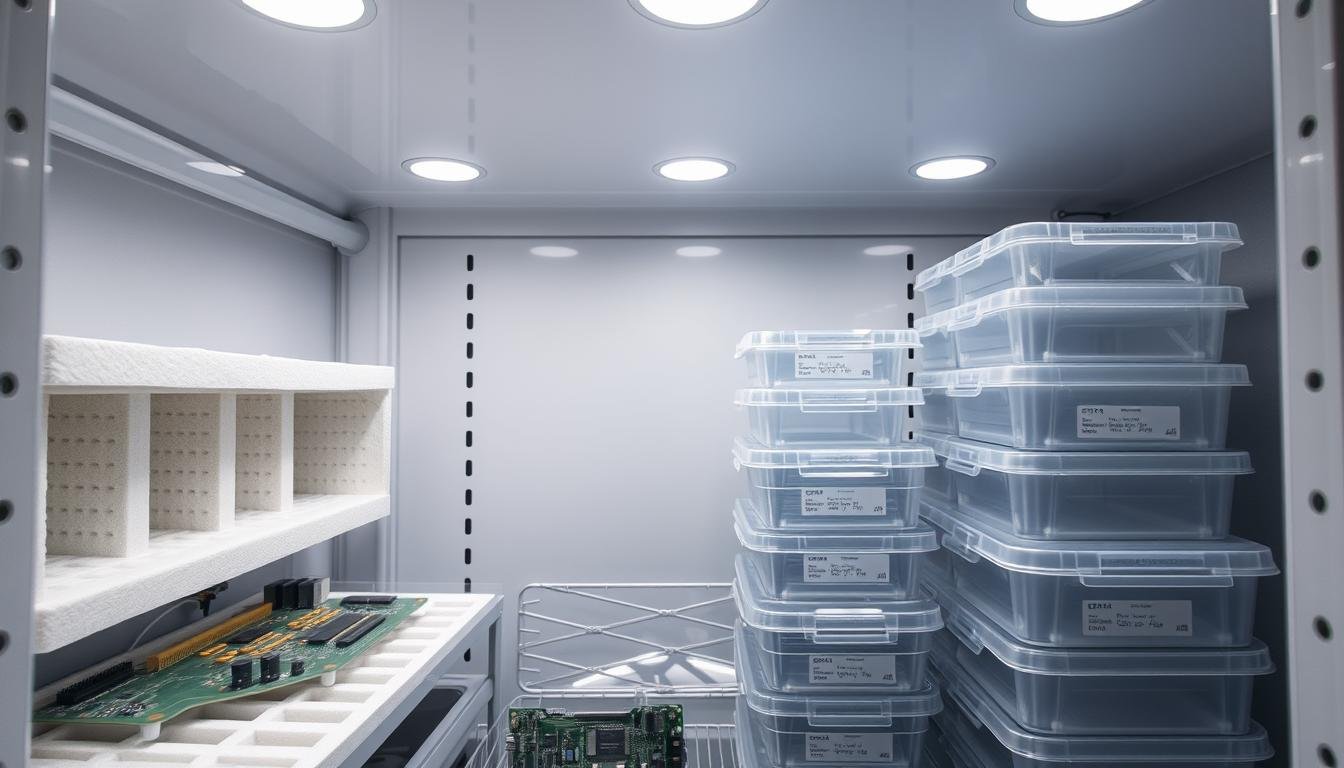
We often overlook the critical role that storage and handling play in maintaining the integrity of moisture-sensitive electronic components. The quality of these components directly impacts the reliability of the final product, and mishandling can lead to serious oxidation, rendering them unusable.
As we navigate the complexities of the electronics supply chain, it’s essential to understand the guidelines for identifying, storing, and handling moisture-sensitive devices (MSDs). Industry standards like JEDEC J-STD-020C provide a framework for ensuring component reliability.
By exploring proper storage solutions and handling procedures, we can prevent moisture-related damage and ensure the reliability of electronic assemblies. This is crucial for technical professionals and business decision-makers in electronics manufacturing.
Key Takeaways
- Understanding the importance of proper storage and handling of moisture-sensitive components.
- Guidelines for identifying and storing moisture-sensitive devices (MSDs).
- Industry standards for handling moisture-sensitive electronic components.
- Preventing moisture-related damage through proper storage solutions and handling procedures.
- Ensuring component reliability in electronic assemblies.
Understanding Moisture-Sensitive Components
Understanding moisture-sensitive components is crucial for ensuring the quality and reliability of electronic assemblies. Moisture-sensitive devices (MSDs) are components that can be damaged by exposure to moisture, which can lead to failures during the manufacturing process or in the field.
What Are Moisture-Sensitive Devices (MSDs)?
Moisture-sensitive devices are electronic components that absorb moisture from the air, potentially leading to damage when exposed to high temperatures during the soldering process. MSDs can include integrated circuits (ICs), LEDs, connectors, and other surface mount devices. These components require special handling and storage to prevent moisture-related damage.
Moisture Sensitivity Levels (MSLs) Explained
The Moisture Sensitivity Level (MSL) classification system is used to categorize components based on their sensitivity to moisture. The MSL rating ranges from Level 1 (least sensitive) to Level 6 (most sensitive). Each level has specific handling requirements, floor life limitations, and storage conditions to maintain component reliability. Understanding the MSL rating of a component is essential for proper component management and to prevent damage during manufacturing.
By recognizing the moisture sensitivity of components and adhering to the appropriate handling and storage procedures, manufacturers can significantly reduce the risk of moisture-related failures and improve overall product reliability.
The Risks of Improper Storage and Handling

Improper storage and handling of moisture-sensitive components can lead to significant reliability issues in electronic manufacturing. When these components are exposed to sudden high temperatures during the solder reflow process, the absorbed moisture can cause damage, ranging from visible cracks to internal delamination.
Moisture-Related Damage Mechanisms
During the PCB assembly process, particularly during reflow soldering, moisture-laden components are subjected to rapid temperature increases. This can cause the trapped moisture to expand, leading to internal delamination, package cracking, and other forms of physical damage. Furthermore, oxidation can occur, rendering components unusable or compromising their reliability.
Impact on Component Reliability and Manufacturing Yield
The consequences of moisture-related damage are twofold. Firstly, it affects component reliability, as damaged components may fail during assembly, testing, or even after deployment. Secondly, it impacts manufacturing yields, leading to increased production costs and potential delivery delays. Effective management of moisture-sensitive components is crucial to mitigate these risks and ensure the overall quality of the final product.
Best Practices for Storing Moisture-Sensitive Components
Effective storage of moisture-sensitive components is crucial for maintaining their integrity and ensuring reliable performance in electronic manufacturing. We recommend two primary methods for storing these sensitive components: using a dry cabinet or moisture barrier bag (MBB) packaging.
Dry Cabinet Storage Solutions
A dry cabinet is an effective storage solution for moisture-sensitive components. To achieve optimal preservation, the relative humidity inside the cabinet should be maintained below 5%, and the temperature should not exceed 30°C. This environment helps prevent moisture-related damage. For more information on managing moisture-sensitive devices, visit our detailed guide.
Moisture Barrier Bags and Dry Pack Methods
For storage and transportation, moisture barrier bags (MBBs) are used to protect components. To implement the dry pack method, components are first placed inside an MBB, followed by adding a suitable amount of desiccant and a humidity indicator card (HIC). It’s crucial not to place the HIC directly on top of the desiccant to ensure accurate humidity readings. The bag is then sealed using a heat sealer after removing as much air as possible, sometimes with the aid of a vacuum.
Desiccants and Humidity Indicator Cards
Desiccants play a critical role in absorbing moisture within the MBB, while humidity indicator cards provide a visual indication of the humidity level inside the bag. Proper placement and use of these tools are essential for maintaining a dry environment and verifying that the storage conditions remain within acceptable limits.
Proper Handling Procedures Throughout the Supply Chain

As we navigate the complexities of handling moisture-sensitive components, it’s crucial to implement proper procedures throughout the supply chain. This ensures that these sensitive components are protected from moisture-related damage, maintaining their integrity from manufacturer to final assembly.
Incoming Quality Inspection
Upon receiving Moisture Barrier Bags (MBBs) containing MSDs, we conduct an appearance inspection to verify that there are no holes, gouges, tears, punctures, or openings. This step is critical because any defects could expose the components or inner layers of the MBBs. “The quality of MSDs is paramount, and inspection is the first line of defense against moisture-related damage.”
Floor Life Management
The opening of an MBB marks the beginning of the floor life countdown for the contained MSDs. It’s essential to track and manage this time to ensure that components are used for solder reflow before their stated floor life expires. The floor life varies based on the Moisture Sensitivity Level (MSL) of the MSDs, ranging from unlimited for MSL1 to mandatory baking for MSL6 before use.
Reflow Considerations
When it comes to reflow soldering, MSDs require special considerations. This includes adhering to specific temperature profiles and being mindful of the limitations on multiple reflow cycles to prevent damage.
Baking Procedures for Exposed Components
If components have exceeded their floor life or have been exposed to moisture, baking is necessary before they can be used. The baking procedure involves specific temperature settings and duration, which vary depending on the package type and MSL level.
By following these guidelines, we can ensure the safe handling of moisture-sensitive components throughout the supply chain, ultimately protecting the integrity of our electronics manufacturing process.
Conclusion: Implementing Effective Moisture Management Protocols
To maintain the integrity of moisture-sensitive components, it’s essential to implement robust storage and handling protocols. Proper management of these components is not just a technical requirement but a business imperative that directly impacts product quality and reliability.
We recommend developing standardized procedures for component storage, floor life tracking, and handling requirements that can be implemented throughout the supply chain. This includes using dry cabinet storage solutions, moisture barrier bags, and desiccants to control moisture exposure.
By implementing these moisture management protocols, manufacturers can significantly reduce defects, improve yields, and enhance overall product reliability. Regular staff training and awareness programs are also crucial to ensure that everyone handling components understands the critical nature of moisture sensitivity.
Continuous auditing and improvement of moisture management practices will help adapt to changing component technologies and manufacturing environments, ensuring long-term success.
FAQ
What is the purpose of storing electronic components in a dry environment?
How do I determine the moisture sensitivity level of a component?
What is the role of desiccants in storing moisture-sensitive components?
Can moisture-sensitive components be stored on the floor?
How often should I inspect stored moisture-sensitive components?
What is the recommended procedure for baking exposed moisture-sensitive components?
Are there specific guidelines for handling moisture-sensitive components during reflow?
How can I ensure that my storage facilities meet the required conditions for moisture-sensitive components?
About The Author
