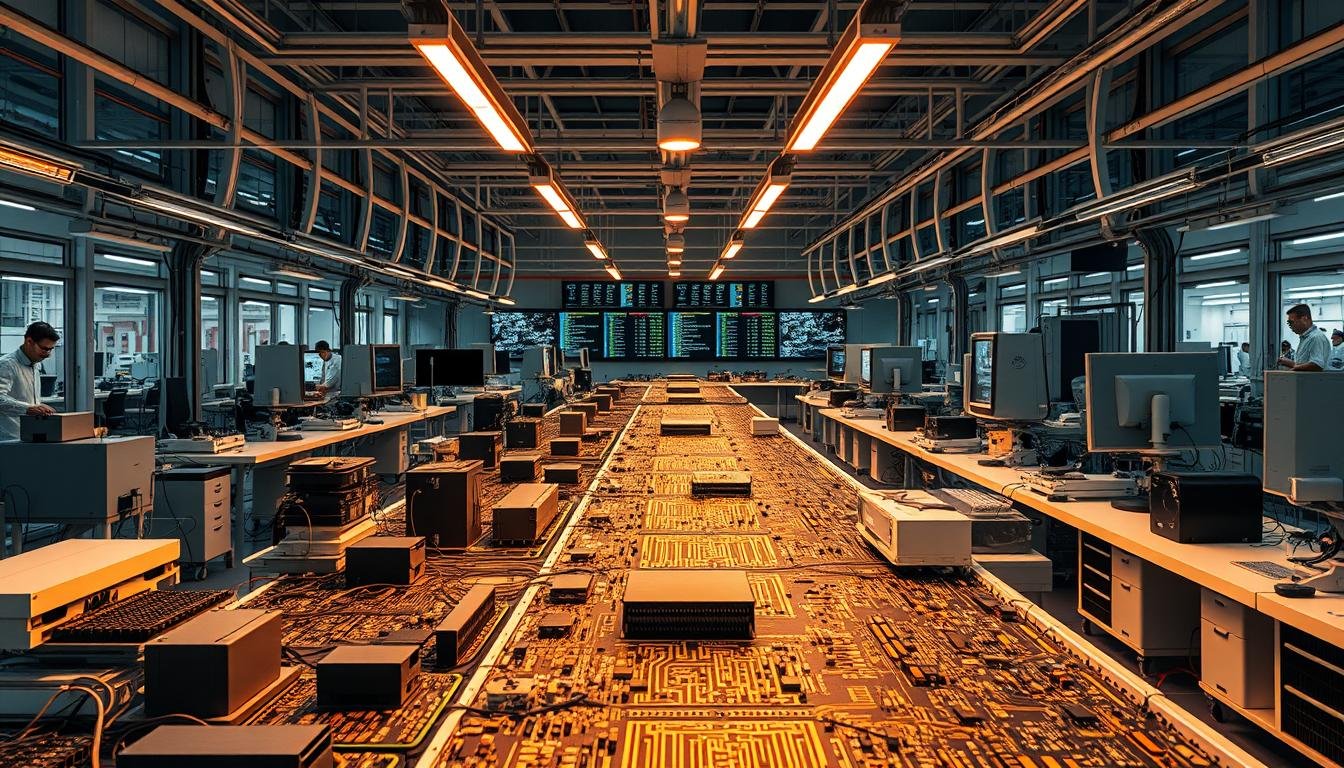
When lives and infrastructure depend on flawless performance, can your monitoring hardware afford any margin for error? Modern surveillance operations demand more than basic component assembly – they require precision-engineered solutions where every connection, interface, and subsystem works in perfect harmony.
We specialize in creating integrated technical solutions that transform standalone components into robust operational platforms. Our methodology combines advanced PCB integration with mechanical assembly, thermal management, and rigorous validation protocols. This approach ensures each unit meets exacting standards for reliability in high-stakes environments.
Technical professionals recognize that true system readiness extends beyond individual part quality. It requires meticulous coordination between power distribution networks, data processing modules, and user interface elements. Through strategic partnerships, we deliver fully configured solutions ready for immediate deployment in monitoring centers nationwide.
Key Takeaways
- Mission-critical environments demand zero-failure integration of electronic subsystems
- Comprehensive assembly processes combine PCB integration with mechanical and thermal solutions
- Rigorous testing protocols exceed industry standards for reliability assurance
- Scalable designs accommodate future technology upgrades and system expansions
- Collaborative development aligns technical specifications with operational requirements
Overview of Box Build Assemblies for Central Monitoring Station Equipment
Critical infrastructure monitoring relies on precision integration where electronic and mechanical elements merge into cohesive operational units. Our approach transforms standalone parts into mission-ready systems through layered technical processes that prioritize reliability above all else.
Definition and Scope of Box Build Assembly
We define this method as a holistic manufacturing process combining circuit boards with auxiliary elements to create operational devices. Unlike basic PCB work, it involves seven specialized stages: component validation, lead preparation, harness creation, precision soldering, sequential mechanical assembly, environmental sealing, and system verification.
The electrical foundation uses printed circuit boards as central hubs, connecting sensors, processors, and communication modules. Structural execution follows an inside-out methodology, securing delicate electronics before adding protective enclosures and interface components.
Significance in Central Monitoring Station Equipment
Modern surveillance hubs require uninterrupted coordination between power systems, data networks, and user interfaces. Our assemblies ensure electromagnetic stability and thermal efficiency – critical factors when processing real-time data from multiple sources.
Through rigorous testing protocols, we achieve 99.998% operational reliability in finished units. This precision prevents signal degradation and hardware conflicts, enabling 24/7 performance in environments where system failures carry severe consequences.
Fundamentals of Box Build Assembly Manufacturing
Reliable system integration begins long before components meet the production floor. Our three-phase methodology transforms raw materials into mission-ready solutions through precision planning and verification.
Assembly Preparation and Material Considerations
We initiate every project with technology file analysis, mapping material requirements to operational demands. Our engineers evaluate components for electromagnetic stability, thermal resilience, and mechanical endurance – critical factors in 24/7 monitoring environments.
Material procurement follows strict protocols. We source connectors, wiring, and enclosures rated for continuous operation, ensuring compatibility across subsystems. Thermal interface compounds and shielding materials undergo compatibility testing before integration.
Quality Control and Inspection Techniques
Our verification process combines human expertise with automated systems. Vision inspection machines scan solder joints while technicians assess tactile elements like switch resistance and knob rotation smoothness.
Key inspection benchmarks include:
- Microscopic examination of circuit connections
- Continuity testing for all signal paths
- Environmental stress simulations
Documentation trails track each component from receipt to final assembly, creating accountability at every manufacturing stage. This dual-layer approach – technical precision paired with hands-on validation – delivers systems that perform when failure isn’t an option.
Key Assembly Approaches and Layout Considerations
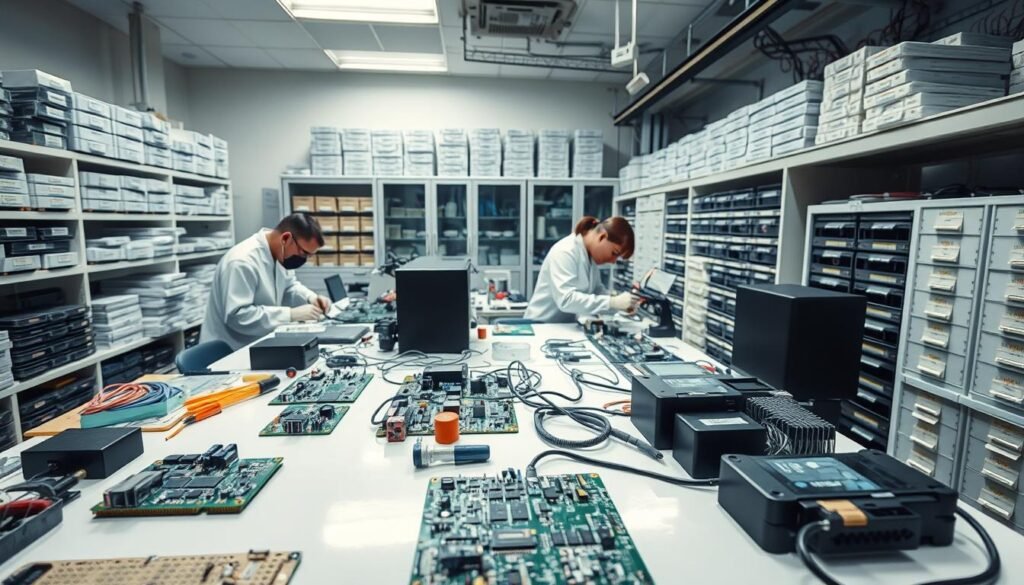
Strategic design decisions determine whether complex systems succeed or falter under pressure. We optimize reliability through three specialized assembly methods paired with physics-driven layout protocols.
Function, Component, and Functional Component Approaches
Our Function Approach creates self-contained modules for critical subsystems. Each unit operates independently, allowing technicians to test power distribution or data processing circuits without disrupting adjacent components. This method reduces downtime during maintenance cycles.
For standardized projects, the Component Approach accelerates production. Identical connectors and wiring harnesses enable rapid PCB integration while maintaining signal consistency across multiple units. We deploy this method for surveillance nodes requiring identical configurations.
Our hybrid Functional Component Approach merges customization with scalability. Integrated sensor arrays use modular designs that adapt to facility layouts while maintaining uniform power requirements. This balances specialized needs with cost-effective manufacturing.
Layout Principles: Power, Thermal Management, and Accessibility
Effective spatial planning begins with weight distribution. Heavy power supplies anchor the base structure, lowering the center of gravity. Control interfaces occupy upper zones for ergonomic access, reducing operator fatigue during extended shifts.
Thermal optimization follows three rules:
| Component Type | Placement Strategy | Cooling Solution |
|---|---|---|
| High-power processors | Perimeter zones | Heat sinks + forced air |
| Voltage regulators | Isolated chambers | Thermal pads + conduction |
| Signal amplifiers | Vertical stacks | Passive convection |
Access doors and test ports align with maintenance workflows. Our teams position diagnostic interfaces within arm’s reach, ensuring swift troubleshooting without disassembling protective casings. This layout philosophy extends equipment lifespan while meeting strict uptime mandates.
PCB Assembly vs. Box Build Assembly: Integration and Manufacturing Insights
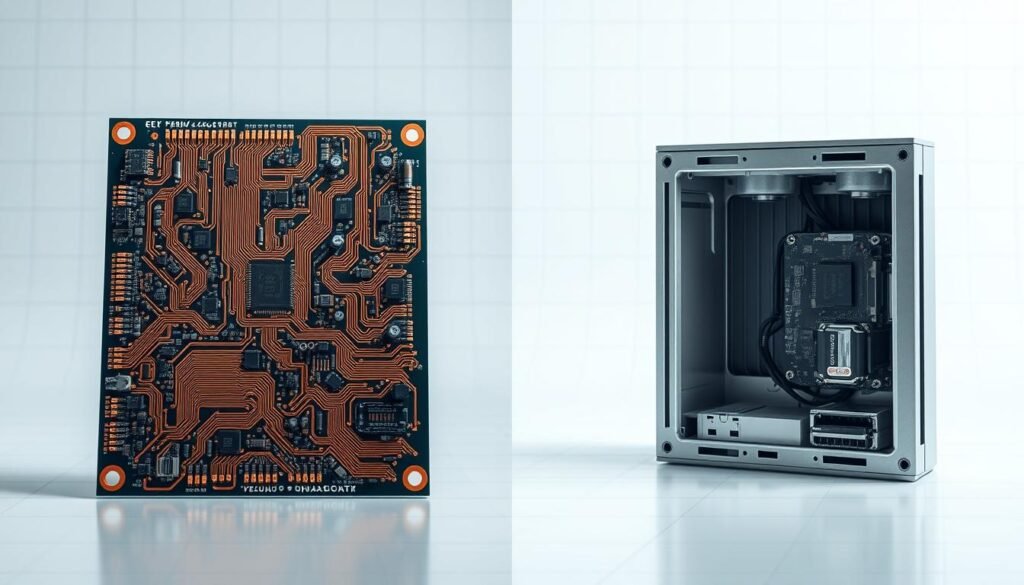
Choosing between PCB assembly and full-system integration determines project timelines and operational outcomes. We help technical teams select optimal manufacturing strategies through transparent process comparisons.
Understanding the PCB Assembly Process
Our PCB assembly services form the electronic backbone of monitoring systems. Surface Mount Technology (SMT) positions microscopic components with 0.005mm accuracy, while Through-Hole Technology (THT) secures high-stress connections. The process follows four critical phases:
- Solder paste application through precision stencils
- Automated component placement at 25,000 parts/hour
- Controlled reflow soldering with ±2°C thermal regulation
- Multi-stage inspection using AOI and ICT systems
Comparative Analysis of Assembly Methods
While PCB work focuses on circuit functionality, box integration creates operational devices. This table highlights key differences:
| Aspect | PCB Assembly | Box Build |
|---|---|---|
| Focus Area | Circuit functionality | Full system operation |
| Typical Components | Resistors, ICs, capacitors | Enclosures, wiring, interfaces |
| Validation Time | 2-4 hours/test cycle | 8-12 hours/system check |
Applications in Prototyping and High-Volume Production
PCB techniques dominate early development phases where engineers validate signal integrity and power distribution. We typically produce 5-25 prototype boards for client evaluations. When scaling to 1,000+ units, box build methods ensure consistent mechanical integration across production batches.
Transitioning between phases requires coordinated design adjustments. Our teams modify PCB layouts to accommodate enclosure specs months before manufacturing begins, preventing costly reworks during volume production.
Integration of Enclosures, Wiring, and Mechanical Components
Seamless system operation hinges on meticulous coordination between physical structures and electronic pathways. Our integration process transforms individual elements into unified solutions through precision engineering and strategic spatial planning.
Optimized Signal Path Design Principles
We implement three core strategies for maintaining signal integrity while ensuring serviceability:
| Wire Type | Routing Technique | Shielding Method |
|---|---|---|
| High-frequency signals | Vertical crossovers | Double-layer braiding |
| Power conductors | Direct channeling | EMI-resistant conduits |
| Control circuits | Modular separation | Ferrite bead isolation |
Our teams secure harnesses within 2″ of mounting surfaces using vibration-dampening clamps. This approach prevents fatigue failures while allowing quick access during maintenance cycles. Component leads maintain 15-20% slack for service adjustments without compromising electrical performance.
Environmental adaptability drives enclosure selection. We specify materials based on thermal expansion coefficients and corrosion resistance. Custom-machined aluminum housings dominate harsh environments, while polymer composites serve weight-sensitive applications.
Human-machine interfaces receive special attention. Control panels undergo ergonomic testing to verify switch placement and display visibility. Our technicians validate accessibility through simulated emergency scenarios, ensuring intuitive operation under stress conditions.
Conclusion
Modern surveillance operations demand solutions where every connection and subsystem performs flawlessly under pressure. Our expertise lies in transforming standalone electronics into mission-critical systems through precision integration. We’ve shown how comprehensive assembly processes bridge the gap between individual parts and operational readiness.
Rigorous testing protocols ensure 99.998% reliability – a non-negotiable standard for 24/7 monitoring environments. Customized manufacturing approaches adapt to evolving technical requirements, whether scaling production or refining prototypes.
As partners in product development, we combine technical mastery with collaborative problem-solving. Our services deliver more than functional devices; they create resilient infrastructure capable of protecting assets and communities.
When operational continuity matters most, trust evolves from consistent performance. Let’s engineer solutions that exceed expectations – today and tomorrow.
FAQ
How do box build assemblies differ from standard PCB manufacturing?
What thermal management strategies work best for 24/7 monitoring systems?
How do you verify electromagnetic compatibility in central station devices?
What connector types ensure reliable sensor network integration?
Can you support hybrid prototypes combining legacy and IoT components?
What documentation accompanies completed assemblies?
How do you handle obsolescence management for long-lifecycle systems?
About The Author
