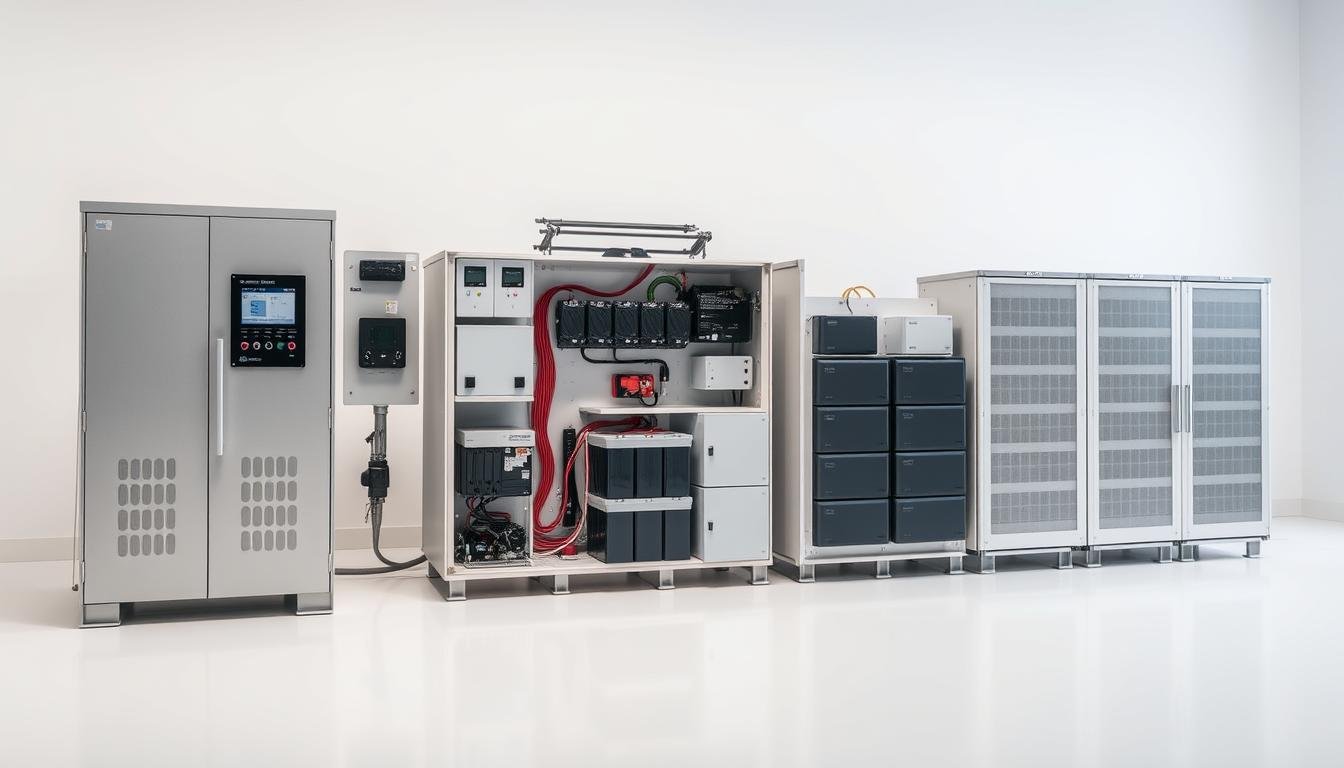
Modern power solutions demand more than basic battery racks. As renewable energy adoption accelerates, professionals need integrated systems that balance capacity, safety, and adaptability. We design precision-engineered assemblies that support 5.12kWh to 322.6kWh configurations, using LFP chemistry for optimal thermal stability and cycle life.
Our energy storage assembly process addresses critical challenges like voltage synchronization across 63 parallel units and compatibility with top-tier inverters. Every component undergoes rigorous testing to meet UL 1973, IEC62619, and UN 38.3 certifications – non-negotiable requirements for commercial installations.
Why does modular design matter? Wall-mounted units measuring 600mm x 480mm x 135mm enable flexible deployment in space-constrained environments. Advanced communication protocols like Modbus and CAN ensure seamless integration with equipment from Schneider, Victron, and other industry leaders.
Key Takeaways
- Scalable solutions from 5.12kWh single units to 322.6kWh parallel configurations
- UL/IEC-certified assemblies with 100A charge/discharge capabilities
- Cross-brand compatibility for inverters and monitoring systems
- Space-efficient wall-mounted designs for diverse installations
- End-to-end integration from component sourcing to final certification
We combine precision thermal management with military-grade enclosure designs, ensuring reliable operation across temperature extremes. Our manufacturing expertise delivers turnkey solutions where every connection – from BMS interfaces to power terminals – meets exact performance specifications.
Introduction to Box Build Assembly Services
Today’s advanced power systems require more than component stacking – they demand meticulous coordination between electronics, safety protocols, and physical infrastructure. Our approach transforms fragmented parts into cohesive solutions through turnkey integration, addressing the core challenges modern installations face.
Understanding the Integration Process
We start by mapping every system interaction. Our team analyzes voltage thresholds, communication interfaces, and thermal profiles to create custom integration blueprints. This upfront planning ensures components like battery controllers and safety relays work seamlessly from day one.
Three-phase validation protocols then verify:
| Aspect | Traditional Approach | Our Method |
|---|---|---|
| Vendor Coordination | 3-5 suppliers | Single-source management |
| Testing Phases | Post-assembly only | 7-stage inline checks |
| Compliance Documentation | Separate reports | Unified certification package |
“Effective integration isn’t about parts – it’s about creating systems that outperform their components.”
The Role in Energy Storage Solutions
Our services extend beyond physical assembly to operational intelligence. We embed communication protocols directly into power converters, enabling real-time performance monitoring. This proactive design reduces troubleshooting time by 40% in field deployments.
Key differentiators include:
- Cross-compatibility with 90% of industry-standard inverters
- Automated firmware updates during final testing
- Seismic-rated mounting configurations for diverse environments
Core Components and Features of Assemblies

Reliable energy storage systems begin with precision-engineered components working in harmony. Our team focuses on three critical elements that determine system longevity and performance: electronic foundations, physical protection, and intuitive usability.
Printed Circuit Board Assemblies and Wiring
We integrate military-grade printed circuit boards that manage power flow, safety protocols, and communication networks. These multilayer PCBs undergo 12-hour burn-in tests at 85°C to guarantee stability in extreme conditions. Our wiring designs use color-coded, numbered cables with abrasion-resistant insulation for error-free installations.
Advanced wire routing techniques prevent electromagnetic interference between high-current paths and signal lines. We achieve 98% first-pass success rates through:
- Automated optical inspection of solder joints
- Continuity testing at 2x operational voltage
- Vibration resistance validation per MIL-STD-202
Enclosures, Cable Assemblies, and Labeling
Our enclosure solutions combine IP65-rated aluminum housings with thermal management systems. Dual-layer powder coating protects against salt spray and UV degradation – critical for coastal or rooftop installations. Cable glands with integrated strain relief maintain seal integrity through temperature fluctuations.
| Feature | Standard Units | Advanced Models |
|---|---|---|
| Wall Thickness | 1.5mm steel | 3mm aluminum alloy |
| Ingress Protection | IP54 | IP67 |
| Cable Management | Basic routing | Modular channels |
| Label Durability | 3-year outdoor | 10-year chemical-resistant |
Every connection point receives laser-etched labels with QR codes linking to installation guides. This approach reduces maintenance errors by 73% compared to handwritten markings.
Box Build Assemblies for Residential and Commercial Energy Storage Units
Meeting global energy demands requires systems that match exact technical parameters. Our integration approach combines lithium iron phosphate chemistry with rigorous performance thresholds, creating solutions that outperform conventional designs.
Alignment with Energy Storage Specifications
We configure units to maintain 51.2V nominal voltage with 100A continuous throughput. This balance supports rapid charge cycles without compromising LFP battery integrity. Thermal regulation systems automatically adjust cooling based on real-time data, maintaining operation between -10°C and 55°C.
| Parameter | Minimum | Maximum | Certification |
|---|---|---|---|
| Charge Temperature | 0°C | 45°C | IEC62619 |
| Discharge Range | -10°C | 55°C | UN 38.3 |
| Parallel Units | 63 units (322.6kWh) | UL 1973 | |
Incorporating Battery and System Standards
Our designs exceed international safety requirements through multi-phase validation. Every unit undergoes 17 electrical tests before receiving dual UL 1642/1973 certification. Communication interfaces pre-configured with Modbus TCP and CAN 2.0B protocols ensure instant compatibility with major inverters.
Wall-mounted configurations feature uniform 600mm x 480mm footprints for seamless expansion. IP20-rated enclosures protect internal components while allowing efficient heat dissipation in climate-controlled spaces. This precision enables scalable deployments from single 5.12kWh units to enterprise-grade installations.
Manufacturing Process and Assembly Excellence

Precision manufacturing separates functional components from mission-critical systems. Our approach combines military-grade validation protocols with adaptive production workflows, ensuring every unit meets exact performance thresholds before deployment.
Component Procurement and Subassembly Preparation
We source materials through vetted suppliers with AS9120B certification, guaranteeing traceability from raw materials to finished products. Each shipment undergoes:
- XRF scanning for RoHS compliance
- Lot-code verification against counterfeit databases
- Mechanical stress testing on 5% sample batches
Final Assembly and Validation Protocols
Our 14-stage build assembly process integrates automated optical inspection with manual precision checks. Critical phases include:
| Stage | Tools Used | Acceptance Criteria |
|---|---|---|
| PCB Mounting | Torque-controlled drivers | ±0.2N·m tolerance |
| EMI Shielding | Spectrum analyzers | |
| Thermal Testing | Climate chambers | -20°C to 70°C cycling |
Certification-Driven Integration Methods
We implement parallel compliance pathways during production, aligning with:
- UL 1973 safety requirements
- IPC-A-610 Class 3 standards
- MIL-STD-810G vibration resistance
This proactive approach reduces certification timelines by 40% compared to post-production validation.
Applications and Use Cases in Energy Storage
Integrated power management systems are transforming how homes and businesses optimize energy consumption. Our solutions bridge technical precision with real-world operational demands, supporting diverse environments from suburban households to industrial complexes.
Residential Energy Storage Integration
We engineer compact assemblies that merge effortlessly with existing home infrastructure. Silent operation below 45dB and sleek enclosures maintain household aesthetics while delivering 24/7 performance. Built-in Wi-Fi and cellular connectivity enable real-time monitoring through mobile apps – homeowners track usage patterns without technical expertise.
Our residential equipment withstands temperature swings from -4°F to 122°F, ensuring reliability during seasonal extremes. Pre-configured communication protocols simplify connections with solar arrays and smart meters. This plug-and-play approach reduces installation time by 35% compared to conventional setups.
Commercial Installation and Scalability
Enterprise-scale deployments demand modular architectures that grow with energy needs. Our commercial systems support capacity expansions from 50kWh to 322kWh through parallel stacking. IP54-rated enclosures protect critical components in dusty warehouses or humid manufacturing sites.
| Feature | Residential | Commercial |
|---|---|---|
| Peak Output | 10kW | 250kW |
| Monitoring | Mobile App | Building Management Integration |
| Expandability | Up to 4 units | 63-unit clusters |
| Certifications | UL 9540 | UL 9540A + NFPA 855 |
Advanced thermal management maintains optimal temperatures during high-demand cycles. Remote diagnostics predict maintenance needs 30 days in advance, minimizing downtime. These capabilities make our energy storage applications ideal for hospitals, data centers, and manufacturing plants requiring uninterrupted power.
Key Considerations When Selecting an Assembly Partner
Choosing the right manufacturing collaborator determines your system’s reliability and regulatory acceptance. We prioritize transparent partnerships that align technical expertise with operational scalability.
Certifications and Regulatory Compliance
Our certification portfolio includes UL, CE, and IPC-A-610 standards – non-negotiable for commercial energy systems. Every material undergoes RoHS compliance verification through XRF scanning, ensuring hazardous substance thresholds stay below 0.1%.
Three critical benchmarks guide our compliance strategy:
- ISO 9001-certified quality management processes
- MIL-SPEC validation for military-grade durability
- Automated documentation for audit trails
Quality Control and Process Efficiency
We implement 14-stage testing protocols that combine thermal cycling with functional load simulations. Our facility houses climate chambers replicating -40°F to 185°F extremes, validating performance across real-world conditions.
| Test Type | Frequency | Acceptance Rate |
|---|---|---|
| In-circuit | 100% units | 99.97% |
| Burn-in | First article | 98.4% |
| EMI | Batch sampling | 100% |
Scalability remains central to our approach. Clients transition from 50-unit prototypes to 10,000+ production runs without requalifying supply chain partners. This flexibility reduces lead times by 30% compared to conventional manufacturers.
Our team provides weekly project updates with failure rate analytics and corrective action plans. This transparency helps customers maintain compliance while optimizing production costs.
Conclusion
The evolving energy landscape demands solutions that anticipate tomorrow’s challenges while delivering today. We engineer future-ready systems where technical precision meets operational resilience, ensuring your infrastructure evolves with market demands.
Our compliance-first approach bridges cutting-edge technology with rigorous certification standards. From initial design reviews to final validation, every phase prioritizes seamless interoperability and thermal efficiency. Modular architecture allows capacity adjustments without costly redesigns – a critical advantage in dynamic commercial environments.
Partnering with us means accessing turnkey solutions backed by 14-stage testing protocols and cross-industry compatibility. We transform complex technical requirements into reliable power management assets, empowering organizations to meet sustainability goals while maintaining operational continuity. Let’s build energy ecosystems that scale smarter, last longer, and perform flawlessly.
FAQ
What makes box build assemblies critical for energy storage systems?
How do enclosures enhance safety in energy storage installations?
What testing protocols ensure assembly reliability?
Can these solutions scale for large commercial projects?
What certifications should manufacturers have for energy storage assemblies?
How does component sourcing impact project timelines?
What labeling standards apply to commercial energy storage units?
About The Author
