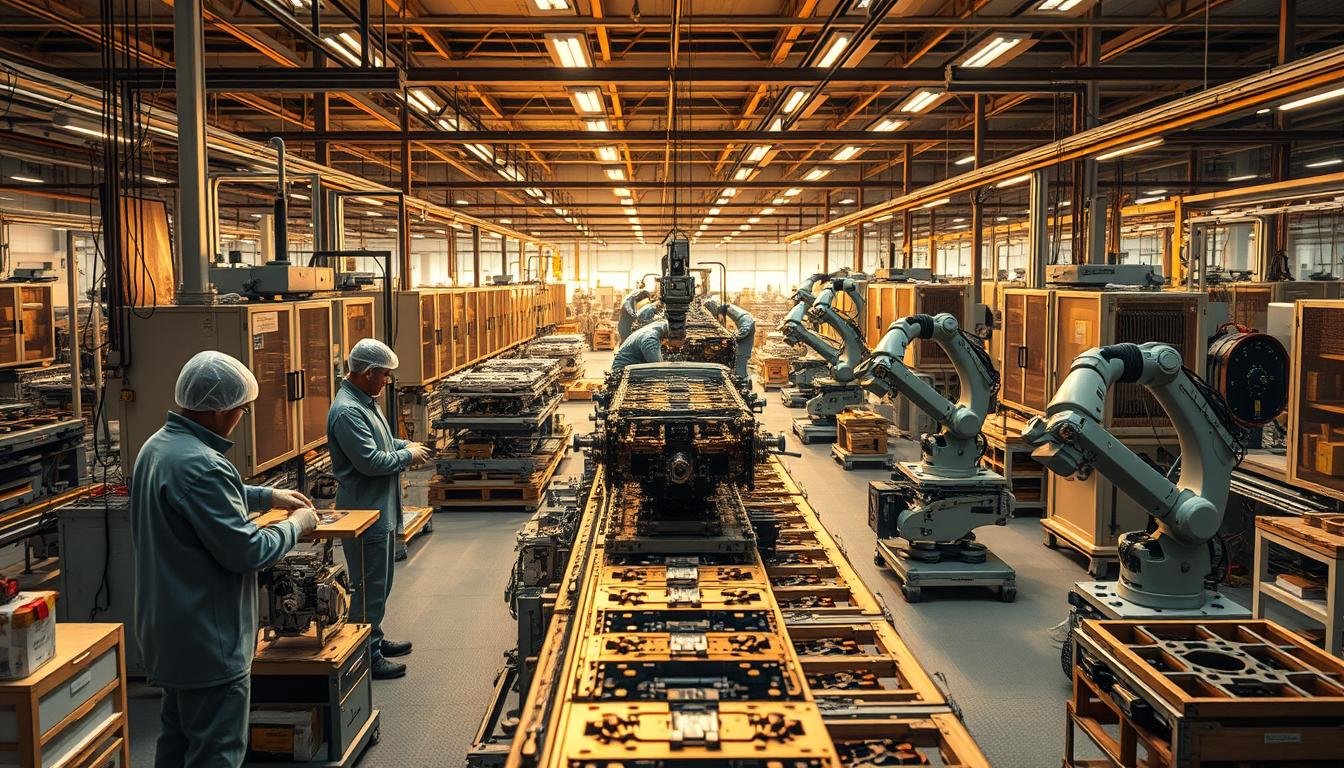
Manufacturing transfers are complex, especially in regulated industries like medical devices where components and processes are carefully controlled. Companies often face challenges when transitioning their product assets and production from an existing manufacturer to a new solution provider.
We recently managed a successful manufacturing transfer from a previous supplier, overcoming significant challenges along the way. The key to our success lay in a strategic approach that ensured continuity of production while maintaining rigorous quality standards.
Our experience demonstrates that with the right methodology, seamless transitions are possible, minimizing disruption to the supply chain and business operations. In this article, we’ll explore the critical factors that necessitated the transition and the solutions we implemented.
Key Takeaways
- Understanding the complexities of manufacturing transfers in regulated industries.
- The importance of maintaining product quality during a supplier transition.
- Strategies for ensuring continuity of production.
- Our proven methodology for minimizing disruption to the supply chain.
- Becoming a trusted production partner for companies facing similar challenges.
The Challenge: Why Manufacturing Transfers Become Necessary
Companies may be forced to reevaluate their supply chain when their existing supplier faces operational disruptions. In the case of a medical device company, the challenge became particularly pronounced when their supplier’s facility was scheduled for closure following an acquisition.
The Medical Device Company’s Situation
The medical device company in our case study produced reusable patient electrode return pads that protect patients from burns during electrosurgery. Their existing supplier’s facility closure due to an acquisition necessitated a swift transfer of production to avoid supply chain disruptions, which could potentially lead to surgery cancellations. The product line had been established for many years, with specialized knowledge concentrated among a few employees at the current supplier.
Critical Timeline Constraints
The timeline constraints were particularly demanding, as any disruption in the supply chain could impact patient care. The company needed to find a new supplier to meet an extremely tight timeline with full production as quickly as possible. To achieve this, they had to secure and verify all current documentation and records for the product line, ensuring they were up-to-date and under proper document control to meet medical device regulatory requirements.
| Challenge | Impact | Requirement |
|---|---|---|
| Supplier Facility Closure | Potential Supply Chain Disruption | Swift Transfer of Production |
| Specialized Knowledge | Limited Expertise | Knowledge Transfer |
| Regulatory Compliance | Risk of Non-Compliance | Proper Document Control |
Understanding the Risks in Supplier Transitions
Transferring manufacturing to a new supplier is often complicated by a range of issues that can compromise quality and delay production. At its core, a successful transition hinges on mitigating these risks effectively.
Common Manufacturing Transfer Issues
Several challenges commonly arise during manufacturing transfers. These include unexpected processing and production issues due to the new supplier’s unfamiliarity with the current manufacturing process, and equipment compatibility problems that necessitate costly modifications. We have observed that quality control considerations are paramount, particularly when legacy information about acceptable quality parameters and dimensional tolerances is not fully documented or transferred.
- Manufacturing transfers inherently carry significant risks that can impact product quality, production timelines, and overall business continuity.
- One of the primary challenges is the potential knowledge gap when transitioning to a new supplier.
- Equipment compatibility issues frequently arise during transfers.
Quality Control Considerations
Quality control is a critical aspect of any manufacturing transfer. As highlighted by industry experts, “Quality issues can arise from the lack of detailed documentation regarding previously agreed-upon quality expectations and dimensional variances.” Ensuring that the new supplier is fully informed and aligned with these expectations is crucial. We emphasize the importance of thorough documentation transfer to avoid quality issues and supply chain disruptions.
Case Study: A Seamless Transition from a Previous Supplier to Our Factory
We recently facilitated a seamless transition for a medical device company from their existing supplier to our factory, showcasing our capabilities in managing complex manufacturing transfers.
Project Overview and Scope
This project involved transitioning the production of critical electrosurgical components from the company’s existing supplier to our factory. The scope was multifaceted, encompassing multiple product SKUs with various purchased components, which required meticulous planning and execution to ensure a smooth transfer.
The project’s complexity was heightened due to the critical nature of the product in medical procedures, necessitating uncompromising quality while meeting aggressive timeline requirements.
| Project Aspect | Description |
|---|---|
| Product SKUs | Multiple, with various purchased components |
| Quality Requirements | Uncompromising, due to critical nature in medical procedures |
| Timeline | Aggressive, to meet market demands |
Unique Challenges of This Transfer
The transfer presented several unique challenges, including capturing undocumented tribal knowledge from the previous supplier and ensuring equipment compatibility.
Our team had to navigate a complex validation process involving multiple stakeholders across the supply chain, as components underwent additional procedures at other suppliers before reaching the end customer.
- Capturing Tribal Knowledge: Ensuring that undocumented knowledge from the previous supplier was captured and integrated into our process.
- Equipment Compatibility: Verifying that equipment was compatible and functional.
- Production Continuity: Maintaining production continuity throughout the transition to prevent market shortages.
Our Strategic Approach to the Transition

At the heart of our manufacturing transfer strategy is a commitment to treating each project with the same rigor as new product development. This approach ensures that we thoroughly understand the product, the manufacturing process, and the quality requirements, thereby minimizing risks during the transfer.
Comprehensive Transfer Planning
Our strategic approach begins with developing a comprehensive project charter that identifies all stakeholders and process inputs. This includes understanding equipment specifications, procedures, supply chain components, potential failure modes, and quality requirements. By doing so, we lay the groundwork for a smooth transition that meets the client’s needs and timelines.
The On-Site Assessment Team
A critical element of our strategy is deploying a specialized on-site assessment team to the customer’s facility while production is still active at the previous supplier. This cross-functional team, comprising Process Engineers, Quality Engineers, Manufacturing Engineers, and experienced Operators, studies the entire manufacturing process to capture both documented procedures and undocumented tribal knowledge.
| Team Member | Role | Responsibility |
|---|---|---|
| Process Engineer | Process Optimization | Analyzing and documenting the manufacturing process |
| Quality Engineer | Quality Control | Ensuring quality standards are met during the transfer |
| Manufacturing Engineer | Production Planning | Planning and executing the production workflow |
By combining comprehensive transfer planning with the insights gained from our on-site assessment team, we ensure that the transfer is executed with minimal disruption to the client’s production schedule, maintaining the highest quality standards throughout the process.
Key Implementation Steps for a Successful Transfer
A successful manufacturing transfer requires meticulous planning and execution to ensure a seamless transition. Our implementation strategy follows a carefully structured sequence to ensure all aspects of the manufacturing process are successfully transferred without compromising quality or production timelines.
Equipment Transfer and Installation Process
We deployed maintenance personnel to the original manufacturing site during equipment teardown and shipment to gain firsthand knowledge of the machinery, enabling confident reassembly at our facility. Prior to equipment arrival, we prepared our facility with all necessary utilities and infrastructure based on detailed specifications, creating an optimized environment for the transferred production line.
Documentation and Knowledge Transfer
The documentation and knowledge transfer process involved creating comprehensive standard operating procedures (SOPs) that incorporated both formal documentation and the tribal knowledge gathered during our on-site assessment. We invited the customer’s engineers and operators to participate in the equipment installation and validation phases, fostering collaboration and ensuring their specialized knowledge was incorporated into our manufacturing process. For more information on successful transitions, you can refer to our guide on IT project handover checklist or learn about choosing the right partner for your electronics business at PCB assembly factory selection.
- Our team ensured a smooth transition by following a structured implementation strategy.
- Detailed equipment specifications were requested upfront to prepare our facility.
- Customer engineers and operators were invited to participate in equipment installation and validation.
Quality Assurance During the Transition Period

To guarantee a seamless transition, we implemented stringent quality control protocols. Ensuring quality assurance during this period was crucial to meet the updated expectations from our end customer.
Validation Processes and Challenges
Validation was the biggest hurdle due to the updated quality expectations. When validation activities began, it became clear that there was a validation scope change from different quality groups, resulting in a disconnect. The customer informed us that they had to perform Gage R&R and dimensional characterization of the parts, revealing many dimensions that were out-of-spec.
- Rigorous validation processes ensured the transferred production line met all specifications and regulatory requirements.
- Comprehensive validation protocols included equipment qualification, process validation, and product testing.
- Unexpected challenges emerged when validation activities revealed dimensional inconsistencies in the product.
Maintaining Production Standards
Our engineering team conducted additional studies to resolve legacy quality issues, working closely with the customer to establish appropriate specifications. Throughout the transition period, we maintained a dual focus on establishing the new production line and ensuring continuous improvement of quality standards.
| Validation Activity | Purpose | Outcome |
|---|---|---|
| Gage R&R | Assess measurement system accuracy | Identified out-of-spec dimensions |
| Dimensional Characterization | Verify product specifications | Revealed legacy quality issues |
| Equipment Qualification | Ensure equipment meets requirements | Confirmed equipment readiness |
For more information on navigating transitions, visit our blog post on navigating the transition from prototypes to mass production with your.
Measurable Results and Client Benefits
With precision and care, we executed the manufacturing transfer, achieving outstanding results for our client. The successful transition of production from a previous supplier to our factory was a testament to our team’s expertise and dedication.
Production Timeline Achievements
The equipment transfer and installation process was completed efficiently, with production readiness achieved within just two weeks of equipment arrival. This was significantly faster than the industry average for similar transfers. Our ability to bring the production line online quickly was a direct result of our comprehensive transfer planning and rigorous quality control processes.
Quality and Cost Improvements
Our rigorous quality control processes ensured that the parts produced at our facility matched or exceeded the dimensional and cosmetic standards of the previous supplier. The client benefited from improved production predictability and transparency, with clear communication channels and documentation. We identified and implemented process improvements that enhanced efficiency and reduced variability in the manufactured parts, providing additional value to the client.
- The equipment arrived without damage and was installed within two weeks, enabling swift production commencement.
- Our quality control measures maintained product integrity, matching or exceeding previous standards.
- The client enjoyed improved production predictability and transparency.
- Process improvements enhanced efficiency and reduced variability in manufactured parts.
Conclusion: Lessons Learned for Future Manufacturing Transfers
Through this complex manufacturing transfer, we have gained significant knowledge that has shaped our approach to subsequent projects. One key takeaway is the importance of establishing clear, comprehensive validation criteria with all stakeholders at the outset to prevent scope changes during validation.
We also confirmed the value of sending a cross-functional team to observe and document the production process at the original supplier before beginning any physical transfer activities. This thorough understanding helps the team prepare for potential challenges and gather knowledge on past quality issues.
- Proper planning and on-site assessment are crucial for successful manufacturing transfers.
- Transparent communication with both the outgoing supplier and stakeholders ensures alignment throughout the transition.
- Rigorous validation protocols are essential to maintaining product quality and minimizing supply chain disruptions.
By applying these lessons, we have refined our approach to manufacturing transfers, ensuring that future projects are executed efficiently while maintaining the highest quality standards.
FAQ
What are the common issues that arise during a manufacturing transfer?
How do you ensure quality control during a supplier transition?
What is the typical timeline for a manufacturing transfer?
How do you handle equipment transfer and installation?
What are the benefits of partnering with a trusted electronics manufacturing company?
How do you maintain production standards during a transfer?
What is the role of documentation in a manufacturing transfer?
How do you handle supply chain disruptions during a transfer?
About The Author
