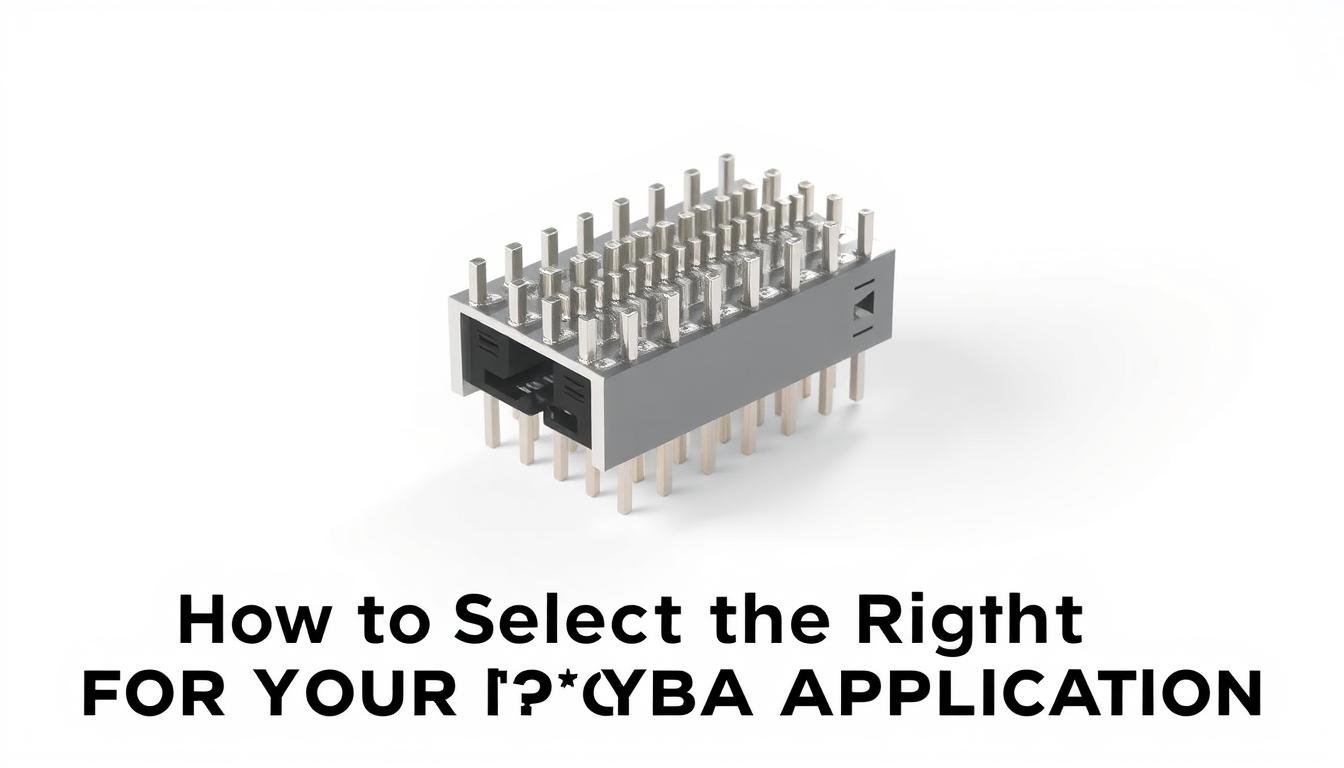
Printed Circuit Board Assembly (PCBA) design is a complex process where reliability is paramount. At the heart of this process are connectors, the backbone of any electronic system, ensuring reliable communication and power delivery between components. A poorly chosen connector can lead to signal degradation, overheating, or mechanical failure, ultimately compromising the entire system.
We understand that selecting the optimal connector for your PCBA application is crucial. It requires a careful analysis of your application’s specific needs, including environmental conditions, current/voltage requirements, and space constraints. By choosing the right connector, you can improve performance, reduce costs, and extend the lifespan of your design.
Key Takeaways
- Understand the various types of connectors available for PCB applications.
- Analyze your application’s specific needs, including environmental conditions and space constraints.
- Choose a connector that optimizes performance and reliability.
- Consider the impact of connector selection on manufacturing efficiency and maintenance accessibility.
- Ensure the selected connector meets the required current/voltage requirements.
The Critical Role of Connectors in PCBA Design
The selection of connectors is a critical decision in PCBA design that affects the system’s reliability and efficiency. Connectors are not just simple components; they are crucial for ensuring signal integrity, power delivery, and overall system performance.
Why Connector Selection Impacts Overall Performance
Connector selection directly influences the PCB’s signal integrity, power delivery, and mechanical stability. A well-chosen connector ensures optimal signal transmission, adequate power supply, and robust mechanical connections. For instance, in a recent project designing a high-speed data acquisition system, we encountered significant signal degradation due to a poorly chosen connector. Switching to a shielded backplane connector with a 50-ohm impedance rating resolved the issue, improving data accuracy by over 30%.
- Signal integrity issues arise from connectors with inadequate shielding or improper impedance matching.
- Thermal management problems occur when connectors are underrated for current requirements.
- Mechanical stress failures happen when connectors aren’t specified for the application’s physical demands.
Common Challenges of Poor Connector Selection
Poor connector selection can lead to various challenges, including signal integrity issues, thermal management problems, and mechanical stress failures. A table summarizing these challenges is provided below:
| Challenge | Description | Impact |
|---|---|---|
| Signal Integrity Issues | Inadequate shielding or improper impedance matching | Data degradation, errors |
| Thermal Management | Underrated current requirements | Overheating, performance degradation |
| Mechanical Stress Failures | Improper specification for physical demands | Broken pins, cracked housings |
By understanding these challenges, designers can make informed decisions when selecting connectors for their PCBA applications, ensuring reliability and performance.
Understanding PCB Connector Types
Understanding the different types of PCB connectors is essential for designing and manufacturing efficient PCBA solutions. PCB connectors facilitate the connection between various components and boards, enabling the transmission of power, data, and signals. We recognize the importance of selecting the right connector for specific applications, ensuring optimal performance and reliability.
Board-to-Board Connectors
Board-to-board connectors are used to connect two or more PCBs, allowing for the exchange of data, power, and signals between them. These connectors come in various configurations, including stacked, coplanar, and mezzanine types, each designed to meet specific spacing and performance requirements.
Wire-to-Board Connectors
Wire-to-board connectors are used to connect wires to a PCB, providing a secure and reliable interface for power and signal transmission. These connectors are available in various styles, including screw-terminal, insulation-displacement, and spring-cage types, catering to different application needs.
Wire-to-Wire Connectors
Wire-to-wire connectors enable the connection of two or more wires, facilitating the transmission of power and signals between devices. These connectors are designed for various applications, including automotive, industrial, and consumer electronics.
Specialized Connector Types
Specialized connector types address specific application requirements. For instance, RF connectors (SMA, BNC, MCX) are designed for high-frequency signal transmission with controlled impedance. USB connectors, another widely used type, come in variants like Type-A, Type-B, Micro, and Type-C, serving different device interfaces and power/data requirements.
| Connector Type | Application | Key Features |
|---|---|---|
| Board-to-Board | Connecting PCBs | Stacked, coplanar, mezzanine configurations |
| Wire-to-Board | Connecting wires to PCBs | Screw-terminal, insulation-displacement, spring-cage |
| Wire-to-Wire | Connecting wires | Various styles for different applications |
| Specialized | Specific applications (RF, USB, etc.) | High-frequency, controlled impedance, various interfaces |
When selecting a connector, we consider factors such as signal integrity, mechanical durability, and industry standards compliance. By understanding the different types of PCB connectors and their applications, we can make informed decisions to ensure the reliability and performance of our PCBA solutions.
Key Electrical Considerations for Connector Selection
To ensure optimal performance and signal integrity, careful consideration of the electrical factors influencing connector choice is essential. We recognize that the right connector can make a significant difference in the overall functionality and reliability of your PCBA application.
Current and Voltage Requirements
Understanding the current and voltage requirements of your application is critical when selecting a connector. High-current applications demand connectors with sufficient power handling capabilities to prevent overheating and ensure reliable operation. We typically specify connectors based on their current rating, which is determined by the connector’s material and design. Voltage requirements are also crucial, as they dictate the necessary insulation and clearance between contacts to prevent electrical discharge or short circuits.
Signal Type and Frequency Range
The type of signal and its frequency range are vital factors in connector selection. For high-frequency applications, connectors with controlled impedance are essential to maintain signal integrity. We consider the signal type—whether it’s single-ended or differential—and the frequency range to select connectors that minimize signal loss and distortion. High-speed signals require connectors designed to handle high frequencies without significant attenuation.
Impedance Matching for Signal Integrity
Impedance matching between connectors and PCB traces is critical for maintaining signal integrity, particularly in high-speed applications. Mismatched impedance can cause signal reflections, leading to data corruption. We implement various strategies to ensure impedance matching, including the use of connectors with controlled impedance and careful PCB layout design. Techniques such as shielding and grounding are also employed to reduce electromagnetic interference (EMI) and crosstalk.
- We select connectors with controlled impedance to match the PCB trace impedance, typically 50 ohms for single-ended signals and 100 ohms for differential pairs.
- Strategic placement of ground pins between signal pins helps reduce crosstalk and maintain signal isolation.
- Shielded connectors provide additional protection against EMI, ensuring signal integrity in noisy environments.
By carefully considering these electrical factors, we can choose connectors that meet the specific needs of our PCBA applications, ensuring reliable performance and signal integrity.
Mechanical Factors in How to Select the Right Connector for Your PCBA Application
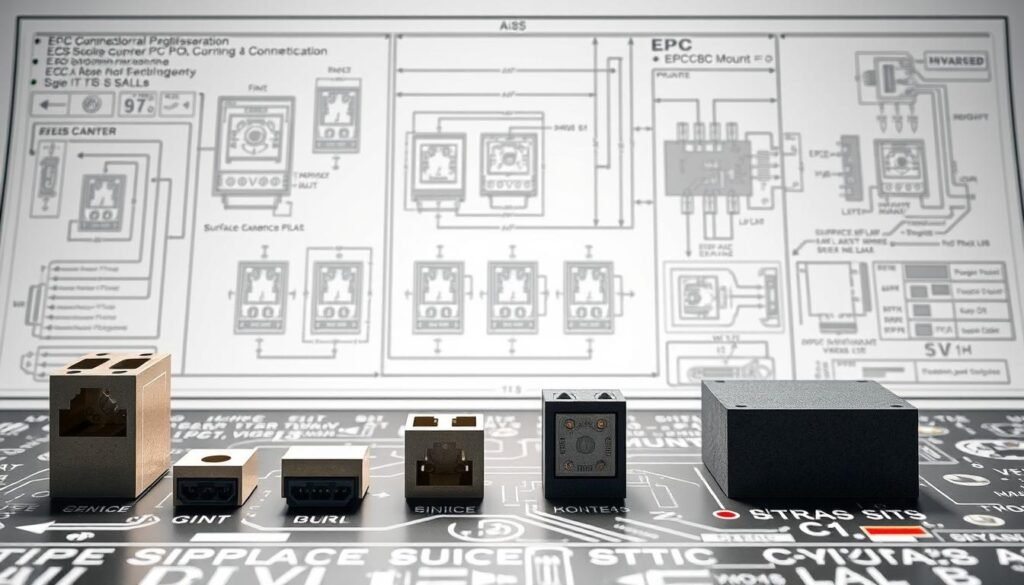
The mechanical aspects of connector selection are just as important as the electrical considerations. When designing a PCBA, it’s crucial to consider the mechanical factors that impact the performance and reliability of the connectors used.
Size and Space Constraints
One of the primary mechanical considerations is the size and space available on the PCB. The connector must fit within the board’s layout while allowing for proper mating and accessibility. We evaluate the physical dimensions and form factor of potential connectors to ensure they meet the PCB design constraints.
For instance, surface-mount connectors are often preferred for automated production due to their compact size and ease of assembly. However, their mechanical strength may be less than that of through-hole variants, requiring careful consideration for applications subject to mechanical stress.
Mating Cycles and Durability
The durability of a connector is determined by its ability to withstand multiple mating cycles without compromising its electrical or mechanical integrity. We assess the connector’s mating cycle rating to ensure it aligns with the application’s requirements.
For applications involving frequent connector mating or high-vibration environments, we specify connectors with robust mechanical designs and durable materials to prevent wear and tear.
Mounting Options and Orientation
The mounting options and orientation of connectors on the PCB significantly impact both the assembly process and the overall mechanical integrity of the design. We consider various mounting approaches, including through-hole, surface-mount technology (SMT), press-fit, and hybrid methods, based on manufacturing capabilities and mechanical requirements.
For connectors under mechanical stress, such as heavy-duty power connectors handling currents above 10A, we use mounting holes or brackets to secure them to the board. This ensures the mechanical stability of the connector and prevents solder joint fatigue.
Environmental Considerations for Connector Selection
When selecting a connector for your PCBA application, environmental considerations play a crucial role in ensuring reliability and performance. The operating environment can significantly impact the durability and functionality of connectors, making it essential to choose connectors that can withstand various environmental stresses.
Temperature Range and Thermal Management
Connectors must be able to operate effectively across the expected temperature range of the application. We consider factors such as thermal expansion and material compatibility to ensure reliable performance. For extreme temperatures, we select connectors with materials and designs that manage thermal stress, maintaining electrical continuity.
Moisture and Dust Protection (IP Ratings)
In harsh environments, connectors with appropriate Ingress Protection (IP) ratings are crucial. For instance, IP67-rated connectors are waterproof and can withstand immersion in water up to 1 meter for 30 minutes. We specify connectors with the right IP rating based on the application’s exposure to moisture and dust.
Vibration and Shock Resistance
For applications subject to vibration and shock, such as in automotive or aerospace industries, we evaluate the vibration profile to select connectors with appropriate mechanical stability. Connectors with positive locking mechanisms like threaded couplings or bayonet locks prevent disconnection during sustained vibration. We also consider the natural frequency of connector assemblies to avoid resonance that could lead to premature failure.
- We assess the vibration profiles for applications in high-vibration environments to choose connectors with suitable retention features.
- Connectors are selected based on their ability to maintain electrical continuity during mechanical stress.
- The mounting method is critical; through-hole or press-fit connectors generally offer superior mechanical stability in high-vibration environments.
By carefully considering these environmental factors, we can ensure the reliability and performance of connectors in various PCBA applications.
Selecting Connectors for High-Current PCBA Applications
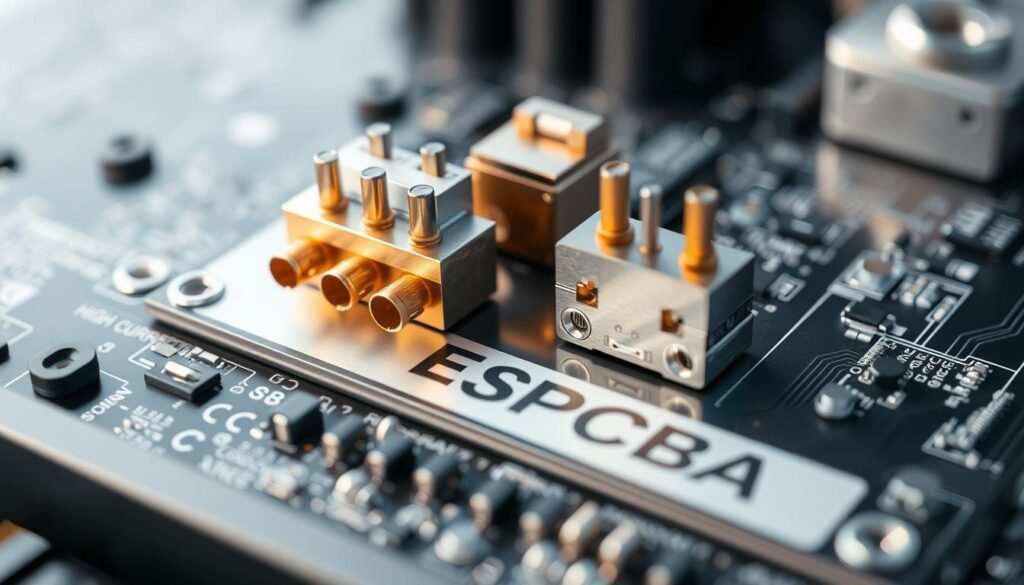
The choice of connector for high-current PCBA applications significantly impacts the overall system’s thermal management and electrical performance. High-current designs require connectors that can handle increased power without compromising the PCB‘s integrity.
Power Connector Specifications
When specifying power connectors for high-current applications, it’s crucial to consider the rating of the connector. We analyze the connector’s current-carrying capacity to ensure it meets the system’s requirements. Key specifications include:
- Current and voltage rating
- Contact resistance and its impact on heat generation
- Material composition for durability and performance
| Connector Specification | Description | Importance |
|---|---|---|
| Current Rating | The maximum current a connector can handle | High |
| Contact Resistance | Resistance that affects heat generation | High |
| Material | Material used for the connector | Medium |
Thermal Considerations for High-Current Designs
Thermal management is critical in high-current PCBA applications. We carefully evaluate the thermal performance of connectors to prevent overheating. Considerations include:
- Thermal dissipation features of the connector
- Operating temperature range
- Proximity to temperature-sensitive components
By understanding these factors, we can select connectors that enhance the reliability and performance of high-current PCBA systems. Ensuring that connectors are appropriately specified and thermally managed is key to a successful design.
Optimizing Signal Integrity Through Connector Selection
To ensure reliable data transmission, it’s essential to choose connectors that optimize signal integrity. Signal integrity is a critical factor in the overall performance of electronic systems, particularly in high-speed data transmission applications.
Minimizing Signal Loss and Interference
Minimizing signal loss and interference is crucial for maintaining signal integrity. We achieve this by selecting connectors with features that reduce crosstalk and electromagnetic interference (EMI). Connectors with shielding or ground pins between signal pins are particularly effective in reducing crosstalk.
- Implementing comprehensive shielding strategies, including metal shells and conductive plating, to maintain EMI protection.
- Selecting connectors that maintain consistent spacing between differential pairs to preserve signal integrity.
- Evaluating the shield effectiveness of connectors to ensure they meet strict electromagnetic compatibility (EMC) requirements.
| Shielding Technique | Effectiveness | Application |
|---|---|---|
| Metal Shells | High | High-speed data transmission |
| Conductive Plating | Medium | General-purpose applications |
| 360-degree Shielding | Very High | Critical applications requiring maximum EMI protection |
Shielding and Grounding Techniques
Effective shielding and grounding techniques are vital for optimizing signal integrity. The grounding scheme of connectors significantly impacts signal integrity, with low-impedance ground returns and multiple ground pins essential for minimizing common-mode noise in high-speed systems.
As noted by industry experts, “Proper grounding and shielding are critical for maintaining signal integrity in complex electronic systems.” We implement these techniques by carefully designing the ground pin arrangement in multi-signal connectors and ensuring a seamless transition between PCB ground planes and connector shielding.
- Carefully designing ground pin arrangements to create effective Faraday cages around sensitive signals.
- Managing the transition between PCB ground planes and connector shielding to prevent ground discontinuities.
PCB Connector Mounting Techniques
Effective PCB connector mounting is critical for maintaining the reliability and functionality of electronic assembly. The choice of mounting technique can significantly impact the performance and durability of the PCB.
Through-Hole Mounting
Through-hole mounting involves inserting connector pins into plated-through holes on the PCB and soldering them in place. This method provides strong mechanical bonds and is suitable for applications requiring high reliability. Through-hole mounting is often used for power connectors or components that need to withstand significant mechanical stress.
Surface-Mount Technology (SMT)
Surface-mount technology involves mounting connectors directly to the surface of the PCB without the need for through-holes. SMT connectors are designed to be smaller and more compact, making them ideal for high-density PCB designs. This method simplifies the assembly process and reduces the overall size of the board.
Press-Fit and Hybrid Mounting Options
Press-fit connectors use compliant pins that are pressed into plated-through holes without soldering, creating a reliable gas-tight connection. This technique is beneficial for applications requiring frequent connector replacement or where soldering heat could damage components. For more information on choosing the right mounting method, visit our detailed guide on PCB mount demystified. Hybrid mounting approaches combine different technologies, such as SMT for signal pins and through-hole for power pins, to optimize both electrical performance and mechanical stability.
As highlighted by industry experts, “The right connector mounting technique can make a significant difference in the overall performance and lifespan of electronic assemblies.” We implement various mounting techniques based on the specific requirements of our projects, ensuring optimal manufacturing flexibility and reliability.
Industry-Specific Connector Requirements
The choice of connectors for PCBA is influenced by the specific demands of various industries. As we navigate the complex landscape of connector selection, it’s crucial to understand the unique requirements of different sectors.
Automotive Connector Standards
In the automotive industry, connectors must withstand harsh environments, including high temperatures and vibrations. We look for connectors with high durability and resistance to environmental factors. For instance, connectors used in automotive applications often require high-temperature resistance and vibration resistance.
| Automotive Connector Requirements | Description |
|---|---|
| High-Temperature Resistance | Ability to operate at temperatures above 150°C |
| Vibration Resistance | Capability to withstand vibrations without compromising signal integrity |
Medical Device Connector Considerations
Medical devices require connectors that meet stringent safety and reliability standards. We prioritize connectors with biocompatibility and high signal integrity for medical applications. The use of connectors in medical devices demands careful consideration of factors such as patient safety and device reliability.
Industrial and Harsh Environment Applications
For industrial applications, connectors must be robust and capable of withstanding harsh environments. We select connectors with high IP ratings and resistance to chemicals for use in industrial settings. These connectors are designed to operate reliably in challenging conditions.
Consumer Electronics Connector Trends
In consumer electronics, the trend is towards miniaturization and multi-functionality. We observe that USB Type-C connectors are becoming increasingly popular due to their versatility and high-speed data transfer capabilities. The adoption of USB Type-C is driven by its ability to support multiple functions, including power delivery, data transfer, and display connectivity.
As we continue to push the boundaries of connector technology, it’s essential to stay informed about the latest industry trends and standards. For more information on selecting the right connectors for your PCBA components, visit our ultimate guide.
Conclusion: Making Informed Connector Decisions for Your PCBA
As we’ve explored throughout this guide, choosing the appropriate connector is vital for optimizing PCBA performance. The process of selecting the right connector involves a careful assessment of electrical, mechanical, and environmental needs.
We’ve examined the critical factors that determine successful connector selection for PCBA applications, from electrical and mechanical considerations to environmental requirements and industry-specific standards. By starting the connector selection process early in the design phase, you can significantly impact PCB layout, manufacturing processes, and ultimately the performance and reliability of the finished product.
A systematic approach to connector selection is recommended, balancing technical requirements with practical considerations including availability, cost, and compatibility with your manufacturing capabilities. It’s also essential to document connector specifications for future reference, including electrical and mechanical parameters, assembly instructions, and mating/unmating procedures.
For critical applications, qualification testing that simulates real-world conditions is suggested to validate connector performance. The right connector choice represents a balance between immediate design needs and long-term considerations such as field serviceability and component obsolescence management.
By applying the principles outlined in this guide, you can confidently select connectors that will provide reliable service throughout your product’s lifecycle while optimizing both performance and manufacturability. Remember, connector selection is not merely a component choice but a system-level decision that impacts everything from signal integrity and power delivery to mechanical robustness and user experience.
FAQ
What factors should be considered when choosing a connector for a PCBA application?
What are the different types of PCB connectors available?
How do I determine the appropriate current and voltage rating for a connector?
What is the importance of impedance matching in connector selection?
What are the benefits of using surface-mount technology (SMT) for connector mounting?
How do I ensure the connector I choose can withstand environmental stresses?
What are the key considerations for selecting connectors in high-current PCBA applications?
How can I optimize signal integrity through connector selection?
About The Author
