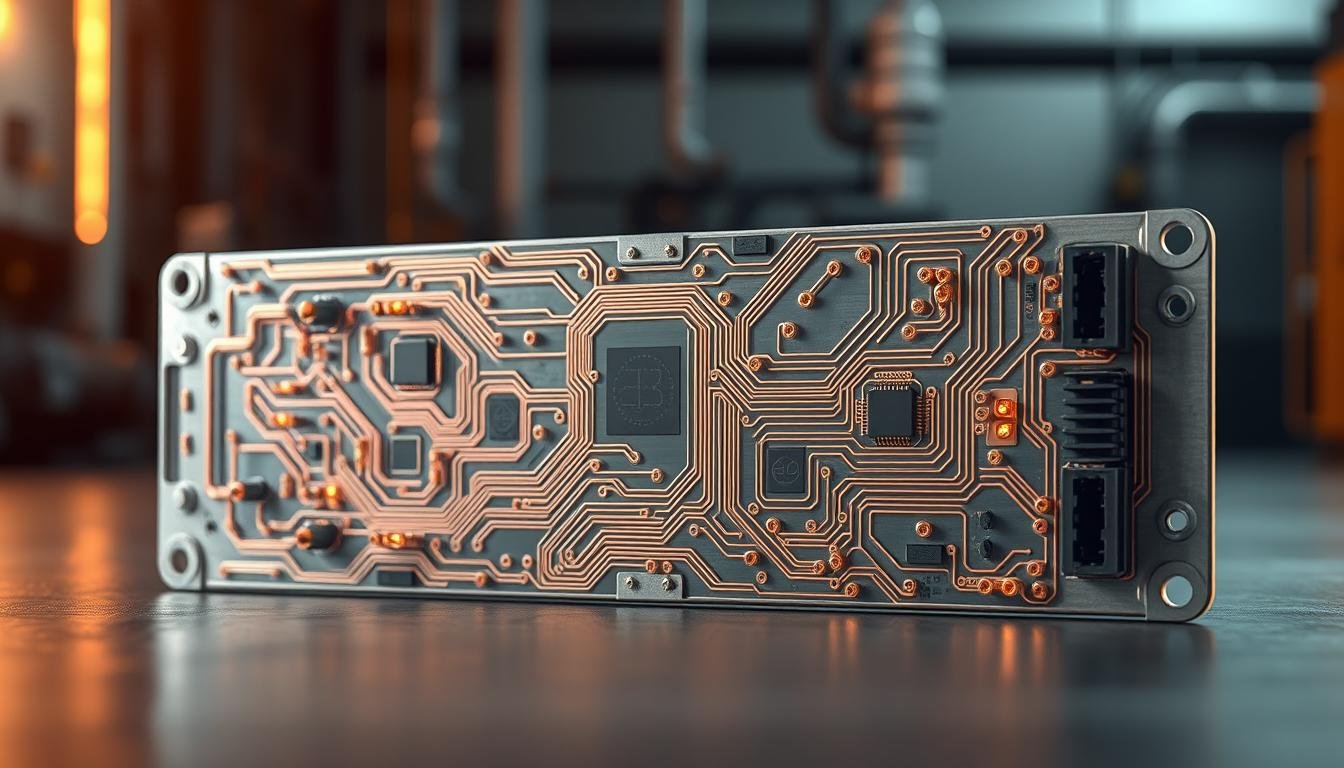
Can high-power LED lighting systems maintain their performance and longevity without effective thermal management? As we explore the critical role of aluminum PCBs in addressing this challenge, it becomes clear that these specialized boards are revolutionizing the industry.
Aluminum PCBs offer a robust solution to the heat management issues plaguing high-power LED applications. By leveraging the excellent thermal conductivity of aluminum, these PCBs efficiently dissipate heat away from critical components, enhancing overall system reliability and lifespan.
Key Takeaways
- Efficient thermal management is crucial for maintaining LED performance and longevity.
- Aluminum PCBs provide superior thermal conductivity compared to traditional FR4 boards.
- Effective heat dissipation directly impacts LED brightness and color consistency.
- Proper thermal management reduces the total cost of ownership for LED lighting systems.
- Aluminum PCBs represent a smart investment for high-power LED applications despite higher initial costs.
Understanding Aluminum PCBs in LED Lighting Applications
In LED lighting applications, aluminum PCBs are essential for maintaining efficiency and prolonging lifespan. One of the primary challenges in LED lighting systems is managing the significant amount of heat generated during operation.
What Are Aluminum PCBs?
Aluminum PCBs, also known as metal-core PCBs, are printed circuit boards that use an aluminum substrate as the base material. This aluminum base provides excellent thermal conductivity, allowing for efficient heat dissipation away from sensitive components. Aluminum PCBs are particularly useful in high-power LED applications where heat management is critical.
Why Aluminum PCBs Are Essential for LED Lighting
LEDs generate heat during operation, which can lead to reduced performance and lifespan if not managed properly. Aluminum PCBs address this issue by providing a thermal pathway to dissipate heat away from LED components. This results in improved durability and reliability, making them indispensable in applications like traffic lights, household lighting, and industrial illumination.
- Aluminum PCBs enable higher-density LED arrangements and greater brightness levels, which would be challenging with traditional FR4 boards.
- The thermal management capabilities of aluminum PCBs directly translate to better color stability, consistent light output, and improved overall lighting system performance.
- Every 10°C reduction in operating temperature can potentially double an LED’s useful life, highlighting the importance of effective thermal management.
By utilizing aluminum PCBs, manufacturers can create more efficient and reliable LED lighting systems. The benefits of aluminum PCBs in LED lighting applications are clear, making them a crucial component in modern lighting solutions.
The Science of Thermal Management in LED Lighting PCBA
As LEDs continue to evolve, the importance of thermal management in their design cannot be overstated. We will delve into the science behind thermal management, exploring how it impacts LED performance and lifespan.
Heat Generation in LED Systems
LEDs generate significant heat during operation, which can degrade performance and reduce lifespan if not managed properly. The heat generated is a result of the inefficiencies in converting electrical energy to light. Effective thermal management is essential to dissipate this heat and maintain optimal operating temperatures.
Thermal Conductivity Principles
Thermal conductivity refers to the ability of a material to conduct heat. In the context of LED lighting PCBA, aluminum PCBs are used due to their high thermal conductivity. This property allows for efficient heat dissipation away from the LED components, thereby maintaining their performance and longevity.
Impact of Poor Thermal Management on LED Performance
Poor thermal management can have severe consequences on LED performance, including reduced light output, color shift, and decreased lifespan. The negative effects can be summarized as follows:
- Reduced light output and color shift due to excessive heat.
- Accelerated degradation and premature failure resulting from overheating.
- Mechanical stress caused by thermal cycling, leading to solder joint failures.
- System-wide reliability issues due to the impact of excessive heat on driver electronics and power components.
- Inconsistent performance across LED arrays, compromising lighting quality.
By understanding the science of thermal management, we can design more efficient LED lighting systems that maintain their performance and lifespan over time.
Key Components of Aluminum PCBs for Effective Thermal Management
Effective thermal management is crucial for the longevity and performance of LED lighting systems, and Aluminum PCBs play a significant role in achieving this. The effectiveness of Aluminum PCBs in thermal management can be attributed to several key components, each contributing to the overall performance of the PCB.
Aluminum Substrate Properties
The aluminum substrate is the foundation of an Aluminum PCB, providing the primary pathway for heat dissipation. The thermal conductivity of the aluminum substrate is a critical factor, as it directly influences the PCB’s ability to dissipate heat away from the LED components. Typically, aluminum substrates have a thermal conductivity ranging from 1 to 4 W/mK, which is significantly higher than traditional PCB materials like FR4. For more information on Aluminum PCBs, visit https://espcba.com/aluminum-pcb/.
Dielectric Layer Considerations
The dielectric layer, situated between the copper layer and the aluminum substrate, plays a crucial role in the thermal performance of the PCB. The thickness and thermal conductivity of this layer are vital in determining the overall thermal resistance of the PCB. A thinner dielectric layer with high thermal conductivity can significantly enhance the thermal performance by reducing the thermal resistance between the copper layer and the aluminum substrate.
Copper Layer Thickness and Its Role
The thickness of the copper layer on an Aluminum PCB directly influences its ability to dissipate heat. A thicker copper layer can carry more current, reducing resistance and associated heat generation. Additionally, a thicker copper layer provides a larger surface area for heat to spread, improving heat dissipation efficiency. However, increasing copper thickness adds to the cost and weight, so a balance must be struck based on specific thermal and electrical requirements.
- The copper layer thickness impacts both electrical current capacity and thermal spreading in Aluminum PCBs.
- Thicker copper layers create more efficient lateral heat spreading before transfer to the aluminum substrate.
- Standard copper weights range from 1oz for basic lighting to 3oz or more for high-power applications.
- Copper trace width and pattern design work together with copper thickness to optimize thermal pathways.
By understanding and optimizing these key components, designers can significantly enhance the thermal management capabilities of Aluminum PCBs, leading to more reliable and efficient LED lighting systems.
Comparing Aluminum PCBs to Traditional PCB Materials
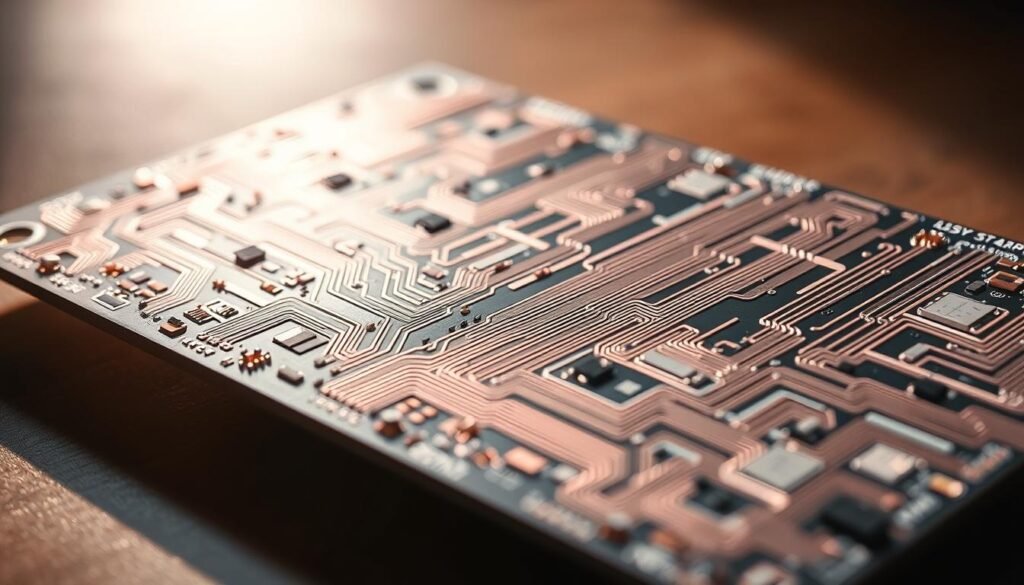
As LED lighting technology advances, the importance of comparing aluminum PCBs to traditional PCB materials becomes increasingly significant. The choice between these materials affects not only the performance and lifespan of LED systems but also their cost and manufacturing complexity.
Thermal Performance: Aluminum vs. FR4
Aluminum PCBs offer superior thermal management compared to traditional FR4 PCBs, which is critical for maintaining the performance and longevity of LED systems. The thermal conductivity of aluminum PCBs allows for more efficient heat dissipation, reducing the risk of overheating and associated degradation.
| Material | Thermal Conductivity (W/mK) | Typical Applications |
|---|---|---|
| Aluminum | 1.0 – 4.0 | High-power LED lighting, automotive LED systems |
| FR4 | 0.2 – 0.3 | Low-power consumer electronics, general-purpose PCBs |
Cost-Effectiveness and Manufacturing Considerations
While aluminum PCBs are generally more expensive than FR4 PCBs, their cost-effectiveness becomes apparent when considering the total cost of ownership. The improved thermal performance of aluminum PCBs can lead to simpler system designs, reduced component counts, and lower overall system costs.
- We analyze the total cost of ownership, including initial manufacturing costs, performance benefits, and extended system lifespan.
- The manufacturing process for aluminum PCBs has become more streamlined, making it viable for high-volume production.
- Economies of scale have made aluminum PCBs increasingly cost-competitive for LED lighting applications.
By understanding the trade-offs between aluminum and traditional PCB materials, manufacturers can make informed decisions that balance performance, cost, and manufacturing complexity.
Aluminum PCB Structures and Types for LED Applications
Aluminum PCBs are revolutionizing LED lighting applications with their advanced thermal management capabilities. The structure and type of aluminum PCB used can significantly impact the performance and reliability of LED lighting systems.
Single-Sided Aluminum PCBs
Single-sided aluminum PCBs feature a single layer of copper circuitry on one side of the aluminum substrate. These PCBs are ideal for simple LED lighting designs where components are mounted on one side. The aluminum substrate provides excellent thermal conductivity, helping to dissipate heat away from the LED components. This structure is cost-effective and suitable for less complex applications.
Double-Sided Aluminum PCBs
Double-sided aluminum PCBs have copper circuitry on both sides of the aluminum substrate, allowing for more complex circuit designs. These PCBs are used in LED lighting applications that require higher component density and more sophisticated circuitry. The double-sided design enhances thermal management by providing additional pathways for heat dissipation.
Multilayer Aluminum PCBs
Multilayer aluminum PCBs are the most advanced type, consisting of multiple layers of copper, dielectric, and aluminum materials stacked together. These PCBs are ideal for complex LED lighting applications that require high component density and advanced thermal management. The multilayer construction improves thermal dissipation and signal integrity, making it suitable for high-performance LED systems.
In conclusion, the choice of aluminum PCB structure and type depends on the specific requirements of the LED lighting application. By selecting the appropriate PCB design, manufacturers can optimize thermal management, enhance performance, and improve the reliability of their LED lighting products.
Design Considerations for LED Lighting PCBA: The Importance of Thermal Management with Aluminum PCBs
Thermal management is a critical design consideration for LED lighting PCBA, and the use of aluminum PCBs can greatly enhance the overall performance and reliability of the system. As LED systems continue to evolve and become more powerful, the need for effective thermal management strategies becomes increasingly important.
Component Placement Strategies
One crucial aspect of thermal management in LED lighting PCBA is component placement. By strategically placing high-power components away from sensitive areas and utilizing aluminum PCBs, designers can optimize heat dissipation and reduce the risk of overheating. Effective component placement involves considering the thermal characteristics of each component and balancing them to achieve optimal thermal management.
Thermal Via Design and Implementation
Thermal vias play a vital role in dissipating heat from high-power LED components. By incorporating thermal vias into the design of aluminum PCBs, designers can create a more efficient heat transfer path, reducing the risk of overheating and improving overall system reliability. The design and implementation of thermal vias require careful consideration of factors such as via size, spacing, and distribution to maximize their effectiveness.
Simulation and Testing for Thermal Integrity
To ensure the thermal integrity of LED lighting PCBA, designers can utilize thermal simulation software to predict heat distribution and identify potential thermal hotspots. By creating a digital model of the aluminum PCB, designers can simulate the effects of high-power components and modify the design accordingly. Physical testing methodologies, such as thermal imaging and thermocouple measurements, can then be used to validate simulation results and refine the design further.
By combining effective component placement strategies, thermal via design, and simulation and testing, designers can create LED lighting PCBA that maximize LED performance and reliability while minimizing the risk of overheating and premature failure.
Real-World Applications of Aluminum PCBs in LED Lighting
The integration of aluminum PCBs in LED lighting is transforming the way we illuminate our world. Aluminum PCBs are being increasingly adopted in various LED lighting applications due to their excellent thermal management properties.
Commercial and Residential LED Lighting
In commercial and residential LED lighting, aluminum PCBs enable the creation of energy-efficient and long-lasting lighting solutions. They help in managing the heat generated by LEDs, thus improving their lifespan and performance. For instance, aluminum PCBs in LED applications are crucial for maintaining optimal operating temperatures.
Automotive LED Applications
Automotive LED lighting systems also benefit significantly from aluminum PCBs. These PCBs help in dissipating the heat generated by high-power LEDs used in vehicle headlights and interior lighting, ensuring reliability and durability. The use of aluminum PCBs in automotive LED applications enhances safety and reduces maintenance needs.
High-Power Industrial LED Systems
High-power industrial LED systems, used in manufacturing facilities and outdoor infrastructure, rely on aluminum PCBs for effective thermal management. These systems operate in demanding environments with high ambient temperatures and limited airflow. Aluminum PCBs help in maintaining the integrity of LED systems, ensuring they deliver consistent performance and energy savings.
By leveraging aluminum PCBs, industries can achieve significant improvements in LED lighting performance, reliability, and energy efficiency. As technology advances, the role of aluminum PCBs in LED lighting is expected to become even more critical.
Challenges and Solutions in Aluminum PCB Implementation
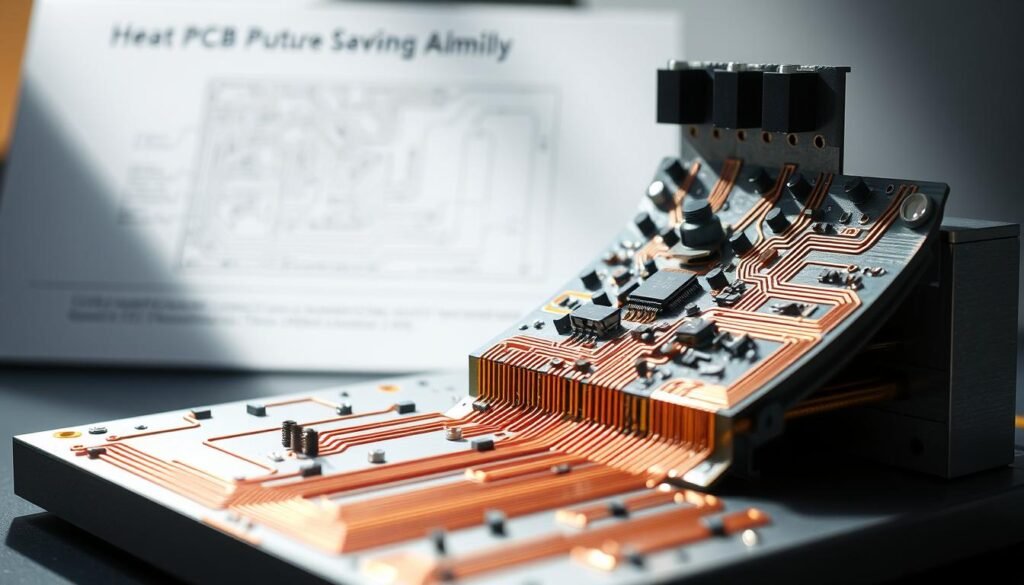
Implementing aluminum PCBs in LED lighting applications presents unique challenges that require careful consideration. While aluminum PCBs offer significant advantages in terms of thermal management, their implementation can be complex.
Balancing Thermal and Electrical Performance
One of the primary challenges in aluminum PCB implementation is balancing thermal and electrical performance. The choice of materials and design considerations significantly impact both aspects. High-purity aluminum substrates, advanced dielectric materials, and thicker copper layers contribute to better thermal performance but also increase the cost. We must weigh the benefits of enhanced thermal conductivity against the increased cost to determine the most cost-effective solution for our specific application.
- Selecting materials that offer optimal thermal conductivity without compromising electrical performance.
- Designing PCBs with thermal vias and specialized surface finishes to enhance thermal management.
- Considering the impact of design features on the overall cost and production process.
Overcoming Manufacturing Challenges
Manufacturing aluminum PCBs poses unique challenges, from material handling to specialized production processes. We analyze the manufacturing challenges associated with aluminum PCBs, including drilling and machining considerations, surface preparation, and treatment processes. Thermal management during the manufacturing process itself, particularly during soldering operations, is also a critical consideration due to the high thermal conductivity of aluminum.
- Implementing quality control and testing procedures specific to aluminum PCBs.
- Developing strategies for working with PCB manufacturers to ensure successful production.
- Considering the impact of manufacturing tolerances on the final product.
Future Trends in Thermal Management for LED Lighting PCBAs
Emerging trends in thermal management are set to revolutionize LED lighting PCBAs. As power electronics continue to evolve, aluminum PCBs are poised to play a pivotal role in emerging technologies. For instance, electric vehicles (EVs) rely heavily on efficient power management systems, where aluminum PCBs can handle the high currents and heat generated by battery packs and motor controllers.
We will see significant advancements in thermal management through the development of next-generation dielectric materials with improved thermal conductivity. The integration of aluminum PCBs with advanced cooling technologies, such as phase-change materials and microfluidic cooling channels, will also enhance performance. Furthermore, miniaturization trends in LED technology will drive innovation in aluminum PCB design.
Smart thermal management systems that incorporate temperature sensors and adaptive control algorithms will be integrated with aluminum PCBs for dynamic thermal optimization. As sustainability considerations become more prominent, aluminum PCB development will focus on recyclability, reduced material usage, and lower energy manufacturing processes. These advancements will support emerging LED lighting applications, from human-centric lighting to horticultural lighting systems with extreme power density requirements.
FAQ
What makes Aluminum PCBs superior for heat dissipation in LED lighting systems?
How does the dielectric layer in Aluminum PCBs impact thermal management?
What are the benefits of using Aluminum PCBs over traditional FR4 PCBs in LED lighting applications?
How do component placement strategies affect thermal management in LED lighting PCBA?
What role do thermal vias play in Aluminum PCB design for LED lighting?
How do multilayer Aluminum PCBs enhance thermal management in complex LED lighting systems?
What are the key considerations for designing Aluminum PCBs for high-power LED applications?
How do Aluminum PCBs contribute to the overall efficiency and lifespan of LED lighting systems?
About The Author
