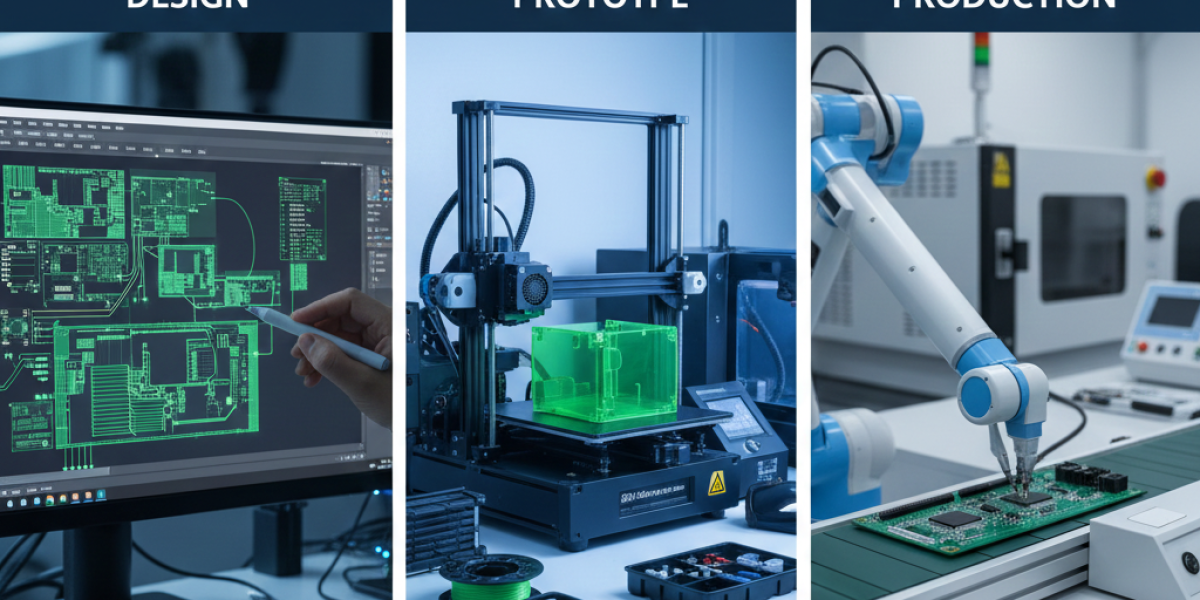
PCB Prototyping: Complete Guide to Design Validation and Rapid Manufacturing
PCB prototyping represents the critical bridge between innovative circuit design and reliable production manufacturing. Successful electronics development requires thorough design validation, iterative refinement, and careful quality verification before committing to full-scale production. PCB prototyping enables engineers to identify design flaws early, optimize performance, and reduce development costs. This comprehensive guide explores prototyping methodologies, design validation techniques, and manufacturing strategies that ESPCBA employs to deliver exceptional prototype solutions accelerating time-to-market.
The Critical Importance of PCB Prototyping
PCB prototyping serves as mandatory validation step separating successful product launches from costly failures. Electronics manufacturers worldwide recognize prototyping as non-negotiable investment preventing expensive production mistakes, field failures, and warranty costs.
Early design validation through prototyping reveals potential issues before production commitment. Thermal management problems, signal integrity challenges, mechanical interference, and component compatibility issues surface during prototype testing. Addressing problems at prototype stage costs mere hundreds compared to production tooling corrections costing hundreds of thousands. Experienced engineers prioritize comprehensive prototyping understanding that successful products begin with thorough design validation.
Rapid prototyping capabilities enable competitive advantage through accelerated development cycles. Markets reward first-movers delivering innovative products meeting customer needs before competitors. PCB manufacturing partners offering quick-turnaround prototyping services enable development teams to compress design cycles, test multiple iterations, and optimize designs before production.
Design Phase and Design for Manufacturing Analysis
Successful PCB prototyping begins with comprehensive design preparation ensuring manufacturability before fabrication commences.
Schematic Capture and Electrical Verification
Professional design starts with detailed schematic capture capturing circuit topology, component selection, and electrical connectivity. Simulation tools validate circuit behavior predicting performance before physical hardware construction. SPICE simulation, signal integrity analysis, and thermal modeling identify potential issues enabling corrective design modifications.
PCB Layout Design and Signal Integrity
Layout engineers translate schematics into physical PCB designs considering component placement, trace routing, and layer stackup. Critical considerations include impedance control maintaining signal integrity, thermal management distributing heat efficiently, and EMI/RFI shielding preventing interference. Well-executed layouts enable reliable prototype performance while poorly designed layouts cause mysterious failures requiring expensive rework.
Design for Manufacturing (DFM) Analysis
Before fabrication begins, comprehensive DFM review ensures designs are manufacturable. Review examines trace widths, spacing, via sizes, and other parameters against process capabilities. Experienced engineers identify potential fabrication challenges enabling proactive solutions. DFM analysis prevents expensive production delays and rework, ensuring smooth prototype fabrication.
Component Selection and Sourcing
Prototype success depends partially on component availability and selection. Verified suppliers reduce delivery delays. Component datasheets verify electrical specifications matching design requirements. Alternative component strategies enable prototyping even during component shortages. PCB assembly partners with established supplier relationships facilitate rapid component sourcing.
The PCB Prototyping Process
Quality prototyping combines rapid fabrication, meticulous assembly, and comprehensive testing delivering functional boards suitable for rigorous validation.
Rapid PCB Fabrication
Advanced fabrication facilities enable quick-turnaround prototype manufacturing. Streamlined production processes, dedicated prototype lines, and material staging accelerate manufacturing. State-of-the-art equipment maintains consistency and precision across small quantities. Express services enable prototype delivery in days rather than weeks.
Precision Component Assembly
Prototype assembly demands attention to detail ensuring reliable functionality. Manual placement of complex components, careful solder joint inspection, and hand soldering where needed preserve circuit integrity. Skilled assembly technicians with prototype experience prevent common assembly errors causing field failures. Quality assembly determines whether prototypes function properly during critical validation phases.
Conformal Coating and Environmental Protection
Many prototypes undergo environmental testing in challenging conditions. Conformal coatings protect circuitry from moisture, salt spray, and chemical contamination. Protective measures ensure boards survive intended operating environments, providing confidence in design robustness. Optional coating services enable comprehensive environmental validation.
Design Validation and Testing Protocols
Rigorous testing transforms prototype boards into validated designs ready for production commitment.
Functional Testing
Comprehensive functional testing verifies circuit operation against specifications. Test fixtures exercise all circuit functionality, exercising input/output ports, triggering internal circuits, and verifying output performance. Thorough functional testing catches design errors, component selection mistakes, and assembly defects enabling corrections before production.
Thermal Analysis and Performance
Thermal cameras and sensors verify temperature distribution during operation. Unexpected hotspots indicate inadequate cooling, component overstress, or design deficiencies. Performance testing under thermal conditions simulates worst-case field operation. Thermal validation ensures designs operate reliably across expected temperature ranges.
Environmental and Stress Testing
Prototypes undergo environmental qualification validating performance under intended operating conditions. Temperature cycling from cold to hot stresses components and solder joints. Vibration testing verifies mechanical integrity under shock and continuous vibration. Humidity exposure tests moisture resistance. Comprehensive stress testing predicts long-term reliability preventing field failures.
Signal Integrity and Electrical Measurements
High-speed designs require signal integrity validation using oscilloscopes and network analyzers. Measurements verify impedance control, propagation delay, and signal quality. Crosstalk and EMI measurements confirm shielding effectiveness. Detailed electrical characterization ensures designs perform reliably across operating ranges.
Iteration Cycles and Continuous Refinement
Prototyping rarely achieves perfection on first attempt. Disciplined iteration cycles enable rapid optimization and design improvement.
Identifying Design Issues
Testing frequently identifies design issues requiring correction. Component overstress, thermal hotspots, signal integrity problems, or mechanical interference emerge during validation. Root cause analysis identifies underlying design flaws rather than symptoms. Thorough problem analysis enables effective solutions preventing similar issues in future iterations.
Design Modifications and Optimization
Identified issues drive targeted design modifications. Component substitutions resolve thermal problems. Routing changes improve signal integrity. Layer stackup adjustments optimize impedance control. Design modifications undergo simulation validation before prototype fabrication. Systematic refinement incrementally improves performance with each iteration.
Rapid Re-Fabrication and Testing
ESPCBA’s rapid prototyping capabilities enable quick re-fabrication minimizing development delays. Prototype boards return for testing days after design modification. Quick turnaround accelerates convergence toward production-ready designs. Multiple iteration cycles compress into achievable development timelines.
Transition from Prototype to Production Manufacturing
Successful prototyping culminates in seamless transition to production manufacturing maximizing design investment returns.
Prototype Validation Documentation
Comprehensive documentation records all prototype iterations, design changes, and validation results. Test data verifies design compliance with specifications. Failure analysis documents issues encountered and resolutions implemented. Complete documentation supports production engineering decisions ensuring consistency between prototype and production designs.
Design File Preparation
Production manufacturing requires precise design files ensuring reproducibility. Gerber files define PCB artwork. Bill of materials (BOM) specifies all components with manufacturer part numbers. Pick-and-place data guides assembly automation. Design files must maintain accuracy and completeness enabling error-free production.
Manufacturing Scalability
Prototype and production manufacturing sometimes employ different processes and equipment. Prototype designs must remain compatible with production processes. Designs suitable for hand assembly may require modification for automated SMT lines. ESPCBA’s engineering team ensures prototype designs transition smoothly to production manufacturing without modification.
Quality Documentation and Traceability
Production manufacturing demands comprehensive quality documentation establishing traceability. Component certifications verify quality. Manufacturing records document equipment settings and personnel. Test results document compliance with specifications. Complete documentation supports warranty claims, regulatory requirements, and continuous improvement initiatives.
Cost Optimization in Prototyping Strategies
Intelligent prototyping strategies optimize costs without compromising design validation.
Design Reuse and Modularity
Modular design strategies leverage proven subsystems minimizing novel circuitry requiring validation. Reference designs from established manufacturers incorporate years of field experience. Component development kits and reference platforms accelerate design cycles. Smart design reuse reduces prototype requirements and development costs.
Prototype Scope Definition
Focused prototyping validates critical functionality avoiding unnecessary complexity. Simple proof-of-concept boards test novel concepts rapidly and economically. Incremental prototyping adds functionality progressively as designs mature. Strategic scope limitation accelerates validation timelines reducing costs.
Batch Processing Efficiency
Multiple prototype designs sharing fabrication batches reduce per-board costs. Combining similar designs enables shared tooling. Scheduling multiple prototypes simultaneously improves manufacturing efficiency. ESPCBA’s facilities accommodate diverse designs in single manufacturing runs maximizing cost efficiency.
ESPCBA’s PCB Prototyping Expertise and Capabilities
ESPCBA brings comprehensive prototyping expertise enabling accelerated development cycles and superior design outcomes. Our dedicated prototype team understands development pressures and validation requirements driving continuous innovation in electronics.
State-of-the-art facilities combined with experienced engineering teams deliver rapid turnaround without sacrificing quality. Design consultation services identify potential issues before fabrication. Comprehensive testing capabilities validate designs thoroughly. Responsive customer service accommodates urgent schedules and complex requirements.
From concept through production, ESPCBA partners with development teams transforming innovative ideas into reliable products. Request a prototype quote discovering how ESPCBA accelerates your product development.
Conclusion
PCB prototyping represents essential investment in product success, validating designs and building confidence before production commitment. Comprehensive prototyping combining design optimization, rigorous testing, and iterative refinement prevents costly mistakes and accelerates development. ESPCBA’s prototyping capabilities enable rapid iteration and thorough validation transforming development concepts into production-ready products. Whether developing cutting-edge consumer electronics, automotive systems, or industrial equipment, proper prototyping methodology ensures product excellence and market success.
Accelerate Your Product Development with ESPCBA Prototyping
Expert prototyping services enabling rapid design validation and seamless production transition.
Start Your Prototype Project Request Prototyping Quote
Fast turnaround, rigorous quality, expert engineering support—transform your designs into market-ready products.
