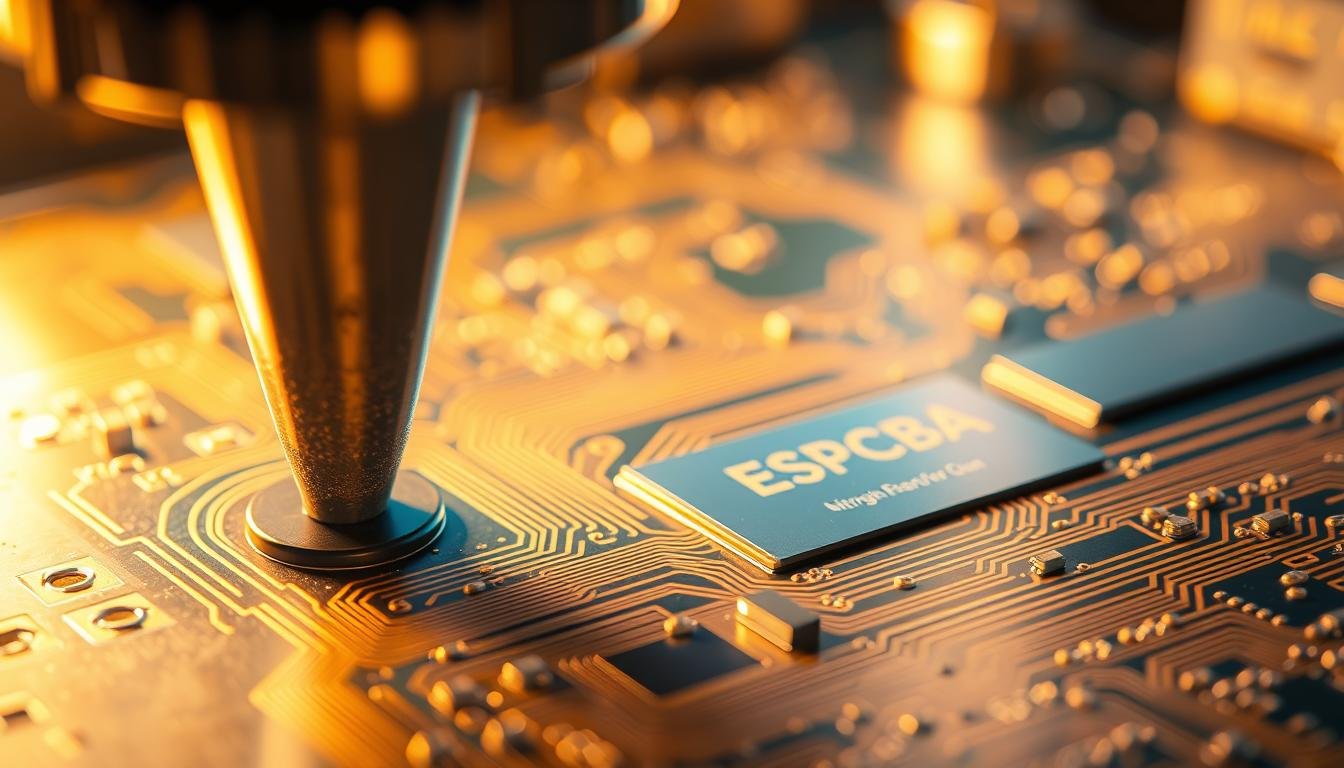
Can the quality of solder joints be significantly improved by controlling the atmosphere during the soldering process? The answer lies in the use of nitrogen in reflow and wave soldering, a technique that’s becoming increasingly vital in electronics manufacturing.
We explore how nitrogen creates an inert atmosphere that reduces oxidation and enhances the quality of solder joints on PCBs. This is particularly crucial in high-reliability applications such as automotive, medical, and aerospace electronics.
By understanding the science behind nitrogen soldering, manufacturers can improve their processes, ensuring higher quality and reliability in their products.
Key Takeaways
- Nitrogen reflow soldering reduces oxidation, improving solder joint quality.
- The process is crucial for high-reliability electronics manufacturing.
- Nitrogen creates an inert atmosphere, enhancing solder wetting.
- Implementing nitrogen soldering can improve manufacturing processes.
- Nitrogen soldering is beneficial for applications requiring high reliability.
Understanding Nitrogen in Electronics Soldering
In the realm of electronics soldering, nitrogen plays a pivotal role in creating an optimal environment for high-quality solder joints. As we delve into the specifics of nitrogen reflow soldering, it’s essential to understand its fundamental principles and benefits.
What is Nitrogen Reflow Soldering?
Nitrogen reflow soldering is a specialized process where standard reflow soldering occurs within a controlled nitrogen-rich atmosphere. Typically, oxygen levels are maintained below 4% according to industry standards. This process is facilitated by nitrogen reflow ovens, which are configured with multiple temperature zones, usually between 8 to 12 zones, to ensure a precise and controlled soldering environment.
The use of nitrogen in reflow ovens prevents the oxidation of metal surfaces during the high-temperature soldering process. As nitrogen is an inert gas, it doesn’t react with metals, thereby maintaining the integrity of the PCB pads and surface-mount devices’ pins. This results in superior solder joints with improved wetting characteristics.
The Chemistry Behind Nitrogen’s Effectiveness
The effectiveness of nitrogen in soldering applications stems from its inert properties. Nitrogen (N2) is not one of the noble gases but is classified as an inert gas due to its unreactive nature. It makes up about 78% of the Earth’s atmosphere, making it a cost-effective choice for creating inert atmospheres in manufacturing environments.
By preventing oxidation, nitrogen ensures that the solder joints are formed without the interference of oxides, leading to stronger and more reliable connections. This is particularly crucial in advanced electronics applications where solder joint integrity is paramount.
- Nitrogen reflow soldering maintains oxygen levels below 4%, adhering to industry standards for optimal soldering.
- The process utilizes reflow ovens with 8-12 temperature zones for precise control.
- Nitrogen’s inert nature prevents metal oxidation, ensuring high-quality solder joints.
- The abundance of nitrogen in the atmosphere makes it a cost-effective inert gas for manufacturing.
By understanding the role of nitrogen in electronics soldering, manufacturers can leverage this technology to improve the quality and reliability of their products. The use of nitrogen reflow soldering represents a significant advancement in the pursuit of excellence in electronics manufacturing.
The Science of Oxidation in Soldering Processes
Understanding oxidation is crucial for achieving high-quality solder connections in electronics manufacturing. Oxidation is a natural process where metal surfaces react with oxygen at elevated temperatures, forming oxide layers that can impede proper solder wetting and bonding.
Oxidation’s Impact on Solder Quality
Oxidation significantly affects solder quality by reducing wetting, increasing void formation, and compromising intermetallic compound (IMC) development at the solder interface. When solder paste is exposed to air for too long, it oxidizes, and the flux partially evaporates. As a result, an oxide layer forms on the surface when the solder melts, reducing the paste’s activity and preventing the molten solder from fully retracting to the pad.
“Oxidation is a major enemy of solder quality,” as it leads to the formation of separated solder beads and compromises the reliability of the solder joint. The rate of oxidation doubles with every 10K rise in temperature, making high-temperature soldering processes particularly vulnerable to oxidation-related defects.
Nitrogen as an Inert Gas Solution
Nitrogen is used as an inert gas to create a protective environment that physically displaces oxygen from the soldering area. By preventing new oxide formation during the critical high-temperature phases of the soldering process, nitrogen helps maintain the quality of the solder joint. This is particularly important in reflow soldering and wave soldering processes where high temperatures are involved.
The use of nitrogen in soldering processes ensures that the solder surface remains free from oxide layers, enhancing the overall quality of the solder connection. By controlling oxidation, manufacturers can achieve more reliable and consistent results in their electronics manufacturing processes.
Benefits of Using Nitrogen in Reflow Soldering

The use of nitrogen in reflow soldering has numerous benefits that enhance the overall quality of solder joints. By creating an inert atmosphere, nitrogen reflow soldering significantly improves the soldering process, leading to more reliable connections.
Improved Wetting and Solder Joint Quality
Nitrogen reflow soldering provides better wetting for soldering, which is crucial for successful soldering outcomes. In a nitrogen environment, the surface tension of solder is lower than in the atmosphere, improving solder fluidity and wettability. This results in solder joints that are not only visually appealing but also mechanically stronger and more reliable.
- Enhanced solder wetting due to reduced surface tension
- Improved solder joint appearance and structural integrity
- Better solder fluidity and wettability
Reduced Oxidation and Dross Formation
The nitrogen atmosphere dramatically reduces oxidation and dross formation during the reflow process. This minimizes maintenance requirements and extends the useful life of solder baths and equipment, leading to cost savings and increased productivity.
- Reduced oxidation of solder and PCB pads
- Minimized dross formation
- Extended equipment lifespan
Enhanced Flux Effectiveness
Nitrogen atmospheres enhance flux effectiveness by preserving its chemical activity throughout the thermal profile. This allows manufacturers to potentially use milder, more environmentally friendly flux formulations, contributing to a more sustainable manufacturing process.
By implementing nitrogen reflow soldering, manufacturers can achieve significant improvements in first-pass yield rates, reduce rework requirements, and enhance the long-term reliability of solder connections. This makes nitrogen reflow soldering an attractive solution for electronics manufacturers seeking to improve their production processes.
The Role of Nitrogen in Wave Soldering

In the realm of wave soldering, nitrogen is used to create an inert atmosphere that improves soldering quality. The application of nitrogen in wave soldering processes can be done either partially or fully, depending on the specific requirements of the manufacturing process.
Partial vs. Full Tunnel Nitrogen Systems
Partial nitrogen systems involve blanketing only the solder wave area under an inert gas environment. In contrast, full tunnel nitrogen systems maintain an inert atmosphere throughout the entire soldering process, including preheat and cooling zones. Tunnel systems are more effective but also more costly. They can operate with adjustable residual oxygen levels between 20ppm and 500ppm in the soldering area.
Optimizing Residual Oxygen Levels
Both tunnel systems and partial inert atmosphere systems can reduce dross formation, with tunnel systems offering more significant improvements. For production processes where dross reduction is critical, residual oxygen levels of about 1000ppm with a partial inert gas atmosphere are adequate. However, to maximize the benefits of nitrogen wave soldering, residual oxygen levels below 500ppm are required, necessitating a tunnel wave soldering system.
By understanding the differences between partial and full tunnel nitrogen systems and optimizing residual oxygen levels, manufacturers can significantly improve the quality of their wave soldering processes. This includes reducing common defects such as incomplete through-hole penetration and solder balls by improving the wetting characteristics and surface tension of the liquid solder.
Nitrogen in Selective Soldering Applications
Nitrogen is essential in selective soldering processes, offering improved control over the soldering environment. We utilize nitrogen to prevent excess oxide formation on the solder surfaces of the selective wave and multi-wave, and to minimize dross formation during nozzle flushing. This results in consistent solder quality throughout production runs and reduced maintenance requirements.
Preventing Oxide Formation on Select Wave Nozzles
The nitrogen flow around the select wave nozzle prevents oxide layer formation on the wave surface, aiding flux activity. By maintaining a clean and oxide-free surface, we ensure that the soldering process remains precise and accurate. This is particularly important in selective soldering, where the precision of the solder joints is critical. For more information on the role of nitrogen in PCB assembly, visit Atlas Copco’s guide on nitrogen in PCB.
Nitrogen Purity Requirements for Selective Soldering
The required nitrogen purity depends on the specific needs of the soldering process. Higher purity nitrogen provides better assistance and can lead to lower consumption. However, it’s crucial to note that the nitrogen purity at the soldering position is never the same as the supply purity due to mixing with surrounding air. We must consider the production demands and component types to determine the appropriate nitrogen purity requirements. Key factors include:
- Production volume and complexity
- Component sensitivity to oxidation
- Quality expectations for solder joints
By optimizing nitrogen purity levels, we can achieve a balance between process performance and cost efficiency in selective soldering applications.
Challenges and Limitations of Nitrogen Soldering
While nitrogen soldering offers several benefits, it’s crucial to understand its limitations and challenges. As manufacturers increasingly adopt nitrogen-based soldering processes, they must be aware of the potential drawbacks and consider these factors in their production strategies.
Cost Considerations and ROI Analysis
One of the primary challenges of implementing nitrogen soldering is the cost. The investment in nitrogen generation equipment, ongoing gas supply, and maintenance can be significant. To justify these expenses, manufacturers must conduct a thorough Return on Investment (ROI) analysis, considering factors such as improved solder joint quality and reduced rework costs.
| Cost Factor | Description | Impact on ROI |
|---|---|---|
| Nitrogen Generation Equipment | Initial investment in nitrogen generators or supply systems | High upfront cost |
| Ongoing Nitrogen Supply | Continuous cost of nitrogen gas or generation | Recurring expense |
| Maintenance Costs | Regular maintenance of nitrogen soldering equipment | Variable, dependent on equipment quality |
Potential Defects: Tombstoning and Wicking Effects
Nitrogen soldering can sometimes exacerbate certain defects, such as tombstoning and wicking. Tombstoning occurs when uneven heating causes a component to lift off the PCB, while wicking refers to solder flowing up component leads, potentially causing short circuits. Understanding these risks is crucial for optimizing the soldering process.
When Nitrogen Cannot Solve Soldering Issues
It’s essential to recognize that nitrogen soldering is not a panacea for all soldering problems. Severe pre-existing oxidation on components or PCBs, for instance, cannot be resolved through nitrogen alone. Manufacturers must identify the root causes of their soldering issues and determine whether nitrogen can provide a meaningful solution.
Conclusion
By adopting nitrogen-based soldering, manufacturers can significantly improve the reliability and quality of their products, ultimately driving business success. The use of nitrogen in reflow and wave soldering processes has become increasingly important in the electronics manufacturing industry.
Nitrogen’s role in creating an oxygen-free environment enhances solder joint quality and reduces defects. This is particularly crucial in lead-free and high-temperature soldering applications, where oxidation can be a significant issue. By minimizing oxide formation, nitrogen improves wetting and solderability, resulting in higher-quality solder joints.
The benefits of using nitrogen in soldering are multifaceted. It not only simplifies post-soldering cleanup but also enhances flux effectiveness, leading to improved manufacturing yields. As highlighted in various studies, including those referenced in technical documents such as this guide on nitrogen soldering, the strategic implementation of nitrogen can significantly impact the overall efficiency and quality of the soldering process.
When considering the adoption of nitrogen-based soldering, manufacturers must weigh the initial investment against the long-term benefits. Factors such as product application requirements, reliability expectations, and economic considerations should be taken into account. As the industry continues to evolve, innovations in nitrogen delivery systems and monitoring capabilities will likely play a crucial role in shaping the future of soldering technology.
In conclusion, the integration of nitrogen into soldering processes offers a comprehensive solution for improving product quality and manufacturing efficiency. By understanding the benefits and limitations of nitrogen-based soldering, manufacturers can make informed decisions to drive their business forward.
FAQ
What are the primary benefits of using nitrogen in reflow soldering?
How does nitrogen prevent oxidation during the soldering process?
What is the difference between partial and full tunnel nitrogen systems in wave soldering?
How does nitrogen purity affect selective soldering applications?
What are the cost considerations when implementing nitrogen soldering?
Can nitrogen soldering solve all soldering issues?
How does residual oxygen level impact nitrogen soldering effectiveness?
Are there any potential defects associated with nitrogen soldering?
About The Author
