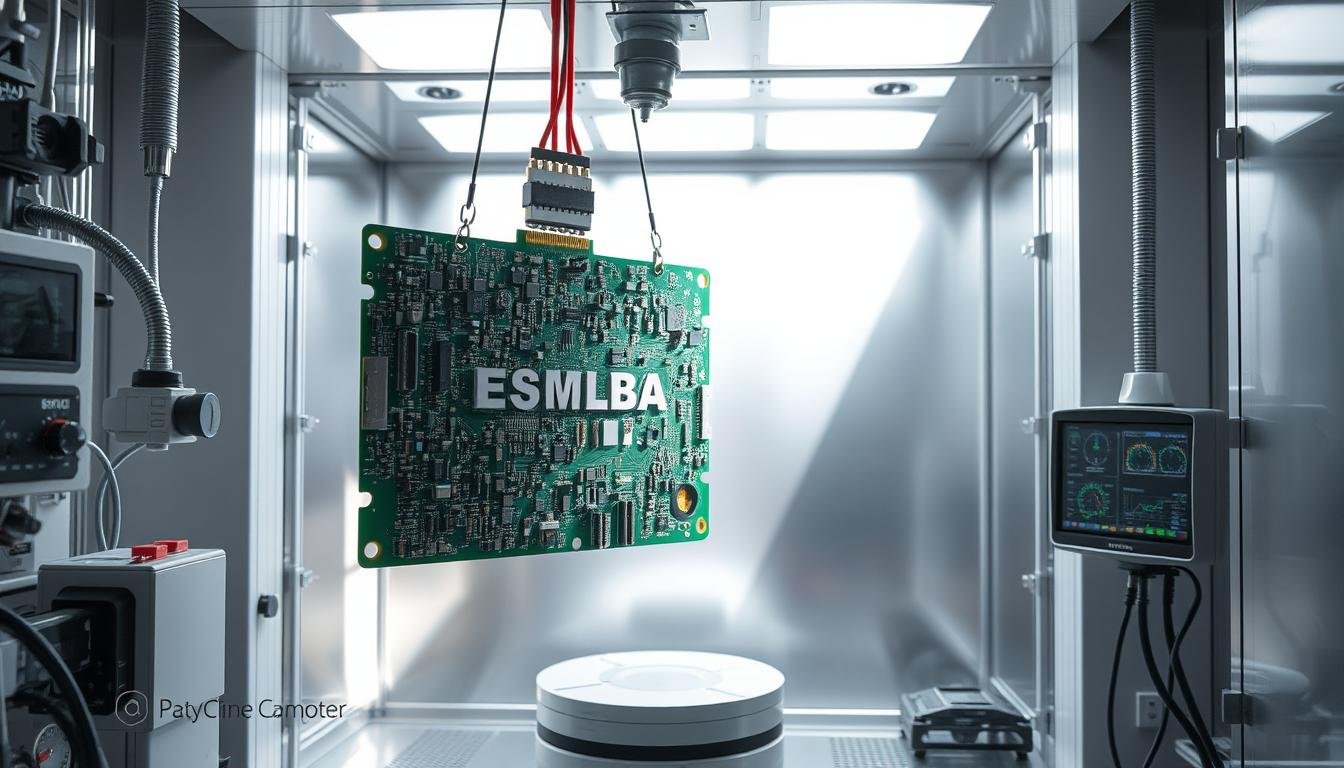
Can your electronic devices withstand the harsh conditions they might encounter during their operational lifetime? Ensuring the reliability of Printed Circuit Board Assemblies (PCBAs) is crucial, especially in industries like aerospace and military, where failure can have significant consequences. At our company, we understand the importance of rigorous testing to predict product lifespan and identify potential weaknesses.
Thermal shock testing and thermal cycling are two critical tests that help manufacturers assess the durability of their PCBAs under extreme temperature conditions. By subjecting these components to rapid temperature changes, we can identify potential failure mechanisms and improve overall product quality. Our quality policy is centered around delivering high-quality PCBA solutions, and we achieve this through rigorous testing and validation processes.
Key Takeaways
- Thermal shock and temperature cycling tests are essential for validating PCBA reliability.
- These tests simulate extreme environmental conditions to predict product lifespan.
- Understanding the differences between thermal shock and temperature cycling is crucial for implementing the right testing methodology.
- Proper thermal testing strategies can significantly reduce field failures and warranty claims.
- Our testing protocols are designed to ensure compliance with industry standards like IPC, JEDEC, and MIL-STD requirements.
Understanding Thermal Stress in Electronics Manufacturing
In electronics manufacturing, understanding thermal stress is essential for producing reliable PCBA. Electronic components generate heat during operation, which can cause the temperature of the circuit board to rise. If this heat is not dissipated quickly, it can lead to failure. Thermal shock, in particular, can cause a circuit board or its components to fail, making thermal shock reliability testing crucial for boards used in rugged applications.
Temperature fluctuations create complex mechanical and electrical effects on circuit boards. The primary physical mechanisms at play are thermal expansion and contraction, which stress PCB materials and connections. When a PCBA experiences temperature changes, different materials expand and contract at different rates, creating mechanical stress at interfaces such as solder joints, plated through-holes, and component connections.
The Critical Role of Thermal Testing in PCBA Reliability
Thermal testing is vital for ensuring the reliability of PCBAs. By subjecting PCBA to thermal shock and temperature cycling tests, manufacturers can identify potential failures and improve the design and manufacturing process. Common failure modes resulting from temperature fluctuations include solder joint cracking, delamination of PCB layers, via barrel cracking, pad cratering, and component fractures.
| Failure Mode | Description |
|---|---|
| Solder Joint Cracking | Cracking of solder joints due to thermal stress |
| Delamination of PCB Layers | Separation of PCB layers due to thermal expansion |
| Via Barrel Cracking | Cracking of via barrels due to thermal stress |
How Temperature Fluctuations Affect Circuit Board Performance
The electrical performance of a circuit board can be significantly affected by temperature changes. Parameters like impedance, signal integrity, and power distribution networks can degrade under thermal stress. High-temperature operation accelerates various failure mechanisms, including electromigration in conductors, dielectric breakdown, and chemical degradation of polymers used in PCB construction.
As we design and manufacture PCBAs, it’s crucial to consider the impact of thermal stress on their reliability. By understanding the effects of temperature fluctuations and using thermal testing, we can improve the performance and longevity of electronic devices.
Thermal Shock vs. Temperature Cycling: Key Differences
Understanding the differences between thermal shock and temperature cycling is crucial for ensuring the reliability of PCBA components. While both tests are used to evaluate the durability of electronic devices under varying temperature conditions, they differ significantly in their methodologies and applications.
Thermal Shock Testing Explained
Thermal shock testing involves rapidly transitioning a device between extreme temperatures to simulate sudden and severe thermal stress. This test is designed to identify potential failures that may occur due to the mismatch in the coefficient of thermal expansion (CTE) of materials used in PCBA.
The rapid temperature change in thermal shock testing can reveal weaknesses in solder joints, component integrity, and other critical aspects of PCBAs. It’s particularly useful for assessing the robustness of electronic components in environments where they may be exposed to sudden temperature fluctuations.
Temperature Cycling Testing Defined
In contrast, temperature cycling testing involves more gradual temperature transitions, typically at rates of 1-10°C per minute. This test simulates the normal heating and cooling cycles that electronic products experience during regular operation, making it particularly relevant for predicting long-term reliability.
| Test Characteristics | Thermal Shock Testing | Temperature Cycling Testing |
|---|---|---|
| Temperature Transition Rate | Rapid | Gradual (1-10°C/min) |
| Test Purpose | Identify immediate failures due to thermal stress | Assess long-term reliability and cumulative fatigue damage |
| Typical Temperature Range | -40°C to +125°C | -40°C to +125°C |
By understanding the differences between these two testing methodologies, manufacturers can better evaluate the reliability of their PCBA components and ensure compliance with industry standards such as JEDEC JESD22-A104.
Thermal Shock Testing Methodologies for PCBAs
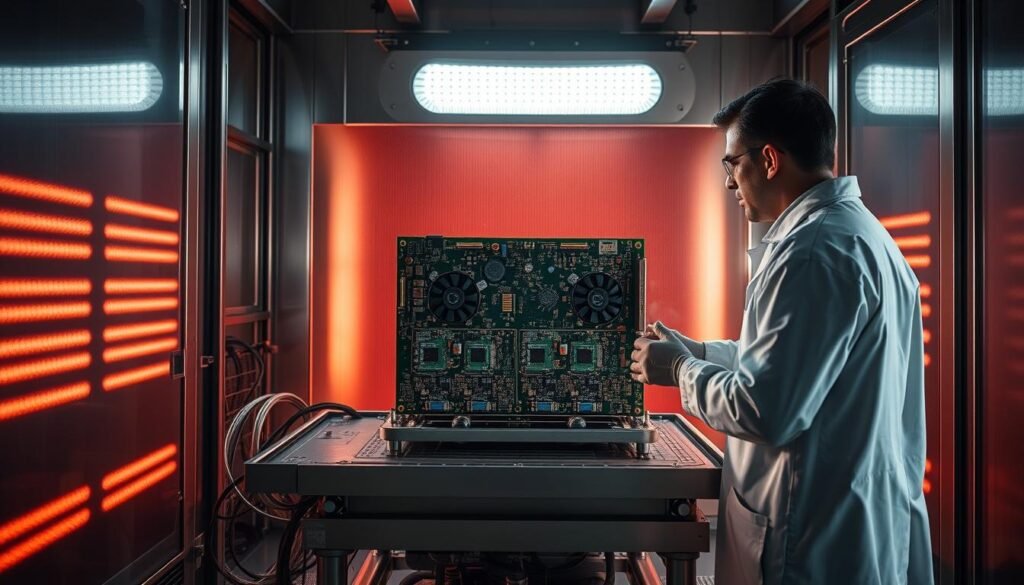
To ensure the durability of electronic assemblies, thermal shock testing methodologies play a vital role. These methodologies are designed to evaluate the reliability of PCBA components under extreme temperature conditions, simulating the harsh environments they may encounter during their operational lifespan.
Test Equipment and Setup Requirements
Thermal shock testing requires specialized equipment capable of rapidly changing temperatures. The test chamber must be able to maintain extreme temperatures and quickly transition between them. Proper setup and calibration of the test equipment are crucial to ensure accurate and reliable test results.
We utilize thermal shock chambers that can achieve temperatures ranging from -65°C to +150°C, with transition times as low as 10 seconds. The specific requirements for test equipment and setup can vary depending on the industry standards and product specifications.
Temperature Ranges and Transition Rates
The temperature range and transition rate are critical parameters in thermal shock testing. The test conditions must be carefully selected to simulate the expected environmental stresses the PCBA will face. Typically, tests are conducted between extreme temperatures, such as -40°C and +125°C, with dwell times that allow the components to reach thermal equilibrium.
| Test Parameter | Typical Range | Transition Time |
|---|---|---|
| Temperature Range | -65°C to +150°C | <10 seconds |
| Dwell Time | 15 minutes to 1 hour | – |
| Cycle Count | 100 to 1000 cycles | – |
Interpreting Thermal Shock Test Results
Interpreting thermal shock test results requires a systematic approach that combines visual inspection, electrical testing, and often destructive analysis techniques. Visual inspection can reveal surface-level defects, while electrical testing provides quantitative data on performance degradation.
We analyze test results across multiple samples to distinguish between random defects and systematic design or manufacturing issues. Failure analysis correlates specific thermal events with observed failures, determining whether they occurred during heating transitions, cooling transitions, or during dwells at temperature extremes.
By following a rigorous testing and analysis protocol, we can ensure that PCBA components meet the required reliability standards for their intended applications.
Temperature Cycling Test Procedures and Applications
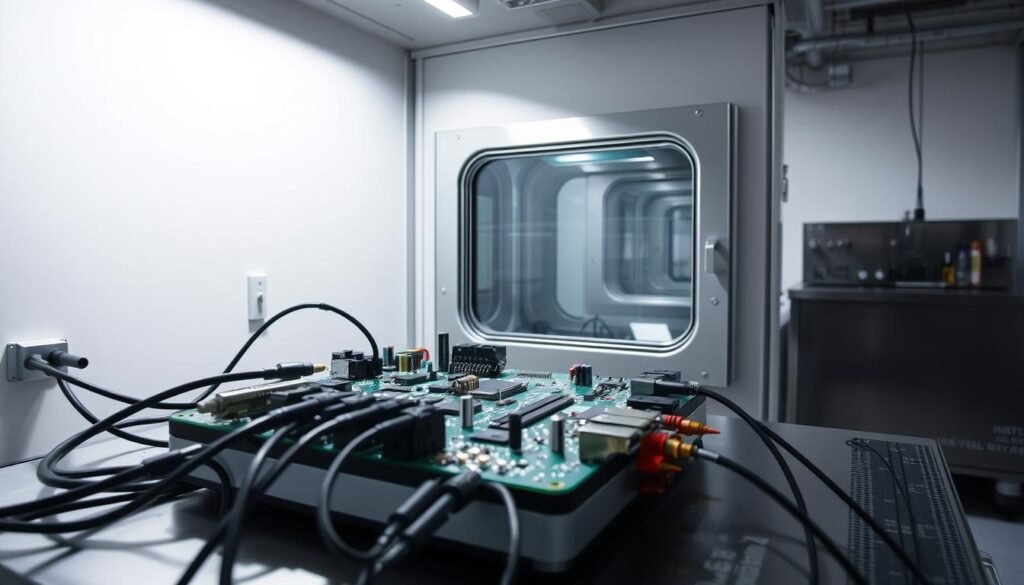
Temperature cycling tests are crucial for evaluating the reliability of PCBA under various thermal conditions. These tests help us understand how electronic components behave when subjected to extreme temperature fluctuations.
Standard Testing Protocols and Parameters
Standard testing protocols for temperature cycling involve specific parameters such as temperature ranges, ramp rates, and soak times. MPI Thermal TA-SERIES of ThermalAir stream systems are designed to meet these requirements, providing precise control over test conditions.
The test equipment is set up to control ramp rates, dwell/soak times, and all temperature parameters. This ensures that the test article (DUT/UUT) is subjected to the desired thermal profile.
Soak Times and Cycle Counts
Soak times and cycle counts are critical factors in temperature cycling tests. Soak times refer to the duration for which the test article is held at a specific temperature, while cycle counts determine the number of times the test article is cycled between temperature extremes.
By adjusting these parameters, we can simulate various environmental conditions and assess the PCBA’s performance under different scenarios.
Real-Time Monitoring During Temperature Cycling
Real-time monitoring during temperature cycling provides critical insights into the behavior of PCBA under test. Modern temperature cycling systems, such as those from MPI Thermal, incorporate continuous electrical monitoring capabilities that can detect intermittent failures.
- Real-time monitoring transforms temperature cycling from a simple pass/fail test into a powerful analytical tool.
- Parameters commonly monitored during cycling include continuity, insulation resistance, impedance, current leakage, and functional performance metrics.
- Advanced monitoring systems can correlate electrical anomalies with specific thermal events, helping engineers pinpoint exactly which temperature transitions or dwells are creating stress on critical components.
By leveraging real-time monitoring and advanced data analysis, we can gain a deeper understanding of how PCBA responds to thermal stress, enabling us to improve their design and reliability.
Common Failure Mechanisms Detected Through Thermal Testing
Understanding the failure mechanisms detected through thermal testing is vital for improving the durability of PCBAs. Thermal testing, including thermal shock and temperature cycling, helps identify potential weaknesses in electronic assemblies.
Solder Joint Failures and Thermal Fatigue
Solder joint failures are a common issue detected through thermal testing. Thermal fatigue caused by repeated temperature fluctuations leads to solder joint degradation. This degradation can result from tensile overstress and tensile fatigue during thermal shock tests, or shear creep fatigue and stress relaxation during temperature cycling tests.
PCB Delamination and Material Degradation
Thermal testing also reveals issues related to PCB delamination and material degradation. Coefficient of Thermal Expansion (CTE) mismatches between PCB materials and components can cause cyclic stress, leading to delamination. Additionally, prolonged exposure to temperature extremes can degrade PCB materials, compromising their structural integrity.
Component Stress and Connection Failures
Component stress during thermal testing affects both internal component structures and their external connections to the PCB. Various component types experience different failure mechanisms, such as ceramic capacitors developing internal cracks due to thermal shock, and semiconductor devices experiencing die attach degradation and wire bond fatigue.
- Ceramic capacitors are particularly vulnerable to thermal shock, creating internal cracks that may propagate during subsequent stress.
- Semiconductor devices experience thermal-induced failure mechanisms, including die attach degradation and wire bond fatigue.
- Connector failures often involve contact fretting due to differential thermal expansion.
By understanding these failure mechanisms, manufacturers can take proactive steps to enhance the reliability of their PCBAs, ultimately improving product lifespan and performance.
Industry Standards and Compliance Requirements
Ensuring compliance with industry standards is crucial for the reliability of PCBA manufacturing. Various standards govern the thermal testing of PCBAs, ensuring that products meet specific reliability and performance criteria.
IPC and JEDEC Standards for Thermal Testing
The Institute for Printed Circuits (IPC) and the Joint Electron Devices Engineering Council (JEDEC) provide comprehensive standards for thermal testing. For instance, IPC standards outline detailed requirements for thermal shock and temperature cycling tests, including test conditions, equipment specifications, and failure criteria. These standards help manufacturers ensure the reliability of their PCBAs under various environmental conditions.
MIL-STD Requirements for Military and Aerospace Applications
Military and aerospace applications require PCBAs to meet stringent standards outlined in MIL-STD specifications. These standards demand rigorous testing, including thermal shock and temperature cycling, to ensure that components can withstand extreme conditions. Compliance with MIL-STD requirements is critical for manufacturers supplying to these industries.
Documentation and Certification Processes
Comprehensive documentation is a critical component of thermal testing programs, providing evidence of compliance with standards and traceability for quality assurance purposes. Standard documentation includes detailed test plans, actual temperature profiles recorded during testing, visual inspection results, electrical test data, and failure analysis reports. For high-reliability applications, third-party validation or witness testing is often required to ensure unbiased verification of test results. We must maintain detailed records, as documentation retention requirements vary by industry, with aerospace and medical applications typically requiring records to be maintained for the entire product lifecycle plus additional years.
Conclusion: Implementing Effective Thermal Testing Strategies
As we navigate the complexities of electronics manufacturing, it’s clear that thermal testing plays a crucial role in ensuring PCBA reliability. To maximize PCB reliability under thermal stress, consider design strategies such as matching CTE values, optimizing via design, and enhancing thermal management.
Implementing effective thermal testing strategies requires a holistic approach that begins in the design phase and continues through manufacturing. Successful thermal testing programs balance thorough reliability validation with practical considerations of time and cost. By leveraging thermal testing, manufacturers can identify potential defects and improve the overall reliability of their PCBAs.
As electronics continue to become more compact and powerful, thermal testing will become increasingly critical for ensuring reliability, particularly in emerging applications. By adopting a proactive approach to thermal testing, manufacturers can ensure the longevity and performance of their PCBAs.
FAQ
What is the primary purpose of performing thermal shock and temperature cycling tests on PCBAs?
How do thermal shock and temperature cycling tests differ from one another?
What are the most common failure mechanisms detected through thermal testing?
What industry standards govern thermal testing for PCBAs?
How are thermal shock and temperature cycling test results typically interpreted?
What role does soak time play in temperature cycling tests?
About The Author
