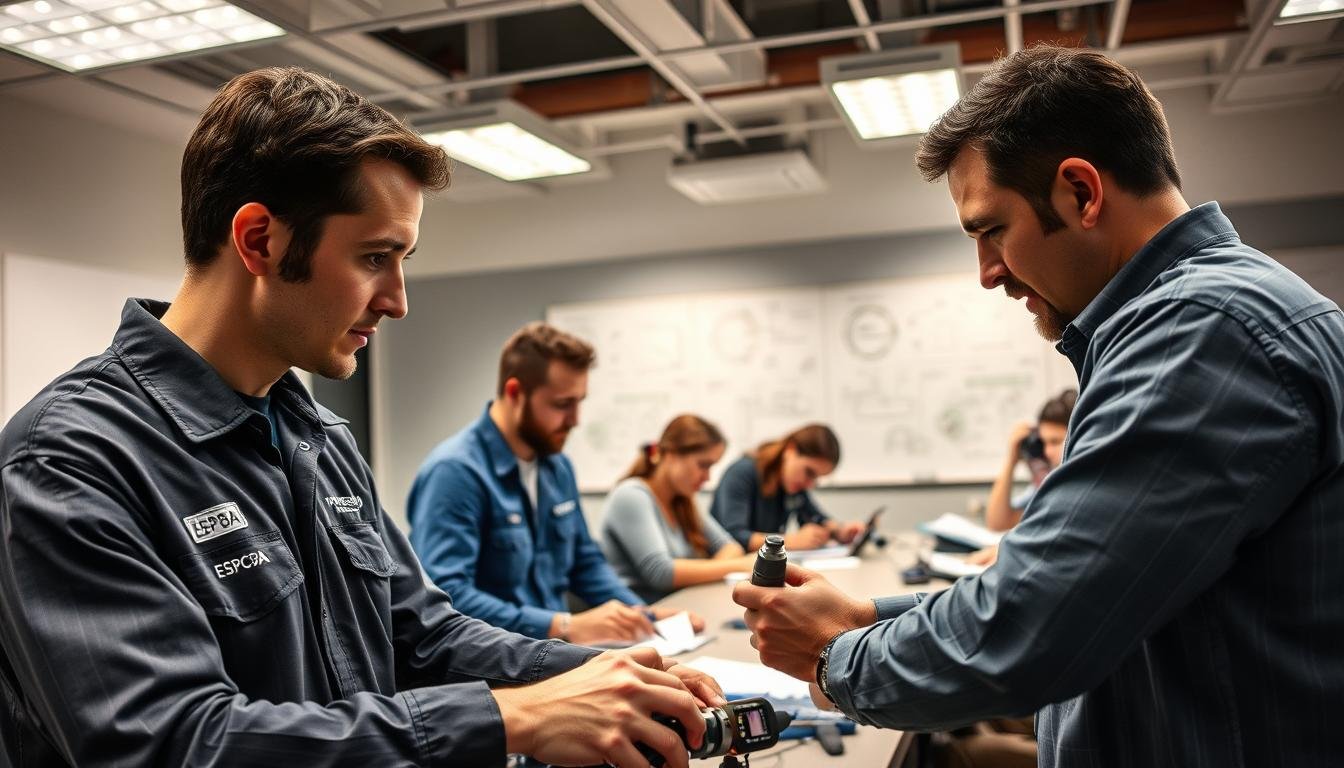
In today’s fast-paced industry, continuous training is not just beneficial—it’s essential.
According to the World Economic Forum, 50% of all employees will need reskilling by 2025 due to technological advancements. For our technicians and engineers, staying updated is crucial. Our commitment to ongoing professional development ensures they possess the latest knowledge and skills, enabling us to deliver superior solutions to our clients.
By prioritizing their growth, we adapt quickly to emerging technologies and methodologies, staying ahead in the industry. To learn more about the future trends shaping our industry, visit our article on the future of electronic spare parts.
Key Takeaways
- Continuous training is crucial for technicians and engineers to stay updated with industry advancements.
- Ongoing professional development enhances problem-solving abilities and innovation.
- Investing in employee growth leads to improved quality in manufacturing processes.
- Staying ahead in the industry requires adapting to emerging technologies and methodologies.
- Our commitment to employee development translates to exceptional value for our clients.
The Rapidly Evolving Landscape of Electronics Manufacturing
In the rapidly evolving world of electronics manufacturing, staying abreast of technological changes is crucial. We operate in an environment where technological advancements occur at an unprecedented pace, fundamentally transforming how products are designed, manufactured, and tested.
Advancements Reshaping the Industry
The integration of advanced automation, artificial intelligence, and IoT capabilities has created new paradigms in production efficiency and quality control. This requires continuous adaptation from our technical teams to remain competitive.
Emerging technologies such as Artificial Intelligence (AI), 3D printing, and blockchain are reshaping everything from product design to manufacturing. We’ve observed that companies failing to address this skills evolution risk falling behind as competitors embrace new methodologies and technologies.
| Technological Advancements | Impact on Electronics Manufacturing |
|---|---|
| Artificial Intelligence (AI) | Enhanced production efficiency and quality control |
| 3D Printing | Rapid prototyping and production |
| Blockchain | Improved supply chain transparency and security |
The Growing Skills Gap Challenge
Our industry faces a significant and growing skills gap as traditional manufacturing expertise must now be complemented with software development, data analysis, and advanced troubleshooting capabilities. By acknowledging these rapid changes, we’ve structured our training initiatives to ensure our technicians and engineers remain at the forefront of industry developments.
To address the challenges posed by the rapidly evolving landscape, we emphasize continuous learning and the adoption of new technologies in our field. This enables us to stay competitive and deliver high-quality solutions.
Why We Invest in Continuous Training for Our Technicians and Engineers
Our approach to staying ahead in the electronics manufacturing industry is rooted in a deep belief in the power of continuous learning. Continuous learning supports quality, efficiency, and innovation in software development, enhancing engineers’ problem-solving and critical thinking abilities.
Our Philosophy on Professional Development
We fundamentally believe that our company’s success is directly tied to the expertise and capabilities of our technical team members. Our philosophy centers on creating an environment where learning is woven into the fabric of daily operations, encouraging curiosity, experimentation, and knowledge sharing at every level.
- Encouraging a culture of continuous improvement that is celebrated and rewarded.
- Fostering an atmosphere where technicians and engineers proactively seek opportunities to expand their capabilities.
By adopting this philosophy, we’ve observed measurable improvements in job satisfaction, retention rates, and overall team performance that directly impact our client deliverables.
Creating a Culture of Continuous Learning
We’ve developed a culture where continuous improvement is not just encouraged but is a part of our daily operations. This culture is supported by balancing structured learning programs with informal knowledge exchange, creating multiple pathways for our team members to develop new skills.
| Aspect | Description | Benefits |
|---|---|---|
| Structured Learning | Formal education and industry certifications | Enhanced expertise, industry-recognized skills |
| Informal Knowledge Exchange | Workshops, seminars, and peer learning | Innovative problem-solving, collaborative environment |
Our commitment to creating a culture of continuous learning is reflected in the way we invest in our team’s growth, ensuring they have the skills needed to address complex technical challenges effectively.
Staying Updated with Industry Advancements
To remain at the forefront of electronics manufacturing, we prioritize staying updated with the latest industry advancements. This commitment to continuous learning enables us to leverage the most current technologies and methodologies, driving innovation and efficiency in our manufacturing processes.
Keeping Pace with Emerging Technologies
We maintain a vigilant approach to monitoring industry trends and emerging technologies, establishing dedicated channels for identifying new methodologies that could enhance our manufacturing capabilities. For instance, our technical teams regularly participate in industry conferences, webinars, and specialized training sessions to ensure they remain at the cutting edge of electronics manufacturing innovations.
- Our technical teams engage in continuous education to stay abreast of the latest technologies and manufacturing processes.
- We’ve implemented structured processes for evaluating new manufacturing technologies and methodologies, allowing us to thoughtfully integrate beneficial advancements into our operations.
Adapting to New Manufacturing Processes
By staying ahead of industry trends, we’re able to advise clients on design optimizations that leverage the latest manufacturing capabilities, providing them with competitive advantages. Our commitment to continuous learning enables us to anticipate industry shifts rather than merely react to them, positioning our company as a forward-thinking partner for our clients.
For example, companies like Tesla are at the forefront of adopting new technologies such as AI and machine learning to optimize their manufacturing processes. By constantly learning and adapting to the latest advancements, Tesla engineers have been able to increase production rates, enhance automation, and reduce errors. Similarly, our dedication to staying updated with industry advancements allows us to drive progress and innovation in electronics manufacturing.
Enhancing Employability and Career Progression
https://www.youtube.com/watch?v=o8gxFJiSDqk
At our organization, we understand that the key to unlocking our technicians’ and engineers’ full potential lies in continuous learning and skill development. Continuous learning directly influences career progression by equipping engineers with the skills needed to stay competitive in a job market increasingly driven by new technologies.
Building Competitive Skill Sets
We recognize that investing in our technicians’ and engineers’ skill development creates a dual benefit—enhancing both their individual career trajectories and our company’s technical capabilities. By providing opportunities to develop specialized expertise in emerging technologies, we enable our technical staff to build highly competitive skill sets that increase their value both internally and in the broader job market.
- Our structured approach to professional development includes clearly defined advancement pathways that allow team members to visualize and work toward their career goals within our organization.
- Technicians and engineers who engage in continuous learning demonstrate greater confidence in tackling complex challenges and show more initiative in seeking innovative solutions.
Creating Pathways for Internal Advancement
Our investment in employee development has significantly improved our retention rates, as team members appreciate the opportunity to grow professionally while contributing to meaningful projects. Research from The National Association of Colleges and Employers (NACE) highlights that skills-based training can boost employability by up to 64%. By fostering a culture of continuous learning, we empower our technicians and engineers to stay competitive in the job market and advance in their career in a meaningful way.
This approach not only enhances their growth but also equips them with new skills, making them more attractive to employers and opening up new opportunities for advancement.
Fostering Innovation and Problem-Solving Skills
By investing in the ongoing development of our technicians and engineers, we cultivate a culture of innovation. Continuous learning is pivotal in fostering creativity and enhancing problem-solving capabilities within our organization.
When our engineers are exposed to new ideas, technologies, and interdisciplinary knowledge, they can approach problems from a fresh perspective. This diversity in learning enables them to make connections between seemingly unrelated fields, often resulting in novel solutions.
Nurturing Creative Thinking
Our training programs are designed to expose team members to cross-disciplinary concepts, encouraging them to make connections that lead to breakthrough solutions. By developing strong problem-solving frameworks through ongoing education, our technical staff can systematically address issues that might otherwise cause significant production delays or quality concerns.
- We’ve discovered that continuous learning creates an environment where innovation flourishes as our technicians and engineers apply diverse knowledge to solve complex manufacturing challenges.
- Our team is encouraged to apply their new knowledge immediately to real-world projects, reinforcing learning while generating tangible improvements to our processes and outcomes.
Applying New Knowledge to Complex Challenges
The confidence that comes from continuous skill development empowers our technicians and engineers to propose innovative approaches rather than defaulting to established but potentially outdated methodologies. By acquiring new skills and knowledge, they are better equipped to tackle complex challenges and drive progress in our electronics manufacturing processes.
Through our commitment to continuous learning and development, we not only enhance our technical capabilities but also foster a culture that values innovation and creative problem-solving.
Our Comprehensive Training Approach

Our comprehensive training approach is designed to equip technicians and engineers with the skills needed to excel in the rapidly evolving electronics manufacturing landscape. We understand that a one-size-fits-all training program is not effective, so we’ve developed a multi-faceted approach that combines formal education, industry certifications, online learning platforms, and hands-on workshops to accommodate different learning styles and needs.
Formal Education and Industry Certifications
We support our team members in pursuing advanced degrees and industry-specific certifications like PMP (Project Management Professional), Six Sigma, and Autodesk Certified Professional, which are valuable for enhancing technical expertise and transitioning into specialized roles. Our company provides financial support for relevant certifications and advanced degrees, recognizing that these credentials not only enhance individual capabilities but also elevate our organizational expertise.
Online Learning Platforms and Resources
We leverage leading online learning platforms like Coursera, edX, LinkedIn Learning, and Udacity to provide our technicians and engineers with flexible, on-demand access to courses covering emerging technologies and methodologies relevant to electronics manufacturing. These resources enable our team to stay updated with industry advancements at their own pace.
Workshops, Seminars, and Conferences
Our internal training programs are specifically designed to address the unique challenges of our manufacturing environment, ensuring that learning is immediately applicable to daily operations. We also regularly send team members to industry conferences and specialized workshops, encouraging them to return and share their insights through formal knowledge-transfer sessions that benefit the entire organization. For more insights on innovative training methods, you can visit how innovative companies train their employees.
By adopting this comprehensive training approach, we foster a culture of continuous learning and ensure that our team remains at the forefront of industry standards and best practices.
Mentorship and Knowledge Sharing Within Teams
By implementing structured mentorship programs, we create opportunities for knowledge sharing and skill development within our organization. Mentorship is a powerful tool for fostering a culture of continuous learning, as highlighted by the concept of continuous learning. Our approach to mentorship goes beyond mere knowledge transfer; it’s about creating a collaborative environment where experienced engineers and technicians can share their insights and expertise with newer team members.
Structured Mentorship Programs
We’ve established structured mentorship programs that pair experienced technicians and engineers with newer team members. These programs create formalized knowledge transfer pathways that preserve critical institutional expertise. Our mentorship approach includes guidance on career development, problem-solving methodologies, and effective communication within cross-functional teams. As a result, our mentors can offer valuable insights into solving complex problems, navigating career challenges, and refining technical skills.
Creating Opportunities for Peer Learning
We create regular opportunities for peer learning through technical forums, project retrospectives, and collaborative problem-solving sessions. These initiatives encourage knowledge sharing across different experience levels, fostering an environment where team members proactively offer assistance and insights. By recognizing and rewarding knowledge sharing, we’ve cultivated a culture that values collaboration and mutual support.
Some of the key benefits of our mentorship programs include:
- Transferring tacit knowledge—the difficult-to-document insights and techniques that come only through years of hands-on experience in electronics manufacturing.
- Enhancing the skills and competencies of our team members through targeted guidance and support.
- Fostering a sense of community and collaboration within our teams.
As we continue to invest in our mentorship programs, we are confident that they will remain a vital component of our strategy for promoting continuous learning and development within our organization.
Measuring the Impact of Our Training Investments

We take a data-driven approach to evaluating the success of our training investments. By establishing clear key performance indicators, we can measure both technical skill advancement and business impact.
Key Performance Indicators for Training Success
Our measurement framework tracks several key performance indicators, including improvements in manufacturing quality metrics, reduction in troubleshooting time, and increases in process efficiency. These metrics provide valuable insights into the effectiveness of our continuous learning initiatives.
- Skills proficiency assessments through technical assessments and certifications
- Project performance metrics to evaluate the application of new skills
- Regular feedback from technicians and engineers on the relevance and impact of training
Tracking Return on Investment
To assess the return on investment (ROI) of our training programs, we compare the costs of development initiatives against tangible benefits such as reduced errors, faster production times, and improved client satisfaction. Our comprehensive measurement system allows us to continuously refine our training approach, allocating resources to the programs and methodologies that demonstrate the greatest impact on our business objectives.
| Metric | Pre-Training | Post-Training |
|---|---|---|
| Manufacturing Quality Metrics | 85% | 95% |
| Troubleshooting Time | 5 hours | 2 hours |
| Process Efficiency | 80% | 90% |
By monitoring job satisfaction and retention metrics among our technical staff, we can quantify the organizational benefits of our professional development approach beyond direct production improvements. This holistic view enables us to make informed decisions about our training initiatives and their impact on our organization.
Overcoming Challenges in Implementing Continuous Learning
In our fast-paced manufacturing environment, we have encountered several obstacles in our efforts to implement continuous learning effectively. One of the primary challenges we faced was addressing the issue of time constraints, as our engineers often have busy schedules that make it difficult to prioritize learning.
Addressing Time Constraints
To tackle time constraints, we integrated learning opportunities directly into work schedules rather than treating them as separate activities. For instance, we encourage our engineers to attend webinars during their commute or allocate a few hours each week to focus on a particular course or skill. This approach has helped us manage time constraints effectively.
We also recognize that some learning opportunities can be costly. However, we have found that many free or low-cost resources are available that can be leveraged to support our continuous learning initiatives. By being strategic in our approach to training investments, we have been able to balance our budget while still providing valuable learning experiences for our team.
Balancing Training with Production Demands
Another significant challenge we faced was balancing training needs with production demands. To address this, we developed innovative approaches such as microlearning modules that can be completed during natural workflow breaks and just-in-time training aligned with upcoming project requirements. This has enabled us to ensure that our training programs are aligned with our production schedules, minimizing disruptions while enhancing our team’s skills.
Our leadership team played a crucial role in overcoming organizational resistance by clearly demonstrating the connection between continuous learning and improved production outcomes. By securing buy-in at all levels of the company, we were able to implement our continuous learning initiatives more effectively. For more insights on fostering a culture of continuous learning, you can visit FasterCapital’s resource on Learning and Development.
By adopting these strategies, we have been able to overcome the challenges associated with implementing continuous learning in our organization. Our experience has shown that with the right approach, continuous learning can become an integral part of our work culture, driving both personal and organizational growth.
Conclusion: The Future of Technical Excellence Through Continuous Learning
The future of technical excellence in our industry hinges on our ability to adapt and innovate through continuous learning. As we look ahead, it’s clear that our commitment to training and developing our technicians and engineers will remain a critical component of our success.
By fostering a culture of ongoing education and skill development, we’re not only enhancing our team’s capabilities but also driving business growth and staying ahead of industry trends. Our forward-thinking approach includes preparing for emerging technologies like artificial intelligence and advanced automation, ensuring we’re well-positioned to tackle complex challenges and capitalize on new opportunities.
The benefits of our continuous learning philosophy extend to our clients, who gain access to cutting-edge manufacturing capabilities and innovative problem-solving approaches. As we continue to invest in our people’s growth and development, we’re confident in our ability to deliver superior results and maintain our position at the forefront of the electronics manufacturing industry.
FAQ
What types of training programs do you offer to your technicians and engineers?
How do you measure the success of your training investments?
How do you address the challenge of time constraints in implementing continuous learning?
What role does mentorship play in your training approach?
How do you stay current with emerging technologies and industry trends?
What benefits do your technicians and engineers gain from your training programs?
About The Author
