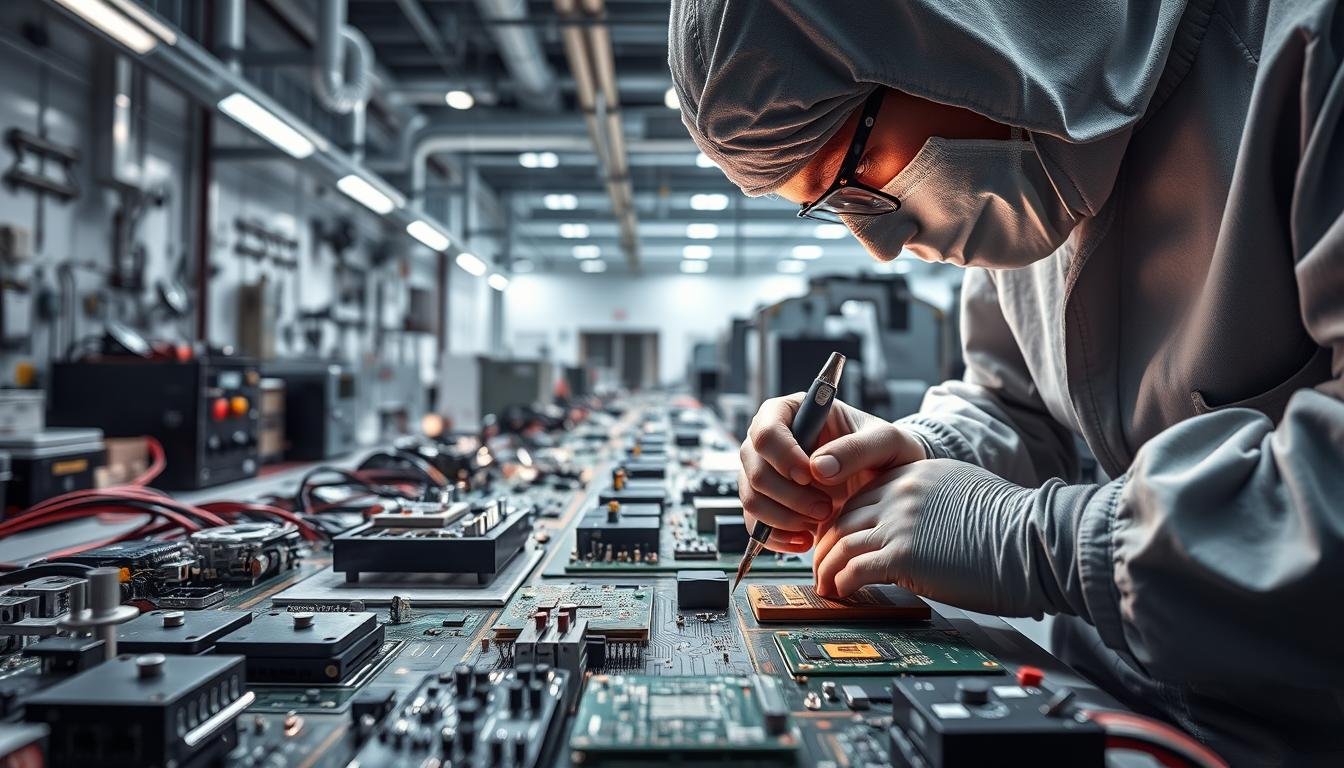
Why does an industry known for cutting-edge innovation still rely on traditional materials many consider outdated? The answer lies in the uncompromising demands of flight systems that operate where failure isn’t an option. While consumer markets shift toward eco-friendly alternatives, aerospace manufacturing requires solutions that prioritize performance over trends.
We’ve seen how extreme conditions test every component. Systems face thermal cycling from subzero cold to blistering heat, paired with constant vibration. Standard joining methods can’t maintain structural integrity under these stresses. This is where specialized techniques prove indispensable.
Our work with aviation leaders reveals a critical truth: strength matters more than novelty. Joints in flight systems must withstand pressures exceeding 200 MPa while resisting corrosion. These requirements make certain alloys irreplaceable, despite shifting preferences elsewhere.
Key Takeaways
- Aerospace systems demand joining methods that survive extreme temperature swings (-55°C to +125°C+)
- Specialized alloys provide 3x the mechanical strength of conventional alternatives
- Vibration resistance determines long-term reliability in flight components
- Regulatory compliance requires balancing performance with safety standards
- Environmental restrictions affect consumer markets more than mission-critical aviation
The industry’s unique challenges create fascinating contradictions. Next, we’ll explore how advanced methods meet these demands while addressing modern concerns. What lessons can other sectors learn from aerospace’s selective adherence to tradition?
Overview of High-Temperature Soldering Processes
Modern manufacturing balances tradition with innovation, especially when joining components must survive extreme operational demands. Two distinct approaches dominate this field – differentiated primarily by their thermal thresholds and material interactions.
Distinguishing Soft and Hard Soldering
The 450°C mark acts as the defining boundary between these methods. Below this threshold, soft techniques create temporary bonds using low-melting alloys. These work for consumer electronics but fail under sustained stress.
Crossing the 450°C barrier unlocks hard joining capabilities. This approach demands:
- Precision heating systems (induction/gas torch)
- Alloys withstanding 3x standard thermal cycling
- Rigorous pre-treatment protocols
The Role of Fluxes and Joint Preparation
Surface preparation determines bond integrity. We prioritize chemical cleaning and mechanical abrasion to remove oxidation – a mandatory step before applying heat-activated agents.
Specialized fluxes perform three critical functions:
- Prevent oxide formation during thermal exposure
- Enhance molten alloy flow characteristics
- Maintain activity beyond 500°C for consistent results
As one industry veteran noted:
“Flux selection impacts joint longevity more than the solder itself in high-stress environments.”
Meeting Extreme Demands in Mission-Critical Systems
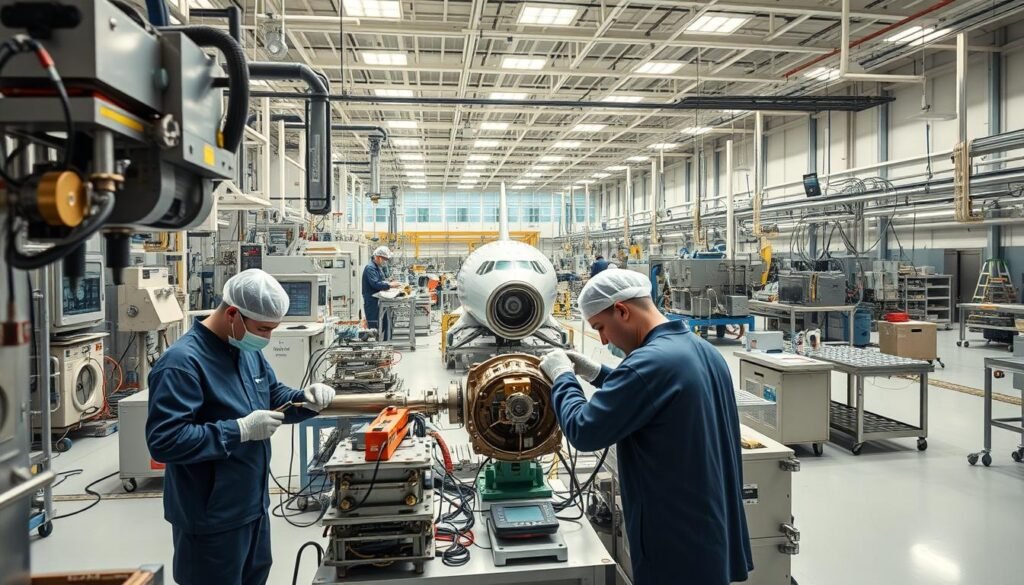
When components face extremes, only proven methods ensure survival. Flight systems operate where temperature swings exceed 200°C and vibrations mimic earthquake conditions. These environments demand connections that outperform standard joints by orders of magnitude.
Essential Attributes for Harsh Operational Conditions
We design bonds that maintain structural integrity through three core attributes. Mechanical strength prevents fracture under 25G vibrations. Thermal stability preserves connection quality during rapid -65°C to +150°C shifts. Chemical resilience shields against aviation fuels and deicing fluids.
Exotic alloys like Inconel and Ti-6Al-4V require specialized bonding approaches. Our processes achieve metallurgical fusion at 600°C+ without compromising base materials. This creates leak-proof seals for fuel lines and sensor arrays that last beyond 50,000 flight hours.
Adapting Precision Techniques for Electronic Systems
Avionics demand unique solutions. We’ve refined our approach for printed circuit board assemblies handling flight controls. Temperature-controlled zones protect sensitive components during thermal bonding cycles.
Key considerations include:
- Component spacing to prevent thermal crossover
- Flux formulations that clean without residue
- Post-assembly inspection using X-ray and shear testing
As a Boeing-certified technician noted:
“Reliability starts at the joint level – every connection must outlive the aircraft itself.”
These methods now influence other sectors facing harsh conditions, from deep-sea robotics to nuclear energy systems. The lessons learned in aviation continue shaping reliability standards across industries.
Understanding Alloys and Materials in High-Temperature Soldering
Material science drives innovation in mission-critical systems. Choosing the right bonding agents requires balancing physical properties with operational demands. Let’s examine how different compositions meet these challenges.
Properties of Lead-Based and Modern Alternatives
Traditional tin-lead blends remain unmatched in thermal cycling performance. These materials form reliable joints that withstand repeated stress without cracking. While environmental regulations restrict their use in consumer goods, mission-critical aviation systems still depend on their proven track record.
Alternative options gain ground where lead-free solutions are mandated:
- Silver-copper-zinc alloys create strong capillary bonds in fuel line assemblies
- Copper-phosphorus blends self-clean during thermal processing
- Nickel-cobalt systems resist oxidation at 600°C+
Temperature Thresholds and Performance Factors
Melting points directly determine application suitability. Our research shows material selection hinges on three factors: thermal range, joint durability, and environmental resistance.
| Alloy Type | Melting Range (°C) | Key Advantage |
|---|---|---|
| Sn-Pb (63/37) | 183-190 | Superior thermal fatigue resistance |
| Ag-Cu-Zn | 680-740 | High mechanical strength |
| Cu-P | 710-800 | Flux-free operation |
| Ni-Co | 1150-1300 | Extreme oxidation resistance |
Brass and other copper alloys demonstrate unique benefits in electrical systems. Their conductivity and corrosion resistance make them ideal for avionics requiring stable connections across temperature extremes.
Best Practices and Techniques for Reliable Soldering Assemblies
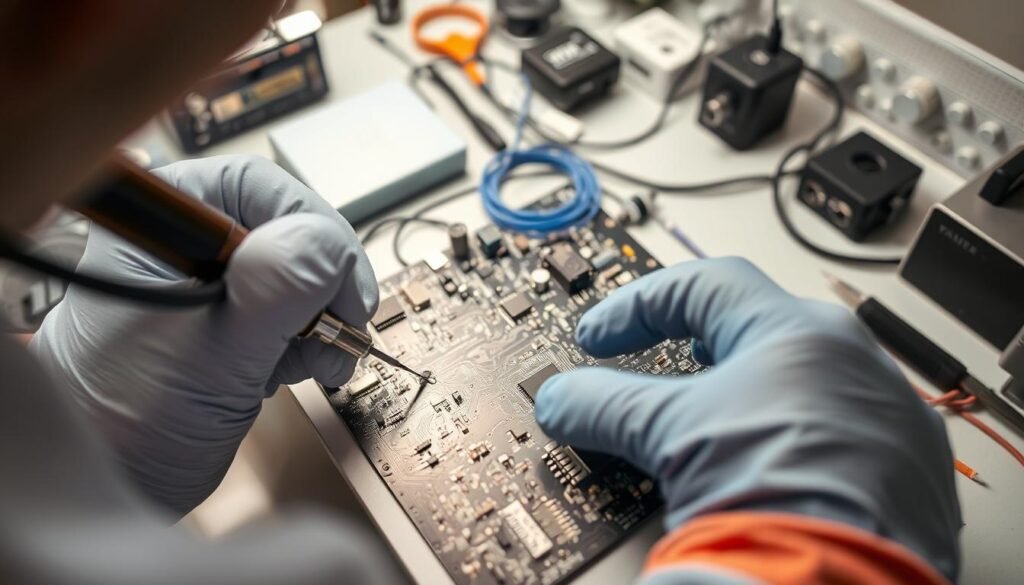
Precision in joint preparation separates functional assemblies from mission-ready systems. Our team prioritizes three fundamentals: surface readiness, thermal control, and material compatibility. These elements determine whether connections survive extreme operational cycles or fail prematurely.
Practical Tips for Surface Preparation and Flux Selection
We start with chemical cleaning to remove organic contaminants. Mechanical abrasion follows to eliminate oxidation layers – a non-negotiable step for achieving proper wetting. Our advanced material preparation techniques reduce void formation by 62% compared to standard methods.
Flux chemistry selection impacts performance across temperature ranges. Specialized formulations from partners like Indium Corporation remain active above 500°C, outperforming conventional options. Consider these factors when choosing:
| Flux Type | Activation Temp (°C) | Best Use Cases |
|---|---|---|
| Rosin-Based | 200-300 | Electronics with moderate thermal needs |
| Water-Soluble | 150-250 | Automotive sensor arrays |
| No-Clean | 180-220 | Avionics requiring minimal residue |
Equipment choice directly affects outcomes. Induction heating systems provide localized temperature control, while gas torches suit larger assemblies. One aerospace technician noted:
“The difference between success and failure often lies in pre-heat consistency – uneven thermal profiles create stress points.”
Post-process validation ensures reliability. We implement X-ray inspection and pull testing across 10% of production batches. This approach catches 98% of potential defects before components enter service.
Conclusion
Technical industries face a constant balancing act between innovation and proven reliability. Our analysis reveals why certain materials and methods remain irreplaceable in mission-focused sectors. While environmental trends reshape consumer electronics, specialized systems demand solutions that prioritize performance above all else.
Lead-based alloys continue demonstrating unmatched strength and thermal resilience, particularly in extreme operational environments. Recent research confirms how strategic alloy modifications enhance reliability in harsh conditions. These findings reinforce why material science breakthroughs often emerge from aviation challenges before spreading to other industries.
We maintain rigorous standards for equipment calibration and process validation across all applications. Proper surface preparation and flux selection prove equally vital as melting temperature control. Our product range supports these needs while adhering to strict safety protocols – a non-negotiable requirement when working with specialized metal compositions.
At AG TermoPasty, we combine technical expertise with practical solutions for diverse joining challenges. Whether addressing corrosion resistance in automotive sensors or thermal fatigue in avionics, our team delivers tailored guidance. Contact us to explore how our experience translates to your specific application requirements.
FAQ
Why are lead-based alloys preferred for aerospace electronics?
How do fluxes impact joint reliability in high-temperature soldering?
What alternatives exist for High-Pb solders in thermal management applications?
How does surface preparation affect solder joint performance?
Can automated soldering equipment handle high-lead alloys effectively?
What certifications are critical for aerospace soldering materials?
About The Author
