
What if a single undocumented tweak could compromise an entire aerospace system? This critical question drives modern approaches to maintaining product integrity in one of the world’s most regulated industries. With NASA and SAE standards emphasizing rigorous protocols, effective systems must address far more than basic version tracking.
We recognize aerospace projects demand absolute precision. Every modification carries cascading effects across interdependent components and documentation. Industry reports reveal 23% of engineering delays stem from poor change coordination – a risk our methodology eliminates through systematic oversight.
SAE EIA-649B principles form the foundation of this strategy, enhanced by decades of hands-on experience. The framework spans identification, verification, and audit functions, creating traceability from design concepts to operational deployment. Complex supply chains and multi-site collaborations amplify these challenges, requiring adaptable yet standardized solutions.
Key Takeaways
- Lifecycle integrity depends on unified oversight of technical specifications and documentation
- Industry standards like SAE EIA-649B provide essential compliance benchmarks
- Effective systems prevent costly errors through real-time change impact analysis
- Multi-site coordination demands centralized visibility across all modifications
- Risk reduction stems from aligning physical products with approved digital records
Overview of Configuration Management in Aerospace Engineering
Aerospace advancements rely on meticulous systems to track every component’s journey from design to deployment. Strict regulations like FAA airworthiness directives and ISO 9001 standards demand unwavering precision in documenting hardware, software, and procedural updates. These protocols ensure safety-critical systems meet evolving technical requirements while maintaining full audit trails.
Modern configuration management bridges gaps between distributed teams and complex supply chains. It coordinates design revisions, material substitutions, and manufacturing updates across global partners. This discipline transforms isolated changes into controlled improvements, preventing errors that could impact flight safety or regulatory compliance.
The industry faces unique challenges: 15-year product lifecycles, multi-tier supplier networks, and zero-tolerance for deviations. Effective solutions must synchronize digital models with physical assets while preserving systems engineering integrity. For example, a single avionics update may require adjustments across wiring diagrams, test protocols, and maintenance manuals.
Centralized platforms now automate version control and approval workflows, aligning with SAE and ISO frameworks. These tools provide real-time visibility into baseline configuration status, change impacts, and compliance documentation. By standardizing processes, organizations reduce rework costs by up to 34% while accelerating certification timelines.
Key Elements of a Comprehensive CM Plan
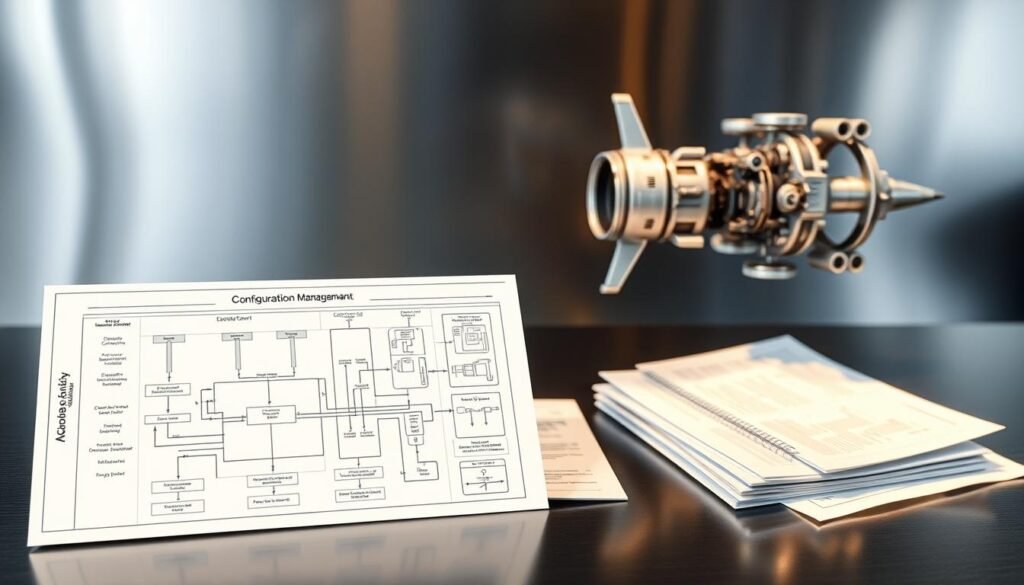
Building a bulletproof system starts with clearly defined structural components. Every successful strategy combines strategic vision with tactical execution pathways, creating alignment between technical specifications and operational realities.
Purpose & Goals in CM Planning
Effective plans act as living roadmaps rather than static documents. We focus on three core objectives:
- Alignment: Connecting technical baselines with business outcomes
- Traceability: Establishing audit-ready documentation trails
- Adaptability: Designing frameworks that evolve with project needs
Essential Regulatory and Lifecycle Requirements
Compliance isn’t optional in aerospace systems. Our approach integrates:
- FAA airworthiness directives at every development phase
- ITAR-controlled data handling protocols
- Lifecycle-specific validation checkpoints
One project manager noted: “The difference between good and great plans lies in anticipating regulatory shifts before they become emergencies.” We embed this foresight through automated compliance monitoring tools that track 87+ global standards.
Multi-team coordination requires watertight role definitions. Clear ownership matrices prevent decision bottlenecks while maintaining accountability across distributed teams. Regular plan reviews ensure alignment with evolving requirements throughout product lifecycles.
Understanding the Role of CM in the Aerospace Industry

How do aerospace systems maintain integrity over decades of service? The answer lies in specialized tracking that evolves with each product’s journey. Configuration practices create living records spanning initial design to final decommissioning.
Every aircraft or spacecraft develops a unique identity through its modifications. This demands meticulous “As-X” tracking:
- As-designed specifications vs. as-built realities
- Test results influencing as-delivered configurations
- Continuous updates from as-maintained service logs
Safety protocols depend on this documentation. Regulatory agencies require proof that replacements or repairs match approved standards. A single engine part substitution could affect multiple systems if not properly tracked.
The industry’s extended lifecycles amplify these challenges. Components face:
- Technology upgrades every 5-7 years
- Supplier changes across 20+ year operations
- Custom modifications for specialized missions
Effective systems bridge design intent with operational needs. They prevent mismatches between digital models and physical assets while supporting maintenance planning. This coordination reduces safety risks and ensures compliance during audits.
Our Configuration Management Process for Aerospace Engineering Changes
When a satellite’s thruster modification requires 47 documentation updates, you need more than sticky notes. Systematic oversight ensures every adjustment aligns with operational requirements and safety protocols. A dedicated control board, led by authorized program leads, evaluates proposals through multi-layered reviews.
| Criteria | Major Adjustments | Minor Updates |
|---|---|---|
| Approval Process | Cross-functional team review | Department-level authorization |
| Documentation | Full traceability + audit trails | Simplified tracking |
| Impact Analysis | Safety, cost, interoperability | Localized effect assessment |
Proposals undergo technical vetting by specialists from manufacturing, quality assurance, and program leadership. One project lead noted: “Thorough evaluations prevent 80% of potential implementation errors before approval.”
Implementation phases include verification checks matching updated specifications. Automated tools flag discrepancies between digital plans and physical modifications. This alignment is critical given the difference between configuration management and change in complex systems.
Continuous improvement loops analyze historical data to streamline future decisions. Lessons from past modifications refine evaluation criteria while maintaining compliance with evolving standards.
Benefits of a Robust CM Plan for Engineering Changes
Major engineering failures often share a common root: incomplete visibility into system adjustments. The Deepwater Horizon incident demonstrated how disconnected documentation leads to catastrophic outcomes. Proper oversight prevents such scenarios by aligning physical components with their digital twins and operational protocols.
- Risk mitigation: Automated tracking eliminates mismatches between as-built hardware and approved designs
- Cost control: Early error detection reduces rework expenses by up to 40% in complex projects
- Regulatory assurance: Real-time audit trails satisfy NASA’s technical standards and FAA requirements
Technical teams gain decision-making clarity through unified data repositories. Maintenance crews access current schematics, while suppliers receive precise specifications. This alignment prevents the documentation gaps that contributed to 68% of aerospace project delays last year.
Performance improvements emerge from continuous analysis of change patterns. One aviation manufacturer reduced design iterations by 31% after implementing traceability protocols. Such best practices transform CM from compliance exercise to strategic advantage.
The importance of these systems extends beyond initial deployment. Aging aircraft require meticulous modification records to maintain airworthiness certifications. Proper information management ensures decades-long operational safety while supporting future upgrades.
Detailed Breakdown of CM Functions and Best Practices
Precision tracking forms the backbone of reliable aerospace systems. Effective methods require coordinated processes that address both technical specifications and operational realities. Two critical functions ensure this alignment: systematic identification protocols and rigorous verification workflows.
Configuration Identification & Status Accounting
Configuration identification begins with defining critical components through unique alphanumeric codes. These identifiers create digital fingerprints for every part, subsystem, and document. A senior project lead notes: “Clear labeling prevents 90% of supply chain mismatches during assembly phases.”
Status accounting systems track component histories like flight recorders. They log approvals, modifications, and compliance checks in real time. This visibility helps teams spot discrepancies before installations – crucial when managing 10,000+ part numbers across global facilities.
Change Control and Verification Processes
Multi-stage reviews form the core of reliable change control. Our approach uses:
- Automated impact analysis tools
- Cross-functional approval boards
- Baseline comparison algorithms
Verification practices confirm physical assets match digital records. Thermal imaging and QR scans validate component placements against schematics. These tools reduce human error by 72% in critical system updates.
Integration between identification and control functions creates self-correcting workflows. When a wing actuator modification occurs, the system updates maintenance manuals and supplier orders simultaneously. This coordination exemplifies best practices configuration principles in action.
Implementing a Configuration Management Plan Throughout the Lifecycle
Successful aerospace systems require adaptable frameworks that mature alongside evolving technologies. We align with NASA’s four-baseline approach, establishing clear benchmarks at critical phases. The Functional Baseline defines performance needs during initial design reviews, while the Allocated Baseline translates requirements into actionable specifications.
Phase-specific strategies ensure smooth transitions between development stages. Production phases demand rigorous control through Product Baselines, while operational deployment relies on As-Deployed records. This methodology supports multi-decade programs by maintaining traceability across supplier changes and technology upgrades.
Early planning proves vital – decisions made during conceptual design impact 78% of total lifecycle costs. Our implementation process evolves with each milestone, integrating lessons learned and regulatory updates. Transition protocols between phases prevent data loss when transferring authority between teams.
Sustainable systems address personnel rotations and shifting customer needs without compromising integrity. By embedding flexibility within structured frameworks, organizations achieve both compliance and operational efficiency throughout extended project lifecycles.
FAQ
How does configuration management ensure compliance with aerospace standards like AS9100?
What role does status accounting play in managing engineering changes?
Why is collaboration between engineering and procurement teams critical in CM?
How do aerospace CM processes address obsolescence risks during long product lifecycles?
What tools support effective change control in complex aerospace projects?
How frequently should organizations conduct configuration audits in aerospace programs?
What metrics indicate successful configuration management implementation?
About The Author
